

The Texas solar permit process involves two separate approval tracks before your system can legally operate: local construction approval from the authority having jurisdiction and an interconnection agreement from your serving utility.
Texas Solar Permit Process: Why Two Approval Tracks Are Required
For current Texas grid conditions and real-time load data, visit the ERCOT grid information page.
When homeowners plan a solar project, most of their attention goes to the panels, batteries, cost, and expected electric bill.
The paperwork usually feels secondary.
It is not.
I work as an electrical designer on utility-scale PV and BESS projects, where drawings, reviews, comments, approvals, and construction documentation are part of the job. When I installed a 10.53 kW solar array and two Tesla Powerwall 3 batteries at my own house, I knew the equipment installation would be only one part of the process.
A grid-connected solar system must satisfy the requirements that apply to the property, pass the required inspections, and complete the serving utility’s interconnection process.
Those are related processes, but they are not the same approval.
That distinction confuses many homeowners. Your panels can be physically attached to the roof while the system is still not authorized to operate in parallel with the grid.
Here is how the Texas solar permit process generally works and where projects commonly get delayed.
Does Every Texas Solar Project Need a Permit?
A grid-connected solar installation cannot simply be attached to a house and energized without the required approvals.
The exact local permit requirements depend on where the property is located.
A homeowner inside city limits may need building and electrical permits from that city. A property outside city limits may fall under county, utility, cooperative, fire-district, or other local requirements. Some jurisdictions have detailed solar-specific procedures, while others process the work through their normal electrical and building departments.
That is why there is no single Texas solar permit form that works everywhere in the state.
Local review may cover electrical-code compliance, equipment ratings and listings, conductors and overcurrent protection, disconnecting means, grounding and bonding, roof attachments and structural information, fire-access pathways and setbacks, equipment placement, battery clearances and protection, and whether the installation matches the submitted plans.
Not every authority requests the same documents or follows the same review process.
The serving utility or electric cooperative has a separate responsibility. It must approve the system’s connection to its distribution network and confirm that the equipment can operate safely with the grid.
Skipping either side of the process can lead to failed inspections, rejected interconnection paperwork, delayed activation, insurance complications, or corrective work.
Two Approval Tracks: Local Authority and Utility
Most grid-connected residential projects involve two separate approval tracks. They may move at the same time, and the exact sequence varies, but both generally have to be completed before the system can begin normal operation.
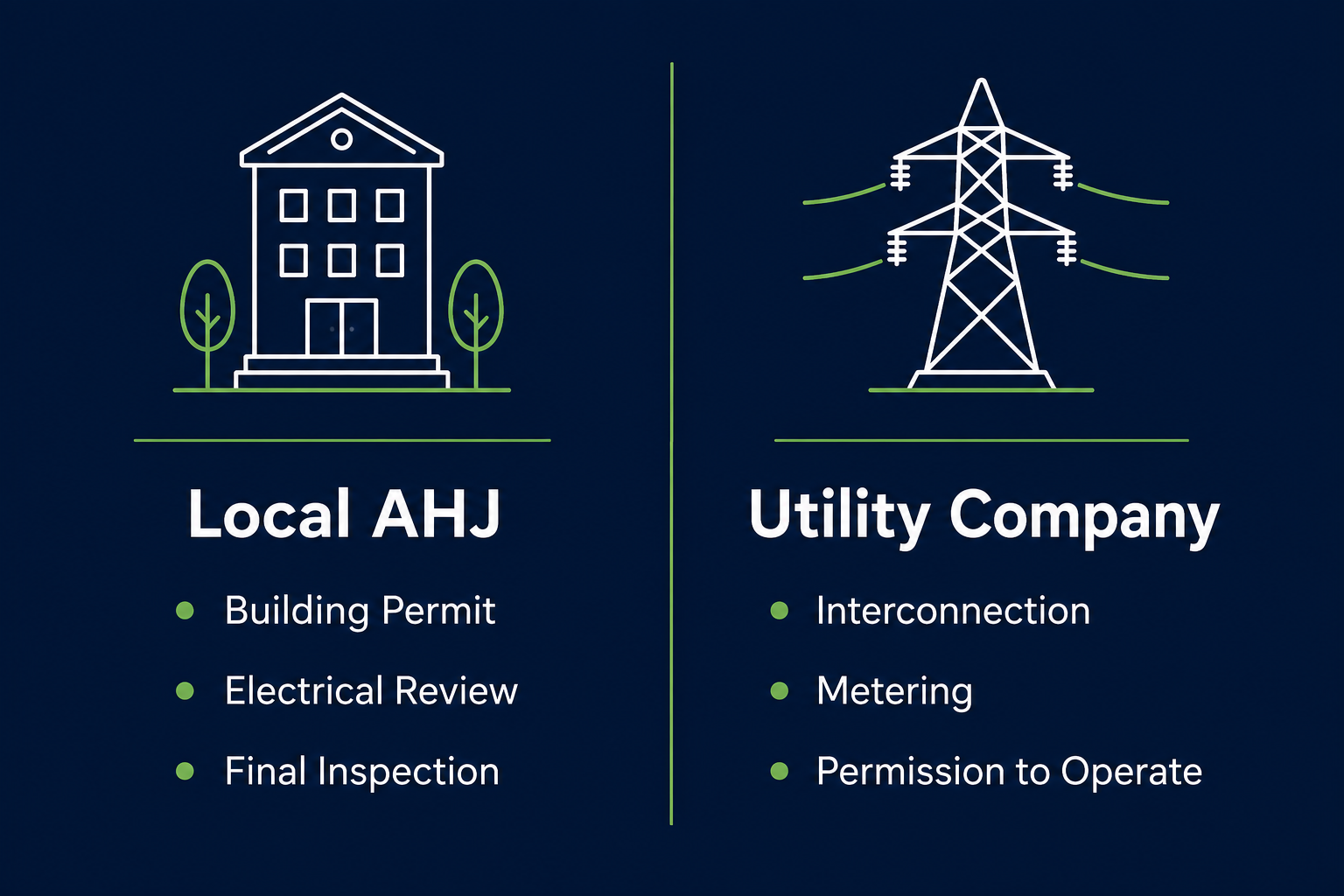
Local construction approval and utility interconnection are separate processes, but they exchange inspection and completion information.
1. The Local Authority Having Jurisdiction
The Authority Having Jurisdiction, usually shortened to AHJ, is the agency or official responsible for enforcing the codes that apply to the property. Depending on the location, that may be a city building department, electrical inspection department, county office, fire authority, or another local body.
The AHJ may review the roof or site layout, electrical one-line diagrams, equipment locations, panel, inverter, battery, and racking information, structural documentation, disconnect and placard details, applicable fire-code access requirements, and manufacturer specifications.
A larger or unusual system may require additional structural or electrical documentation. Some jurisdictions may also require portions of the design to be prepared or sealed by a licensed professional.
The important lesson is that the installer needs to know the requirements of the actual jurisdiction. A drawing package that passed in one Texas city may receive comments in another.
2. Utility Interconnection
Local approval gives permission to construct the installation under the applicable local rules. It does not automatically give permission to connect to the utility grid and export power.
The utility interconnection process covers the relationship between the customer-owned generation system and the utility’s distribution equipment. In the Houston area, that process may involve CenterPoint. In other parts of Texas, it may involve Oncor, another transmission and distribution utility, a municipal utility, or an electric cooperative.
The utility reviews information such as the system’s AC and DC ratings, inverter models and certifications, export capability, protective and disconnecting equipment, metering requirements, point of interconnection, whether additional circuit review is needed, and final inspection or completion documentation.
The inverter must stop energizing the utility side of the connection when the grid is unavailable. A battery-backed home can continue operating only after the backup equipment isolates the house from the utility. That separation protects the utility system and the people working on it.
The Texas Solar Permit Process, Step by Step
The details vary, but a properly managed residential project generally moves through the following stages.
Step 1: Site Evaluation and System Design
Before anyone applies for approval, the installer needs enough information to design the project. That normally includes electrical-service information, the main-panel rating, utility meter location, roof measurements and condition, shading and usable roof area, the proposed panel layout, solar and battery equipment, backup loads or whole-house configuration, existing electrical equipment, and the proposed interconnection method.
The installer then prepares the project documents. A typical package may include a roof plan, site plan, electrical one-line diagram, equipment schedule, attachment details, warning labels, and manufacturer data sheets.
This is where professional preparation matters. A plan set does not need decorative complexity, but it does need to agree with itself. The system size, breaker ratings, conductor information, equipment models, and installation layout cannot contradict one another from sheet to sheet.
I review electrical documents for a living. When I looked at the package for my own house, that consistency was one of the things I cared about most. A clean drawing package does not guarantee instant approval, but a careless one almost guarantees comments.
Step 2: HOA Review, When Applicable
An HOA is not the building department and cannot issue an electrical permit. It may still have an architectural-review process that needs to be completed before installation.
Texas Property Code Section 202.010 limits the ability of property owners’ associations to prohibit or restrict solar energy devices, but the law still allows certain restrictions involving placement, safety, rooflines, visibility, and common property. The law also addresses proposed alternative locations that would reduce the system’s estimated annual energy production by more than 10 percent.
That does not mean every disagreement automatically ends in the homeowner’s favor. The statute includes definitions, exceptions, approval procedures, and technical requirements. Homeowners dealing with a serious dispute should read the current statute and obtain legal advice rather than relying only on a solar salesperson’s summary.
In practical terms, the installer should prepare the HOA package early enough that the architectural review does not become a surprise delay.
Step 3: Local Permit Submission
The installer submits the required documents to the AHJ. The reviewing department may approve the package, reject it as incomplete, or return comments requesting revisions.
Comments are normal. The problem is not receiving a review comment. The problem is submitting weak documents that create repeated rounds of avoidable revisions.
Common issues include equipment model numbers that do not match, missing structural information, incorrect service ratings, incomplete one-line diagrams, missing battery details, improper equipment clearances, incorrect fire setbacks, inconsistent array sizes, missing labels or disconnect information, and proposed work that does not match the existing house.
The review time depends on the jurisdiction, workload, system complexity, and quality of the submission. There is no dependable statewide timeline.
Step 4: Utility Interconnection Application
The installer also submits an interconnection application to the serving utility or cooperative. Depending on the utility, this may happen before, during, or after local plan review.
The application identifies the generating equipment and explains how it will connect to the utility system. Additional documentation may be required for batteries, export controls, larger systems, or unusual interconnection methods.
The utility may approve the initial application, request corrections, or require additional review. This is one reason the installer needs to identify the serving utility correctly at the beginning. The retail electric company that sends the homeowner’s bill is not necessarily the company responsible for the poles, wires, meter, and interconnection approval.
Step 5: Installation
After the required construction approvals are in place, installation can begin. The crew should build what was approved.
That sounds obvious, but field conditions sometimes require equipment or conduit to be moved. When those changes are significant, the installer may need to revise the drawings or obtain approval rather than improvising and hoping the inspector accepts the work.
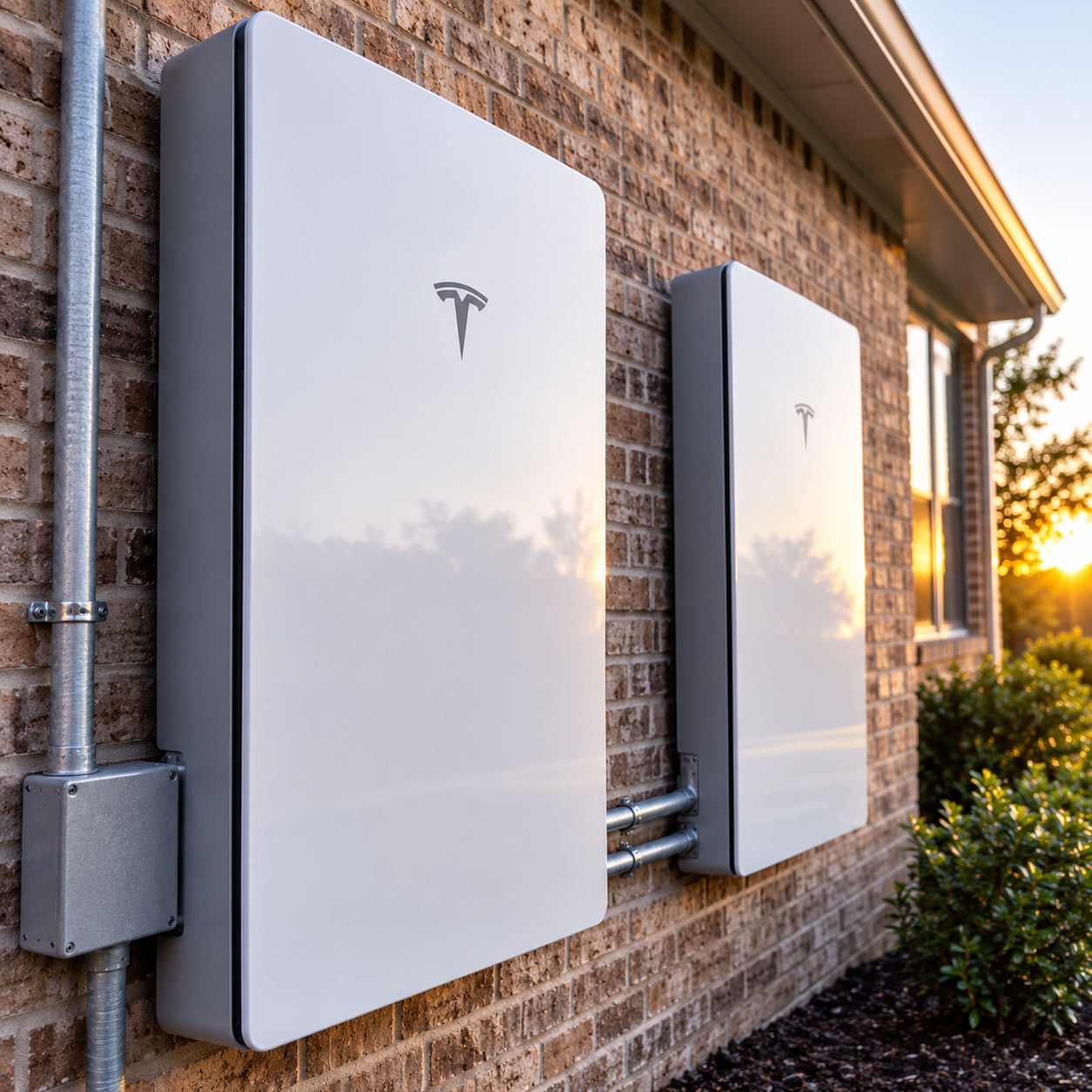
For my project, the physical work included 27 solar panels, two Powerwall 3 batteries, associated backup equipment, electrical connections, and the equipment required to integrate the system with the house. The installation itself was only one stage. Completion by the crew did not mean the system was automatically ready for normal grid-connected operation.
Step 6: Local Inspection
After installation, the local inspector checks the work against the approved documents and applicable codes. The inspection may include panel attachments, conduit and conductor installation, equipment mounting, grounding and bonding, disconnects, breakers and overcurrent protection, service connections, battery placement, required labels, clearances, and whether the field installation matches the plans.
The inspector may approve the work or issue corrections. Once the required local inspections are complete, the installer can provide that documentation to the utility as part of the final interconnection closeout.
Step 7: Metering, Final Utility Review, and Permission to Operate
Passing the local inspection does not necessarily mean the homeowner should turn on the system immediately.
The utility may still need to receive the passed inspection, review the completion documents, confirm the installed equipment, complete metering work, replace or reprogram the meter, finalize the interconnection agreement, and issue formal authorization.
That final authorization is commonly called Permission to Operate, or PTO.

PTO is the final authorization that allows the system to legally operate in parallel with the grid.
This is the stage that tests a homeowner’s patience. The equipment may be installed. The roof work may be finished. The batteries may be mounted. The inspection may have passed. You may still be waiting on the utility process.
I went through that exact frustration with my own system. Looking at a completed solar and battery installation that you cannot yet use feels ridiculous, but the installer cannot lawfully ignore the interconnection requirements and operate an exporting system without approval.
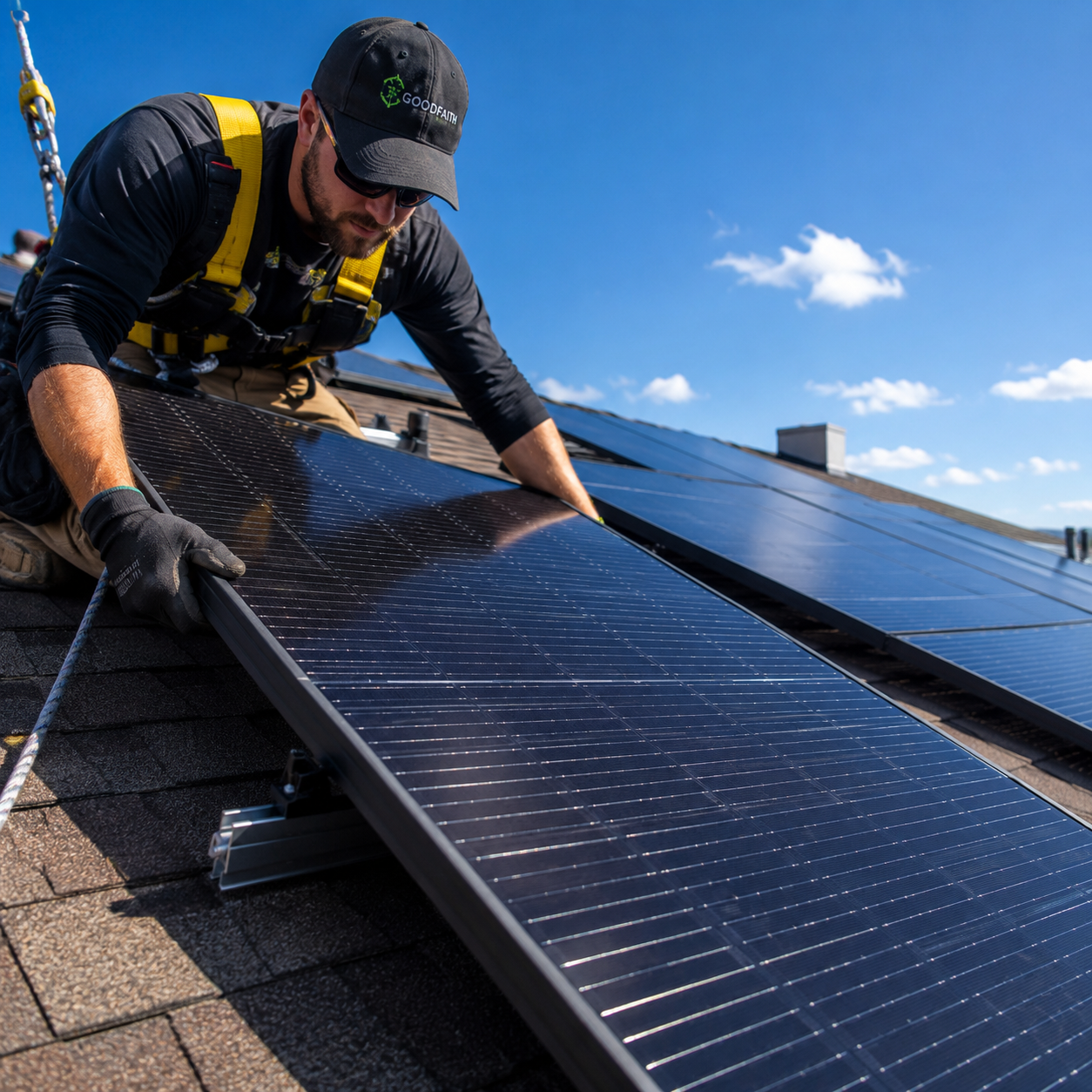
Once the required authorization for my project was issued, Good Faith Energy completed the activation remotely.
What Permission to Operate Actually Means
Permission to Operate means the utility has authorized the approved system to operate in parallel with its distribution network under the interconnection agreement.
It does not mean the utility guarantees how much solar the system will produce, guarantees export compensation, or requires every retail electric plan to treat exported energy the same way. It also does not mean the system will provide unlimited outage power or that the homeowner can later change the equipment without further review.
It means the approved installation has completed the required interconnection process and may operate under the applicable terms.
Texas HOA Solar Protections
Texas law generally prevents an HOA from imposing a blanket prohibition on solar energy devices, but it does not eliminate all architectural restrictions.
An association may still enforce certain rules involving equipment that extends above the roofline, whether panels follow the roof slope, the height of ground-mounted equipment, common property, safety requirements, approved placement, and other conditions specifically allowed by statute.
The law also limits an association’s ability to force the system into an HOA-selected location when that alternative would reduce the estimated annual energy production by more than 10 percent compared with the homeowner’s proposed location. The production comparison should be supported by the type of technical analysis required by the statute rather than by a homeowner simply declaring that one roof face is better.
Solar roof tiles are also expressly included in the statutory treatment of solar energy devices.
Important: This section is a practical overview, not legal advice. HOA disputes can turn on the recorded restrictions, system design, roof orientation, statutory exceptions, and documentation submitted during the architectural-review process. Homeowners dealing with a serious dispute should read Texas Property Code Section 202.010 directly and obtain qualified legal advice.

Where local permit posting is required, the permit should be displayed according to the jurisdiction’s instructions.
How to Avoid Solar Permit Delays
The most effective way to reduce delays is to submit accurate information the first time.
Hire an Installer Familiar with the Jurisdiction
Experience with Texas solar does not necessarily mean experience with your city, utility, or cooperative. Ask whether the company has completed projects under the same AHJ and serving utility.
Confirm Who Is Handling Each Submission
The contract should clearly identify who is responsible for HOA documents, permit drawings, structural documentation, permit fees, utility applications, inspection scheduling, correction notices, final interconnection paperwork, and PTO follow-up. Do not assume that “we handle everything” answers every one of those questions.
Ask to See the Plan Set
You do not need to be an electrical designer to look for obvious inconsistencies. Check that the address, panel count, equipment models, battery quantity, array size, and equipment locations match what you agreed to buy.
Do Not Confuse the Retailer with the Utility
In deregulated areas, the company selling you electricity may not own the meter or distribution lines. The transmission and distribution utility handles the physical interconnection process.
Expect Comments Without Accepting Endless Excuses
A plan-review comment is not evidence that the project is failing. Repeated corrections caused by missing or contradictory information are different. Ask what the reviewer requested, when the correction was resubmitted, and whether anything is still needed from you.
Do Not Energize the System Early
A homeowner should not bypass locks, change commissioning settings, close prohibited disconnects, or attempt to export power before authorization. A battery system may have special commissioning or backup-testing procedures, but those need to be handled according to the installer’s, manufacturer’s, inspector’s, and utility’s requirements.
The Bottom Line
The Texas solar permit process is not a single permit issued by one office.
It is a coordinated process involving system design, any applicable HOA review, local construction approval, utility interconnection, inspection, final documentation, and permission to operate.
The exact requirements depend on the property.
The best installer is not merely the company that can put panels on a roof quickly. It is the company that can produce a correct design package, respond to reviewers, install what was approved, pass inspection, and complete the utility process without leaving the homeowner to untangle the paperwork.
The panels are the visible part of a solar project.
The approvals are what make the system legal and operable.
This page is part of the Texas Home Solar series. Start with the overview: Texas Home Solar: One Electrical Designer’s Honest Take.
More From the Solar Section

Disclaimer: I am an electrical designer, not a licensed attorney, financial advisor, or tax professional. Nothing on this page should be considered legal, financial, or tax advice. Solar permitting requirements, HOA restrictions, and utility interconnection procedures vary by jurisdiction, property, and utility provider. Texas Property Code Section 202.010 governs HOA solar rights in Texas. Consult qualified professionals before making a purchasing, legal, or financial decision.