
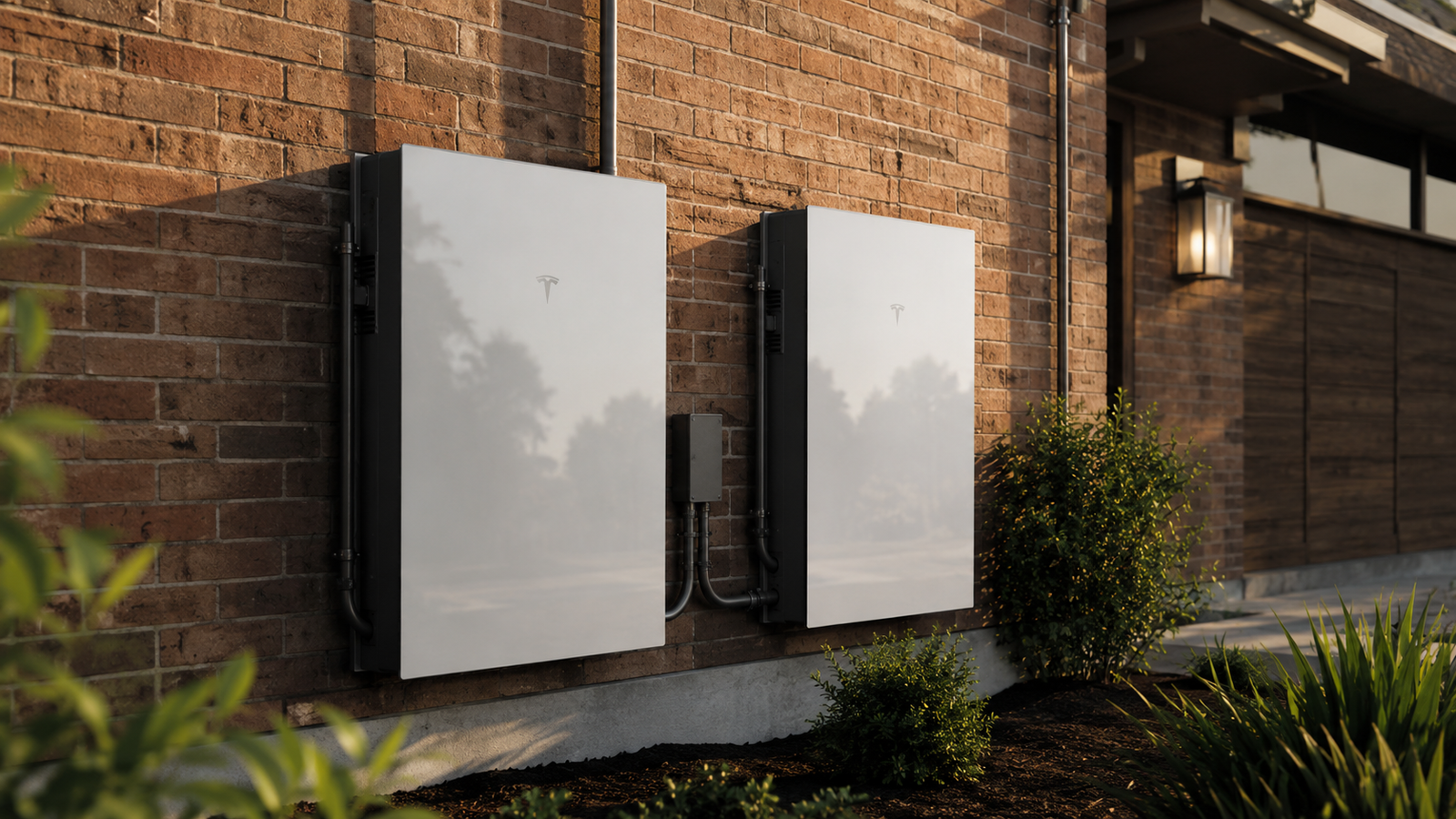
This Tesla Powerwall 3 review Texas edition covers my actual experience running two units for whole-house backup, daily cycling, and surviving CenterPoint grid outages.
Tesla Powerwall 3 Review Texas: Why I Chose Two Units
When I designed the solar system for my house, the panels were only half of the project.
Hurricane Beryl had already left our neighborhood without power for five days. My wife could not use her CPAP, the house was hot, and we were completely dependent on CenterPoint restoring the grid.
I did not want a solar system that shut down with the utility and left us in the same position during the next extended outage. I wanted battery storage that could keep the house operating.
I work as an electrical designer on utility-scale PV and BESS projects, so I approached residential batteries with a healthy amount of skepticism. Battery brochures tend to emphasize storage capacity while skipping over the harder question: What can the system actually start and operate when the grid goes down?
I ultimately installed two Tesla Powerwall 3 units, giving my house 27 kWh of nominal battery storage in a whole-house backup configuration.
After more than a year of normal operation, daily cycling, Texas summer demand, and several utility interruptions, I have a much better understanding of what the system does well and where homeowners need realistic expectations.
The Specifications That Actually Matter
Most homeowners begin with battery capacity.
Each Powerwall 3 contains 13.5 kWh of nominal stored energy, so my two-unit system provides 27 kWh. That number matters because it helps determine how long the batteries can support the house during an outage, including periods of wider Texas grid stress.
But capacity does not tell you what the system can run at the same time. That is where power output matters.
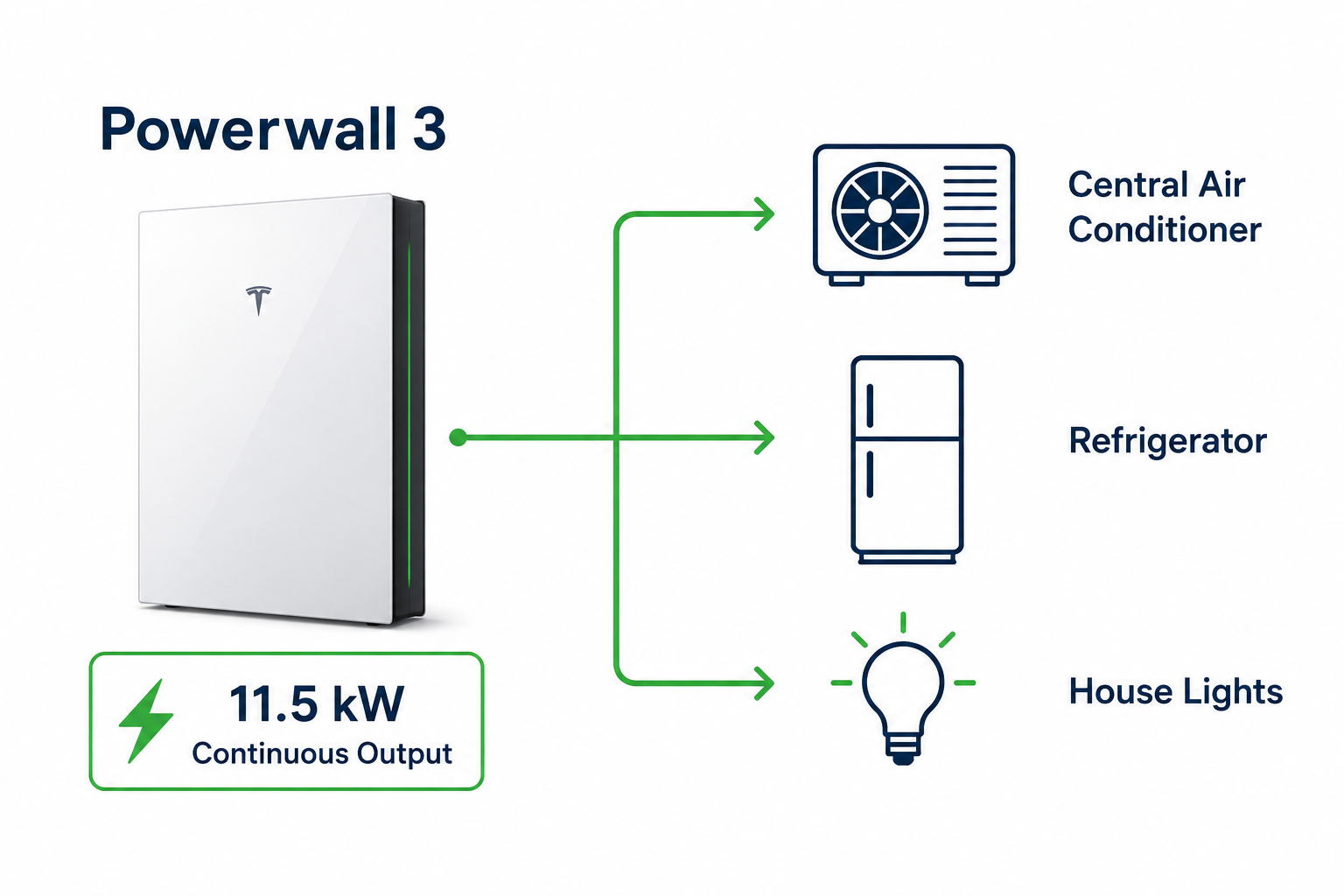
Capacity determines runtime. Power output determines which appliances can start and run at the same time.
A Powerwall 3 can be configured for up to 11.5 kW of continuous AC output under normal conditions. The actual configured output depends on the installation, supporting electrical equipment, and applicable requirements. Two units can therefore provide substantial combined output when the system is designed and configured to use it.
That is one of the primary reasons I selected two units.
My concern was not keeping a lamp, refrigerator, and Wi-Fi router running. I wanted enough available output to support the central air conditioner and the rest of the house without designing the entire backup arrangement around a handful of critical circuits.
Starting a central air-conditioning compressor is different from keeping it running.
Motors can require a brief burst of starting current far above their normal operating current. The Powerwall 3 is designed to start heavy loads, but that does not mean one battery can automatically start every central air-conditioning system while carrying every other load in the house at the same time.
The compressor characteristics, locked-rotor current, starting equipment, battery configuration, and other active loads all matter.
That is why battery sizing must be based on the actual house rather than on a salesperson saying, “One battery should be enough.”
Whole-House Backup Does Not Mean Unlimited Power
My house is configured for whole-house backup.
When the grid fails, the Tesla backup equipment isolates the house from the utility, and the Powerwalls serve the main house load rather than a separate critical-load subpanel.
That means we do not walk through the house discovering that only the refrigerator, internet equipment, and a few selected outlets are connected. The entire house remains available.
But “available” does not mean I can ignore energy use.
Power determines how much equipment can operate at the same time. Energy determines how long the batteries can keep supplying it.
My two Powerwalls have enough output to make whole-house backup practical for my home, including central air conditioning. The 27 kWh of stored energy gives us meaningful runtime, but it is still a finite amount.
If I run the air conditioner, electric oven, dryer, and other heavy loads together during an extended outage, I will drain that stored energy much faster.
Whole-house backup gives me access to the entire house. It does not create an unlimited private power plant.
What Happens When the Grid Goes Down
We have experienced several utility interruptions since the system was activated.
The transition to battery power has been fast enough that it is easy to miss. The house remains energized, and sometimes the first sign of an outage is a notification in the Tesla app or seeing that the surrounding homes have gone dark.
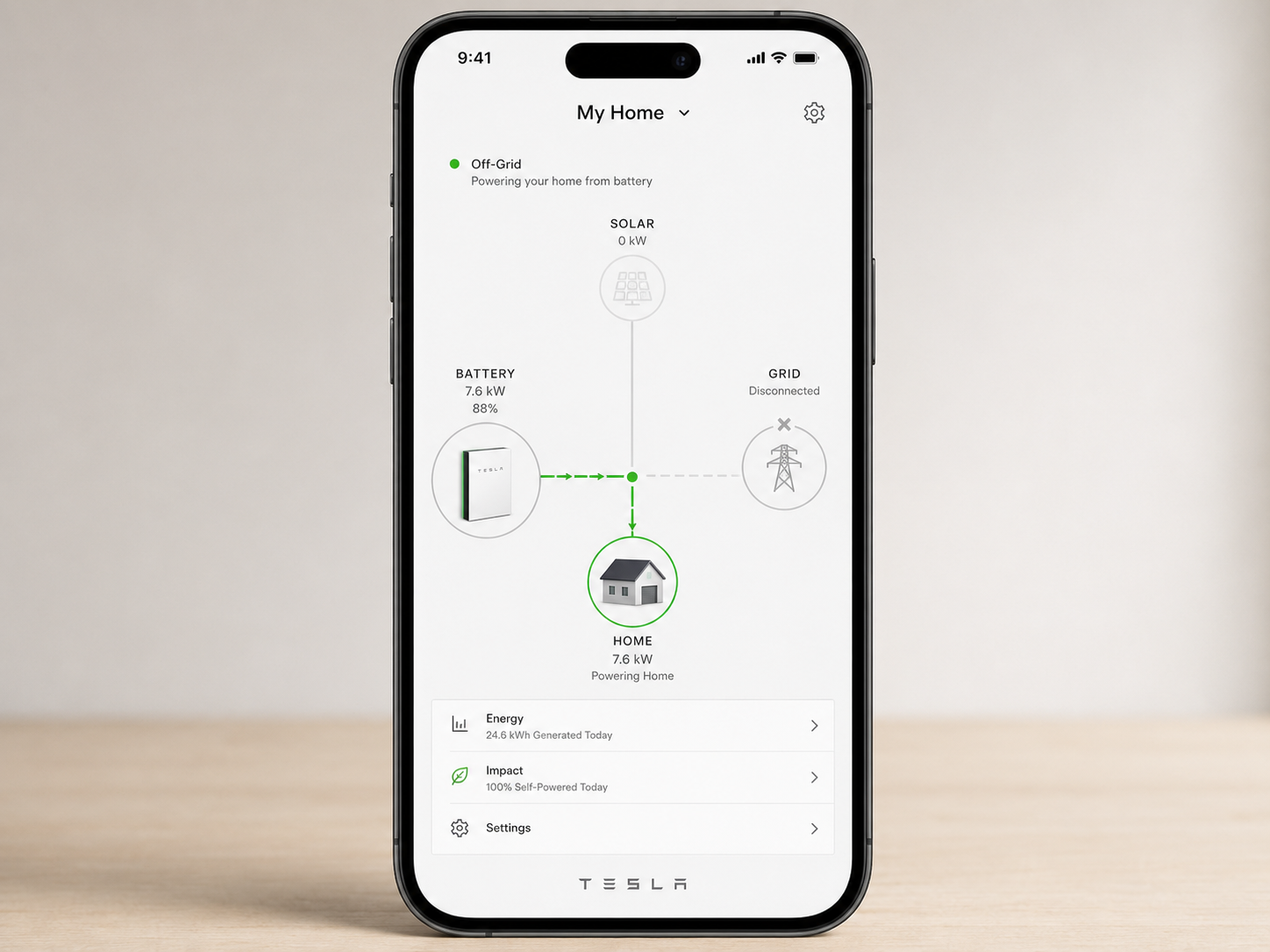
The Tesla app provides real-time visibility into power flow and the remaining battery reserve.
The Gateway disconnects the house from the utility so the system does not backfeed the grid. The batteries then supply the home through the backup system.
That transition has worked reliably in my experience.
During a short interruption, we normally do not need to change anything. During a longer outage, especially on a hot Texas night, I pay attention.
The central air conditioner is one of the largest loads in the house. The batteries can run it, but every hour of cooling uses part of the finite stored energy we may need before the sun returns. That means making choices.
We can keep the house comfortable, the food cold, the CPAP operating, and the normal household circuits available. But I would not casually run every major electrical appliance at once during a long outage merely because the panel remains energized.
The real advantage is control. Before the batteries, CenterPoint determined whether our house had power. Now, when the grid fails, we have stored energy, solar production when the weather permits, and the ability to decide how to use both.
Daily Cycling and the Electric Plan
Backup power was the reason I bought the batteries, but the grid operates normally most days. The Powerwalls still work every day.
We started with TXU Energy before the solar installation. Once the system went live, we switched to a David Energy plan structured around a home with solar and battery storage. Under that arrangement, the account received value from solar exports and battery participation, which resulted in several months of bill credits.
When David Energy later changed its plan structure, we shopped the market again and switched to a new provider offering a free-nights plan. The Powerwalls charge from the grid during the free nighttime period, then supply the house during the more expensive daytime hours.
The Tesla software coordinates that battery behavior around grid conditions, household consumption, export opportunities, and the backup reserve I choose.
Note on Retail Plans: Texas has a deregulated energy market, and retail plans change constantly. A strategy that works today still requires reviewing current import rates, export compensation, battery-credit structures, and contract terms. We will cover how to shop for a solar-and-battery electric plan in a separate article.
That arrangement has helped reduce my electric bills, but I am careful not to attribute all of those savings to the batteries alone.
My results come from the entire system working together: a 10.53 kW solar array, two Powerwall 3 batteries, household consumption patterns, battery reserve settings, export credits, the retail plan structure, and seasonal weather.
Before solar and batteries, my highest summer bill in the comparison I reviewed was $376.10. After installation, my highest summer bill in that same comparison was $101.63.
Those are meaningful results.
But isolating the financial value created specifically by the batteries would require a separate calculation. What I can say is that the batteries are not sitting idle while waiting for the next hurricane. They are actively shaping how the house buys, stores, uses, and exports energy.
What I Like About Powerwall 3
The strongest feature is the combination of storage capacity, high output, integrated solar-inverter capability, and automatic control.
The system does not require me to manage every cycle manually. The Tesla app gives me a clear view of solar production, household consumption, grid imports, exports, battery charge, and backup reserve. I can raise the reserve when severe weather is expected or lower it when I want more battery capacity available for daily use.
The integrated inverter also reduced the number of separate major components needed for my solar and battery system.
Most importantly, the two-unit configuration provides enough practical output for the whole-house arrangement I wanted. I did not buy the Powerwalls to keep three circuits alive. I bought them because I wanted the house to remain functional during a CenterPoint outage.
So far, they have done that.
What Homeowners Need to Understand
The Powerwall 3 is capable equipment, but it cannot correct a poor system design.
A homeowner can still end up disappointed if the installer:
- Sizes the system based on battery capacity alone
- Ignores air-conditioning starting requirements
- Fails to account for heavy loads operating at the same time
- Confuses a whole-house connection with unlimited runtime
- Sets unrealistic expectations about outage duration
- Assumes solar production will remain strong during every storm
- Ignores the homeowner’s required backup reserve
A single Powerwall 3 may be enough for some homes, including homes with central air conditioning. It may not be enough for another home with a larger compressor, electric heating, multiple HVAC systems, a well pump, electric water heating, or several major loads operating at the same time.
The answer has to come from the home’s actual load information and the system design.
My Final Verdict
Was choosing two Tesla Powerwall 3 units the right decision for my house?
Yes.
They provide the power output and stored energy needed for the whole-house backup arrangement I wanted. The transition during utility interruptions has been reliable, the app makes the system easy to understand, and the batteries play an active role in how our solar system operates every day.
They have not made us immune to long outages. Poor solar weather, heavy air-conditioning demand, and careless use of large appliances can still drain 27 kWh of stored energy faster than expected.
What matters is that we now have the ability to keep the house operating, protect the food, run my wife’s CPAP, manage the air conditioning, and use the next day’s solar production to begin recharging the batteries.
For my home and my goals, the dual Powerwall 3 system was worth it. Based on my experience, it is one of the strongest residential battery options I have worked with, but only when the number of units, electrical configuration, household loads, and outage goals are properly evaluated.
Do not buy one simply because a salesperson says it will “run the whole house.” Make them show you the load calculations.
This page is part of the Texas Home Solar series. Start with the overview: Texas Home Solar: One Electrical Designer’s Honest Take.
More From the Solar Section


Disclaimer: I am an electrical designer, not a licensed financial advisor, tax professional, or attorney. Nothing on this page should be considered financial, tax, or legal advice. Solar system performance, pricing, and incentive eligibility vary by location, equipment, installer, and individual tax situation. Consult qualified professionals before making a purchasing or financial decision.