
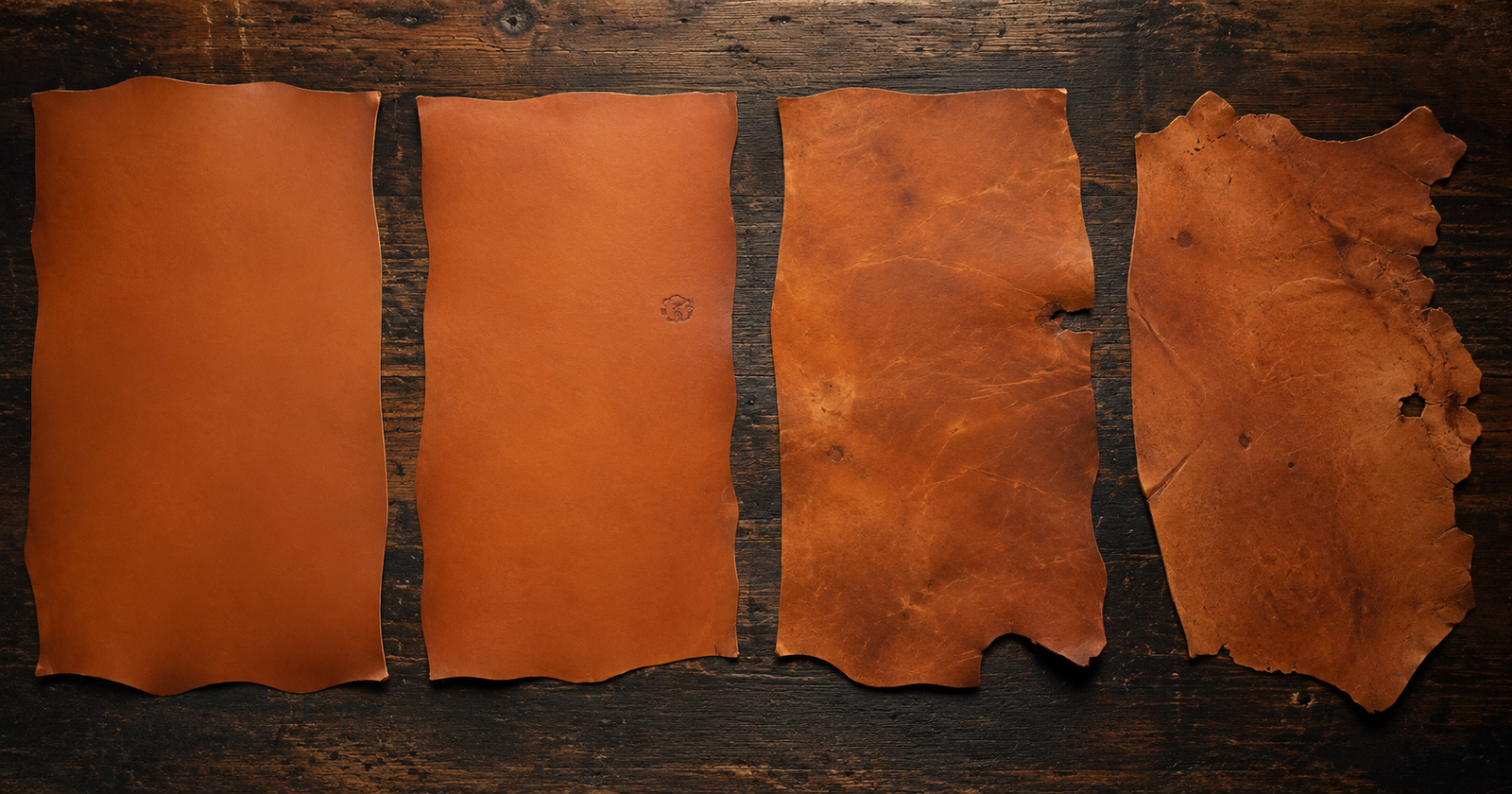
Understanding Tannery Leather Grades
In Part 1 of our Leather Grades Guide, we looked at retail terms such as full grain, top grain, and genuine leather. When you begin shopping from tanneries and serious leather suppliers, you encounter another set of descriptions.
Listings may describe a hide as first quality, A grade, tannery run, factory second, craft grade, utility grade, or economy. These terms can tell you something about surface condition, consistency, and usable yield, but they do not belong to one universal grading system.
One supplier’s craft grade may be cleaner than another supplier’s second. A factory second may contain only a cosmetic mark, or it may have uneven finish, loose grain, thickness variation, or another problem that affects how the leather works.
This guide explains the common ideas behind leather grades, what the seller’s terminology may mean on the bench, and how to judge whether a discounted hide actually fits your project.
How Leather Grading Actually Works
The basic idea: A leather grade usually describes expected condition, consistency, and usable yield. The seller’s written definition matters more than the name alone.
No natural hide is perfectly uniform. The animal may have carried scars, brands, insect marks, wrinkles, stretch, and differences in fiber density. Tanning and finishing can add another layer of variation through color, thickness, temper, grain, coating, and handling marks.
Depending on the tannery or supplier, leather may be evaluated for:
- Surface appearance: Scars, brands, scratches, grain damage, color variation, and finish marks
- Fiber condition: Loose grain, weak belly, spongy areas, stretch, and poor density
- Consistency: Variation in thickness, temper, color, finish, or embossing
- Cutting yield: How much clean, usable area remains for the intended market
- Conformity: Whether the hide matches the tannery or customer’s target color, feel, finish, and specification
A hide can be downgraded for a highly visible cosmetic issue even when most of the leather is structurally sound. It can also be downgraded because the temper, finish, or grain does not meet the intended specification.
The lower grade may cost less, but the advertised square footage is not the same as usable square footage. The value depends on whether your pattern pieces fit between the problems.
Why Grade Names Vary Between Sellers
There is no single retail dictionary that forces every tannery and distributor to use grade names the same way.
You may encounter:
- First quality, premium, select, or A grade
- Tannery run or TR
- B grade, factory second, or second quality
- Craft, economy, rustic, or value grade
- Utility, low grade, special purchase, or as-is
These terms may overlap, but they are not guaranteed equivalents. “Tannery run,” for example, may mean a normal unsorted mixture rather than a top grade. “Factory second” may identify a minor cosmetic miss, a color mismatch, a finish problem, or a piece that failed a customer specification.
Read the seller’s definition every time. Look for photographs, expected defects, return restrictions, minimum usable dimensions, and whether the image shows the actual hide or only a representative example.
First-Quality and Selected Hides
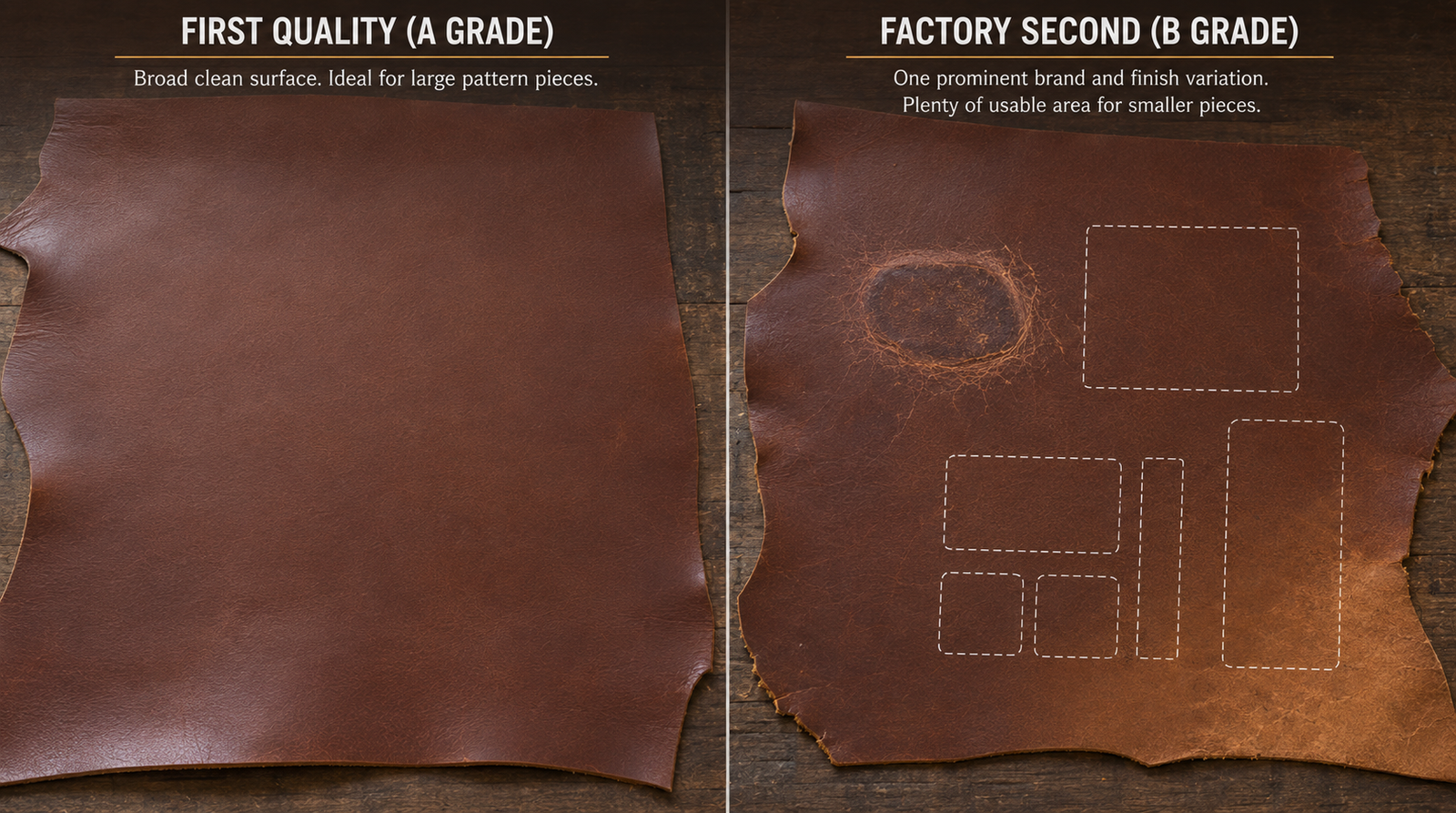
First-quality, premium, select, and A grade usually refer to leather chosen for cleaner appearance, better consistency, or higher usable yield. The exact standard depends on the tannery or supplier.
A first-quality hide may offer:
- Fewer major scars, brands, holes, and grain defects
- More consistent color and finish
- More predictable thickness and temper
- Larger uninterrupted cutting areas
- Better matching between hides from the same article or lot
That does not mean the hide will be flawless. Natural markings, wrinkles, grain variation, and minor handling marks can still appear. The advantage is usually a higher percentage of usable leather and less time spent arranging patterns around defects.
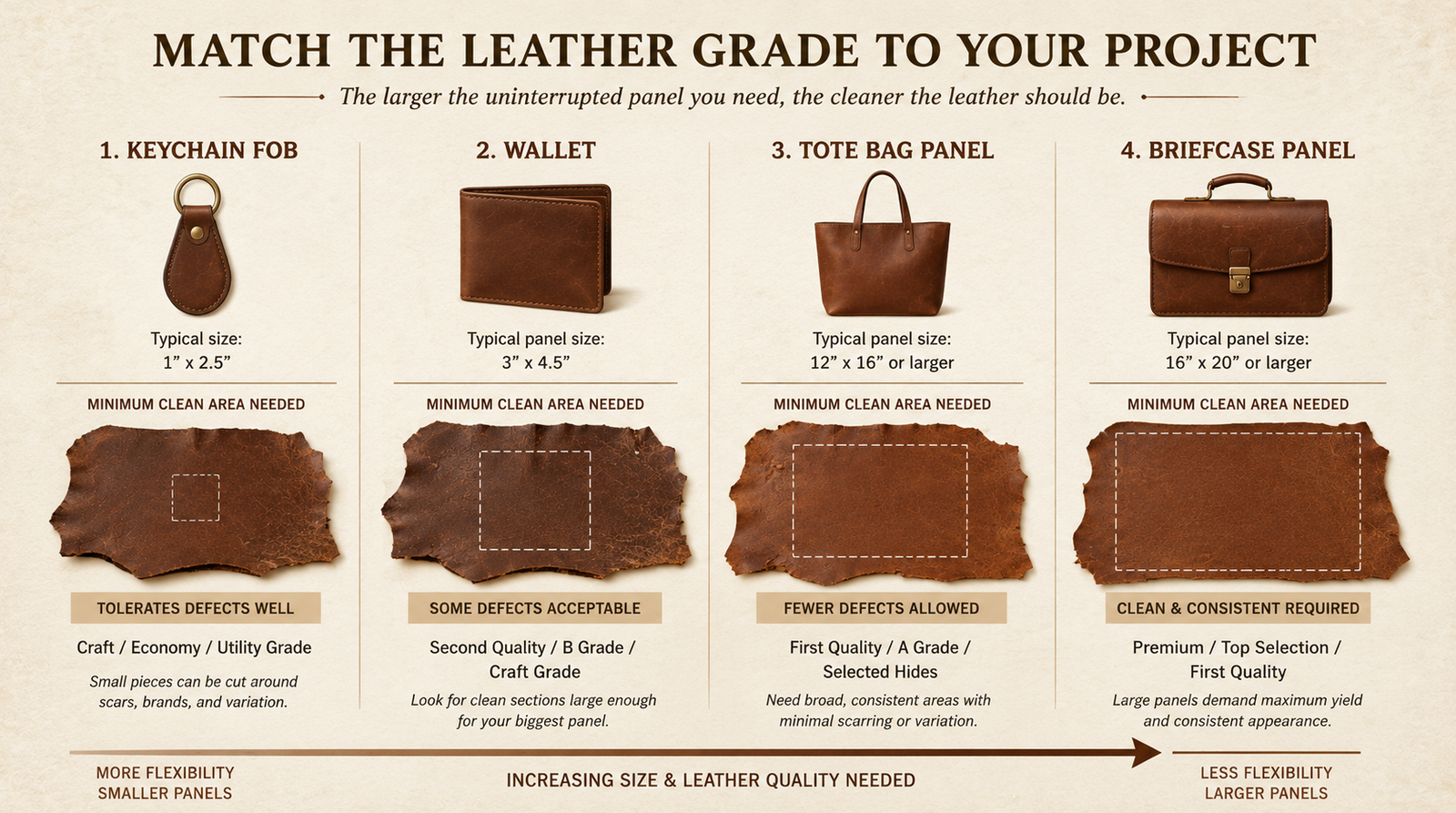
Cleaner hides make the most sense when you need large bag panels, matching production pieces, long straps, broad carved areas, or a consistent surface for goods sold at a premium.
Bench note: Do not pay for a cleaner grade automatically. A maker cutting small card pockets may gain very little from the extra yield compared with someone cutting matching briefcase panels.
Factory Seconds and B Grades
Factory seconds, second quality, and B grade generally refer to leather that did not meet a higher selection standard. The reason may be cosmetic, structural, dimensional, or related to a customer specification.
Common reasons include:
- A prominent scar, brand, scratch, or grain mark
- Color outside the target range
- Uneven finish, gloss, embossing, or pull-up
- Thickness or temper variation
- Roll marks, handling damage, or processing marks
- An article that did not match the original customer order
Some seconds are excellent leather with one obvious defect that is easy to avoid. Others contain broader inconsistencies that change how the leather cuts, glues, stitches, finishes, or wears.
Do not assume a second performs exactly like the first-quality version in every respect. It may share the same article name and general recipe while differing in finish, color, temper, usable yield, or conformance to specification.
Maverick Leather is especially useful for tannery overstock, discontinued articles, value hides, and factory seconds. Read each listing closely because condition and defect type can vary from one lot to another.
Craft and Economy Grades
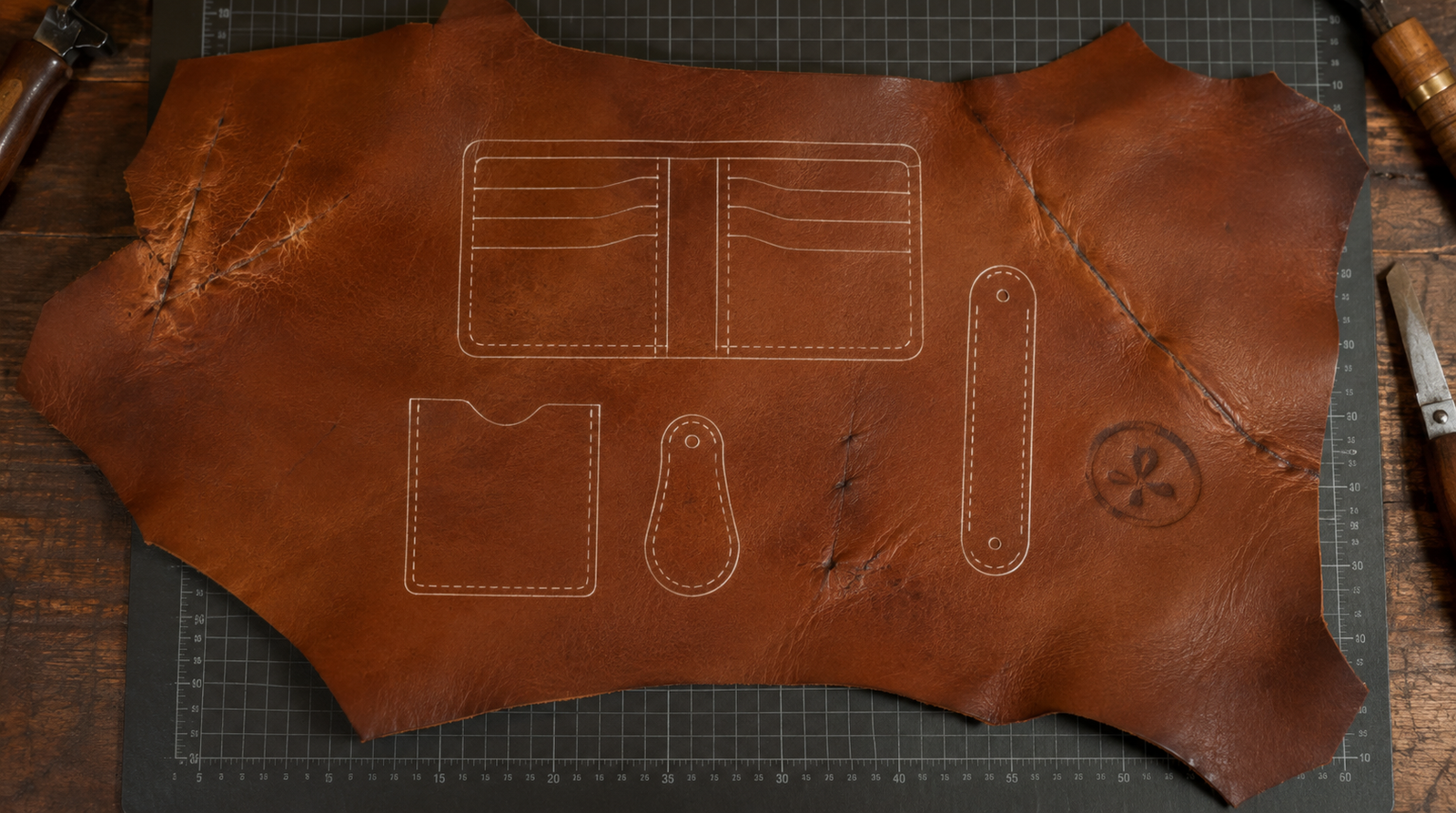
Craft, economy, value, and rustic grades usually indicate leather with lower expected yield or greater variation than the seller’s standard stock. These are seller-defined categories, so the listing description matters more than the category name.
You may encounter:
- Large brands or clusters of scars
- More color or finish variation
- Loose belly and uneven stretch
- Irregular cuts or partial hides
- Mixed thickness or temper
- Sections that are excellent beside sections that are difficult to use
This leather can be a strong value for small goods, pattern testing, tooling practice, rustic projects, straps, tabs, and pieces that can be nested around the damage.
Visible scars and brands may also be used intentionally, but do not assume every flaw is merely decorative character. Check whether the grain, fiber structure, finish, or strength has been compromised in that area.
Bench note: Craft grade is useful when the pattern is flexible. It becomes expensive when most of the hide cannot provide the dimensions your project requires.
Utility Grade
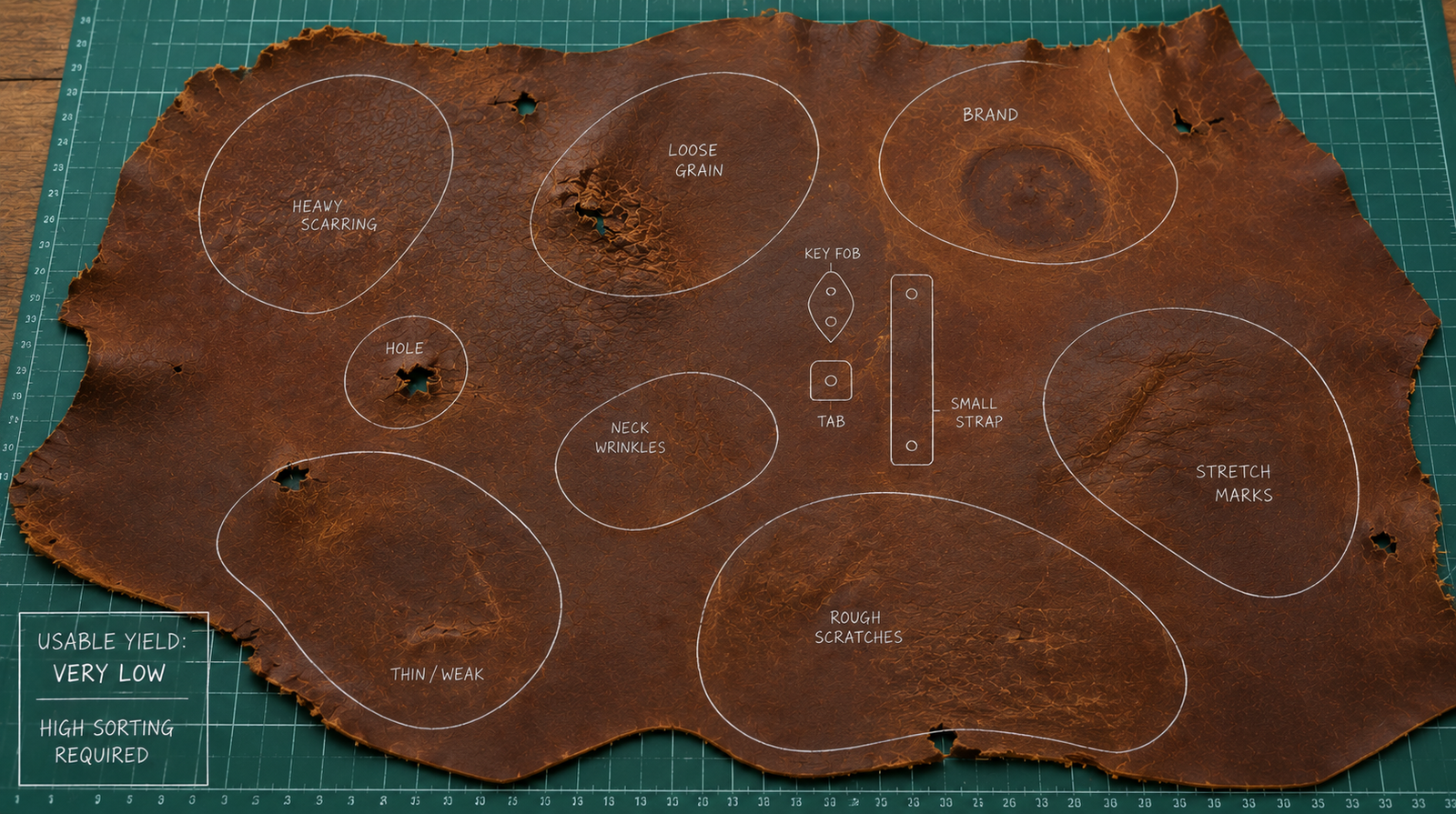
Utility grade usually identifies leather being sold primarily for price rather than consistency or yield. It may contain extensive surface damage, loose grain, weak belly, finish defects, holes, irregular cuts, thickness variation, or sections that do not meet the seller’s normal standard.
That does not mean every utility hide is unusable. It means the buyer should expect more sorting, more waste, and less predictability.
Utility leather may work for:
- Practice cuts and machine setup
- Tooling, dye, glue, or finish tests
- Small pieces cut from isolated clean areas
- Mock-ups and prototypes
- Shop protection, pads, or noncritical workshop uses
- Projects designed around visible scars and variation
Do not automatically use weak or spongy utility leather as a hidden structural layer. Covering it does not improve its strength. Interior reinforcement should still be made from material capable of carrying the load.
Utility leather can also be a poor choice for a sharpening strop if the grain, density, surface, or finish is unsuitable. A clean, firm offcut is more important than the grade label.
How to Buy by Usable Yield
The goal is not to buy the highest grade. It is to buy leather that provides the surface, consistency, dimensions, and performance your project requires at a reasonable total cost.
Choose a cleaner selection when:
- You need large uninterrupted panels.
- You are matching multiple pieces from the same lot.
- Color and finish consistency are central to the design.
- Pattern placement leaves little room for defects.
- Sorting and waste would cost more than the grade upgrade.
Consider seconds or craft grades when:
- Your products use small pattern pieces.
- You can inspect or see the actual hide before buying.
- The defects are cosmetic and easy to avoid.
- Natural marks support the finished design.
- The discount is large enough to justify reduced yield and added cutting time.
Before ordering, ask:
- Is the photograph of the actual hide?
- How does the seller define this grade?
- What defects or variations should I expect?
- Are the problems cosmetic, structural, or both?
- What are the approximate usable dimensions?
- Does the leather have loose grain, stretch, finish cracking, or thickness variation?
- Is the purchase returnable?
Bench note: Grade describes expected condition. Pattern size determines whether that condition is a bargain.
Where to Compare Leather Grades
A trustworthy supplier explains what its grade names mean, describes likely defects, and gives the buyer enough information to estimate usable yield. For discounted leather, photographs of the actual hide are especially valuable.
Compare the tannery, article, cut, weight, temper, condition, return policy, and shipping cost. A familiar grade word does not replace those details.
Use our directories to compare sources for selected hides, tannery-run leather, factory seconds, craft grades, utility leather, closeouts, and vegetable-tanned stock. Read each supplier’s own grade definitions before ordering.