

Is solar worth it in Texas? This page answers that question using my actual system costs, loan terms, pre-solar TXU bills, and post-solar David Energy bills from my Magnolia, Texas home.
Introduction: Is Solar Worth It in Texas? Here Is What My System Actually Cost
When homeowners ask whether solar is worth it in Texas, most of them are asking about the money.
They want to know whether the panels will actually lower their electric bill, whether the loan payment will wipe out the savings, and whether the batteries are worth what they cost.
I work as an electrical designer on utility-scale PV and BESS projects, but I did not buy my home system because I expected some magical return on investment. I bought it after Hurricane Beryl left our neighborhood without power for five days and showed me exactly how vulnerable we were without backup power.
The financial side still had to make sense.
To show what that looks like, I am opening my own books. These are my actual system costs, loan terms, pre-solar utility bills, and post-solar utility bills. This is not a sales projection. It is what happened at my house.
The System and What It Cost
My system includes a 10.53 kW solar array made up of 27 Meyer Burger panels and two Tesla Powerwall 3 units providing 27 kWh of nominal battery storage.
The first door-to-door solar proposal I received was approximately $72,000.
I knew that price was inflated. I design PV and battery systems for a living, so I was able to look past the presentation and evaluate what they were actually offering.
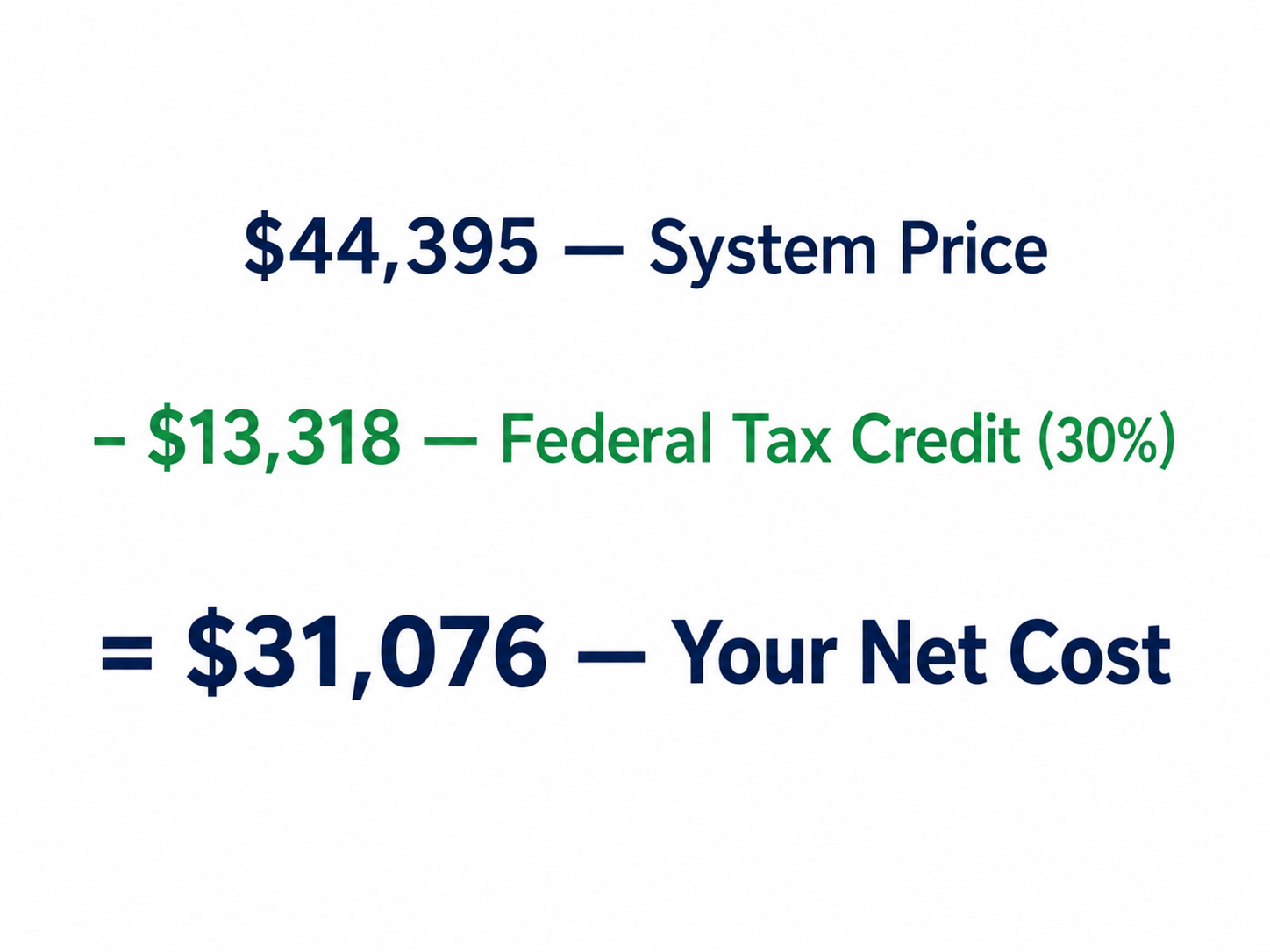
I eventually signed a contract with Good Faith Energy for $44,395.
Because my system was installed in 2024, it qualified for the federal residential clean-energy tax credit available at the time. Thirty percent of the contract price was approximately $13,319, bringing the estimated effective system cost to approximately $31,077.
Note: That credit was part of my 2024 transaction. It is not something a homeowner should assume is still available on a new proposal today. The federal residential clean-energy credit is no longer available for systems placed in service after December 31, 2025.
I financed the system with a 20-year loan at 8.49 percent.
Without applying the anticipated tax-credit amount to the principal, the payment would have been approximately $400 per month. Applying that amount to the loan as planned reduced the scheduled payment to approximately $280 per month.
For the comparisons below, I am using that $280 scheduled payment.
What Electricity Cost Me Before Solar
To decide whether solar is worth it, you first have to understand what you are trying to replace.
My home is a two-story house in Magnolia, Texas. We keep it around 72 degrees throughout the year, and air conditioning in Texas is not a small electrical load.
During the summer of 2024, my TXU Energy bills climbed quickly.
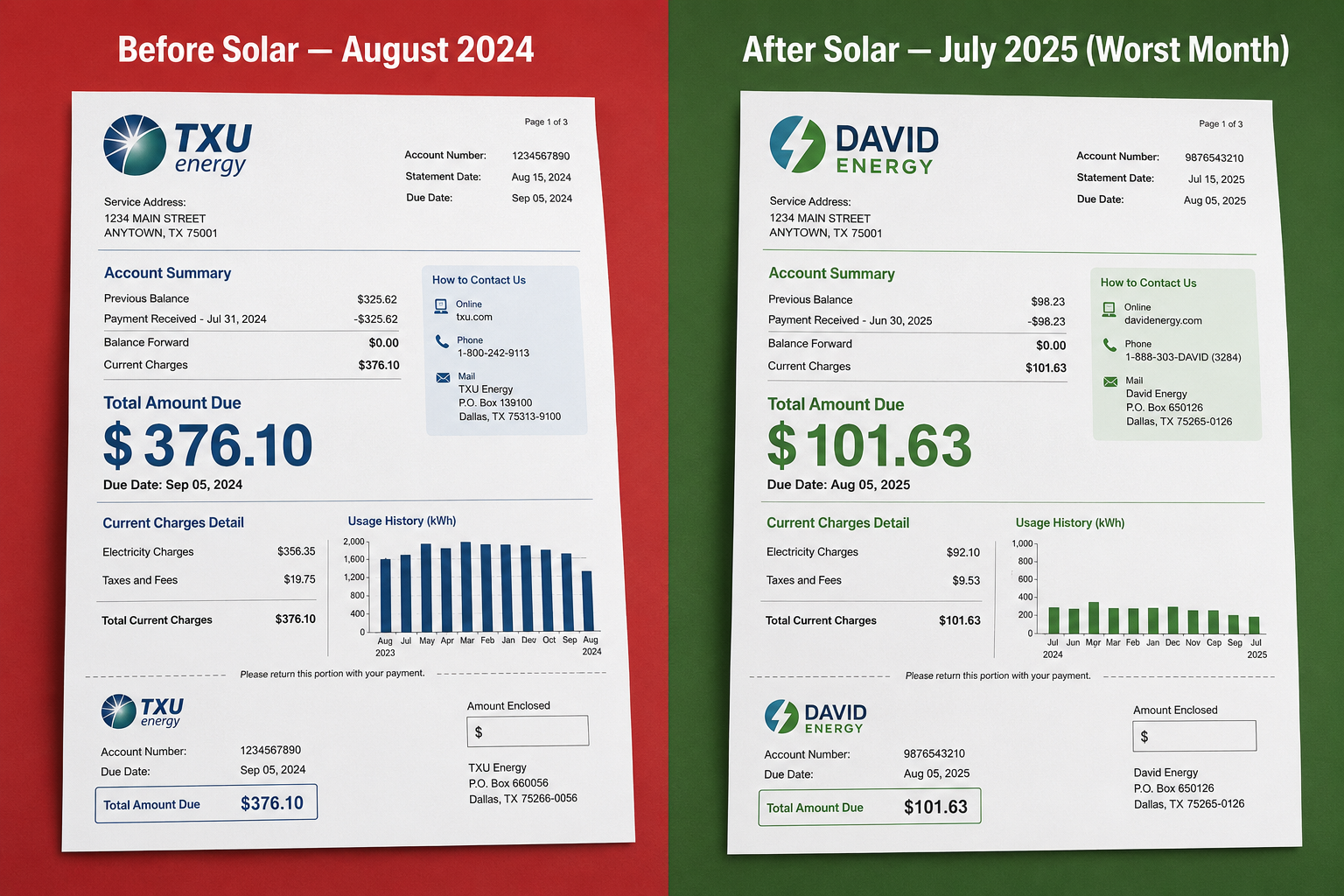
My July bill, which covered the period when Hurricane Beryl knocked out our power, was $288. The next two bills rose to $376 and $332. My highest-usage month reached 1,958 kWh and cost me $376.
That $376 paid for one month of electricity. Once it was paid, it was gone.
It did not purchase equipment. It did not give me backup power. It did not protect my wife’s CPAP, keep the refrigerator and garage freezer running, or help us through the next extended outage.
It purchased electricity for that billing period and nothing more.
What Happened After Solar
My system went live in mid-December 2024.
I also switched to David Energy, which at the time offered a battery-optimized retail plan that credited my account for exported solar energy and certain battery dispatches.
Note on price shopping: David Energy was the right plan for our specific setup. Texas has a deregulated energy market with dozens of providers, and the best plan depends on how your system is configured. If you have batteries and a solar array, you want a plan that rewards exported energy and battery dispatch. If you are grid-only and price shopping, you need something different. We will cover how to shop for the right plan on a separate page.
That plan matters. In Texas, the panels and batteries do not operate in isolation from the retail electric plan. A poorly matched plan can weaken the economics of an otherwise good system.
For the first five months of 2025, my account showed credits rather than an amount due.
In January, the bill showed a credit of $16.04. By April, that credit had reached $50.78.
Then summer arrived.
In June 2025, I received my first amount due for the year: $51.16. In July, my highest summer bill reached $101.63. In August, it dropped to $63.32.
The system did not make electricity free. It dramatically reduced what I bought from the grid while giving me a more predictable total monthly cost.
Running the Real Math
Now we get to the part that matters.
Before solar, my highest summer utility bill was $376.
After solar, my highest summer utility bill in this comparison was $101.63. Add the $280 solar payment, and my total cash outflow for that month was $381.63.
That is not a miracle savings story. It is roughly five dollars more than my old peak bill.
I am comfortable saying that because the two payments are not buying the same thing.
The old $376 bill bought one month of electricity. Once that month was over, the money was gone, and I started again with the next bill.
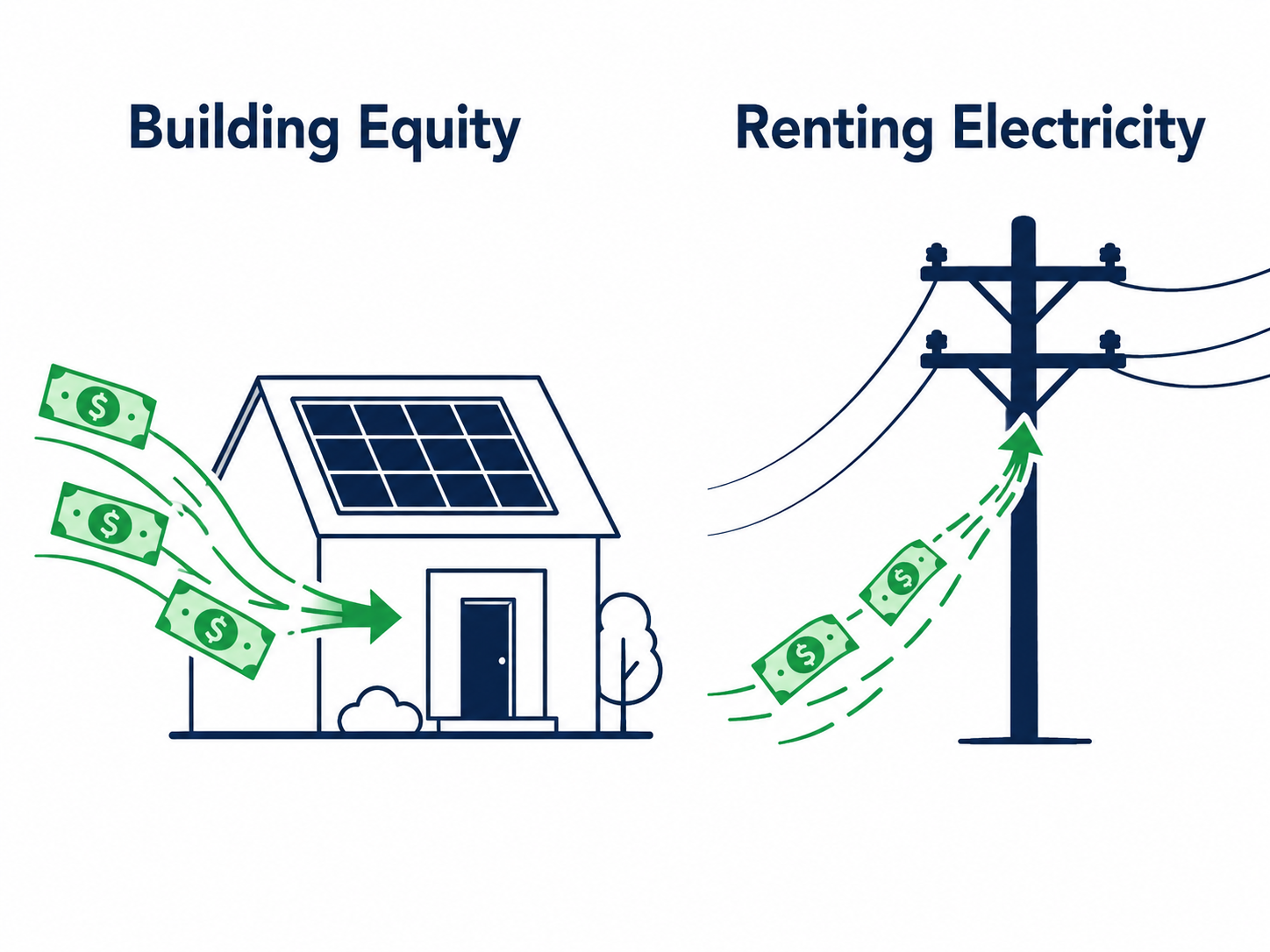
The $280 solar payment is paying down equipment installed on my property. The remaining $101.63 paid for the additional grid electricity my house needed during one of the most demanding months of the year.
So yes, in that worst-month comparison, I paid about the same amount as I did before solar. But now that payment also gives me:
- A 10.53 kW solar array
- Two Powerwall 3 batteries
- 27 kWh of nominal battery storage
- Whole-house backup capability
- Reduced dependence on grid electricity
- Greater control over when I import and export power
- More protection from future utility-rate increases
- A house that can continue operating when the grid fails
That last point matters to me more than a sales-sheet payback calculation.
Hurricane Beryl left our neighborhood without power for five days. My wife could not use her CPAP. We did not have solar or batteries yet, and that experience was the reason I started designing a system for our own house.
The system does not give us infinite power. During a long outage, we would still have to pay attention to the weather, battery level, solar production, air-conditioning demand, and other heavy loads.
But we are no longer sitting in a dark house with no local source of power and no control over the situation.
That is what my monthly payment purchased.
My Verdict
Was solar worth it for my house?
Yes.
That does not mean it is automatically worth it for every house in Texas.
If I had signed the approximately $72,000 proposal, the answer might have been no. An overpriced system can destroy the financial case before the first panel reaches the roof.
The system worked for me because I bought it at a much better price, matched the equipment to my actual loads and resilience goals, and chose a retail electric plan that worked with the batteries rather than against them.
I did not eliminate every electric bill. I did not create free electricity. I did not lock in a guaranteed return.
What I did was trade a large, unpredictable utility expense for a more stable total cost that also pays for equipment and gives my family whole-house backup capability.
For me, that was worth it.
Three Things to Check Before You Buy
1. The Gross Contract Price
Judge the system before applying tax credits, rebates, export assumptions, or optimistic savings projections. A bad price does not become a good price because a salesperson moves numbers around on the proposal.
2. The Retail Electric Plan
In Texas, the electric plan can materially affect the result. Check how the provider treats imported power, exported solar energy, battery dispatch, monthly charges, credit limits, and expiring credits. Verify the current terms before signing because these plans can change.
3. The Financing Terms
Do not evaluate the loan by the monthly payment alone. Look at the cash price, financed price, loan principal, interest rate, APR, dealer or lender fees, total amount paid over the life of the loan, any assumed early principal payment, and what happens if that payment is not made. A low advertised interest rate can be paired with a large fee added to the contract price.
More From the Solar Section


Want Another Proposal to Compare?
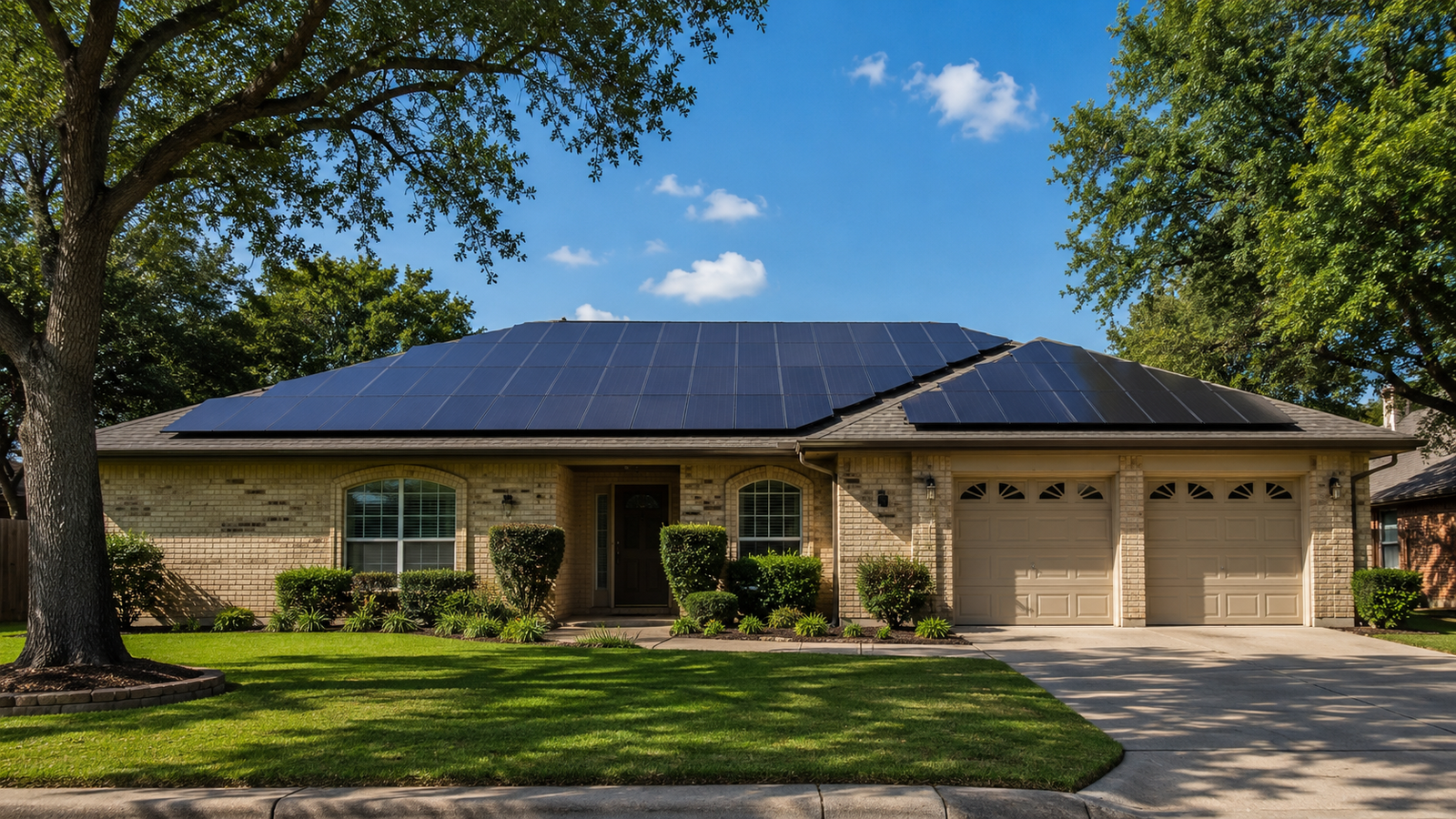
I hired Good Faith Energy for my own house because their proposal was far more reasonable than the first one I received, and I was satisfied with the system design and installation they delivered.
You can request a proposal from them and compare it with any other offers you receive.
Referral disclosure: I may earn a commission if you request a quote through this link and later become a customer. I hired Good Faith Energy for my own house before entering the referral relationship.
Disclaimer: The system sizes, costs, production, bills, and backup performance described here are based on my own home, equipment, financing, and electric plan. Results vary by location, weather, shading, roof layout, household loads, equipment settings, utility requirements, financing, and system design. I am an electrical designer, not a licensed financial advisor or tax professional. Nothing on this page should be considered financial or tax advice.