
What Hurricane Beryl Taught Me About Solar Power Outage in Texas
Does Solar Work During a Texas Power Outage?
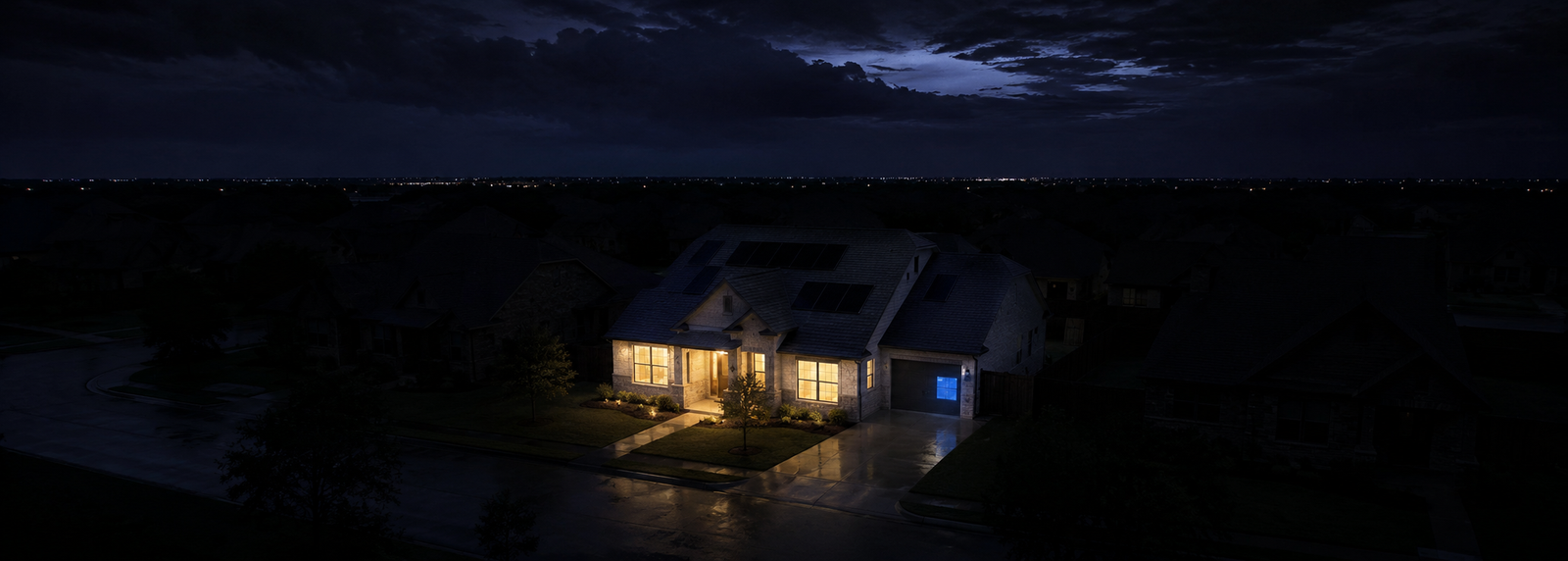
Most grid-tied solar panels shut down when the utility goes out. Add properly configured battery storage, and the same array can keep serving the house while remaining safely disconnected from the grid. Hurricane Beryl is what made me build our system around that difference.
The Short Answer: Batteries Change Everything
A standard grid-tied solar system normally shuts down when the utility grid fails. The panels may be sitting in full Texas sun, but the system cannot continue powering the house as though nothing happened.
That is not a defect. It is a required safety function. Utility crews need to be able to treat a failed line as de-energized. A solar inverter cannot keep sending electricity onto that line while someone is trying to repair it.
A properly configured solar-and-battery system works differently. Backup equipment isolates the home from the utility, creates a local electrical system on the property, and allows the solar array and batteries to continue serving the backed-up loads.
That is the difference between owning solar panels and owning an outage-backup system.
What Hurricane Beryl Taught Me About Solar Power During a Texas Outage
Hurricane Beryl made landfall near Matagorda on July 8, 2024, then moved through the Houston area. Our house avoided major storm damage, but the electrical grid did not recover nearly as quickly.
Our neighborhood lost power, and it stayed off for five days.
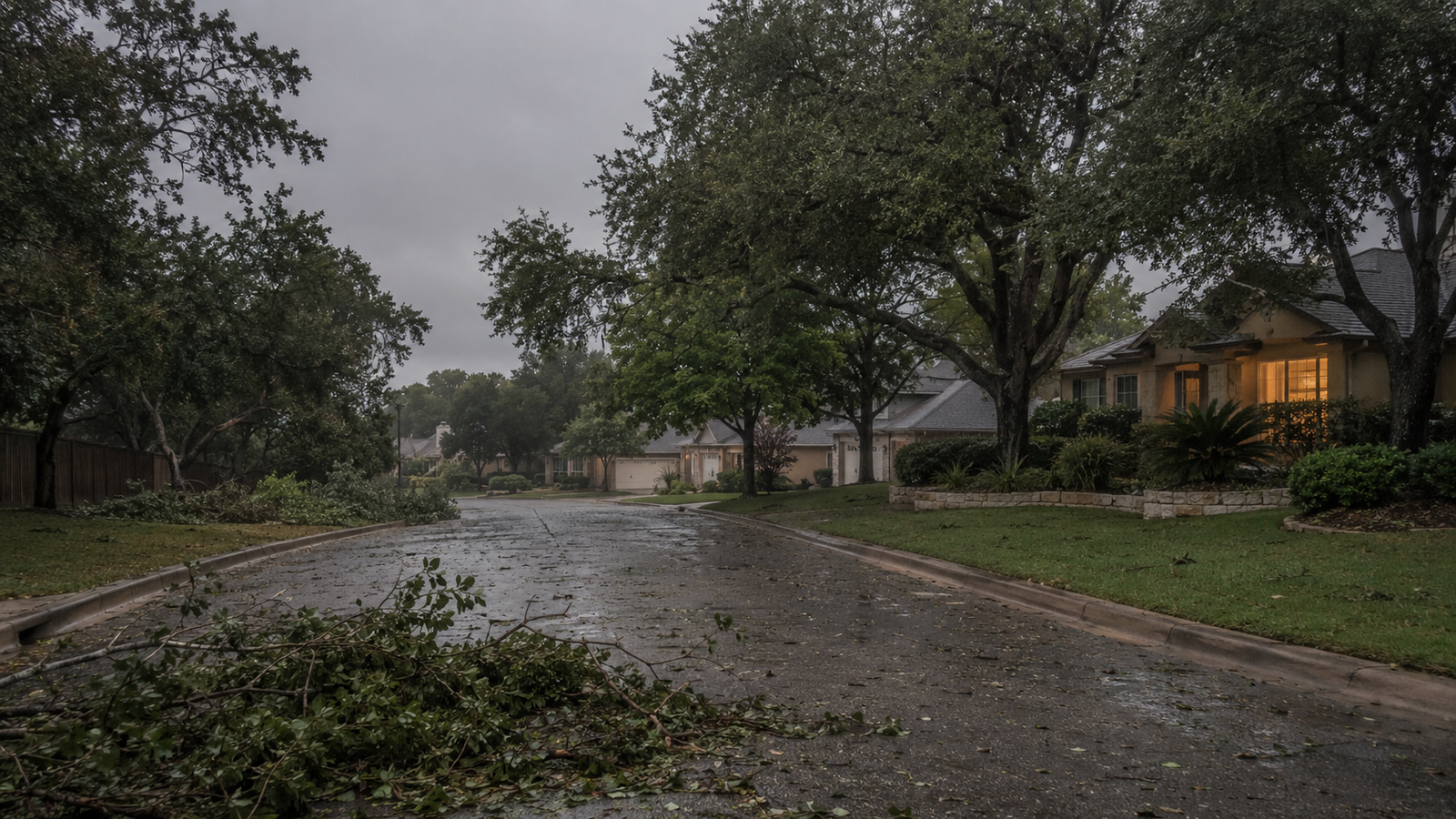
At the time, we did not yet have our solar and battery system. My wife uses a CPAP machine while sleeping, and she could not use it during the outage. We were hot without air conditioning, but losing access to that medical equipment was what changed the situation for me.
I already worked in utility-scale PV and battery-storage design. I spent my days helping design systems for other people’s projects while my own house remained completely dependent on the grid. Beryl made that contradiction impossible to ignore.
That outage is why I stopped postponing our own system.
What Our Current System Would Have Done
The first day of Beryl was dark and heavily overcast. Our two Powerwalls would have started with whatever energy they had stored, but the array would not have produced enough that morning to run the house and fully replace what we used.
Depending on the starting charge and the loads we kept running, we might have reached the reserve level later that day or during the night. We could have reduced consumption and stretched the batteries, but I will not pretend the system creates sunlight that is not there.
The following day was bright, sunny, and hot. The 10.53 kW array would have carried the daytime household loads while recharging the batteries for the next night.
From there, the intended cycle could resume: solar powers the house and charges the batteries during the day, and the Powerwalls carry the house after sunset.
That is what we designed the system to do.
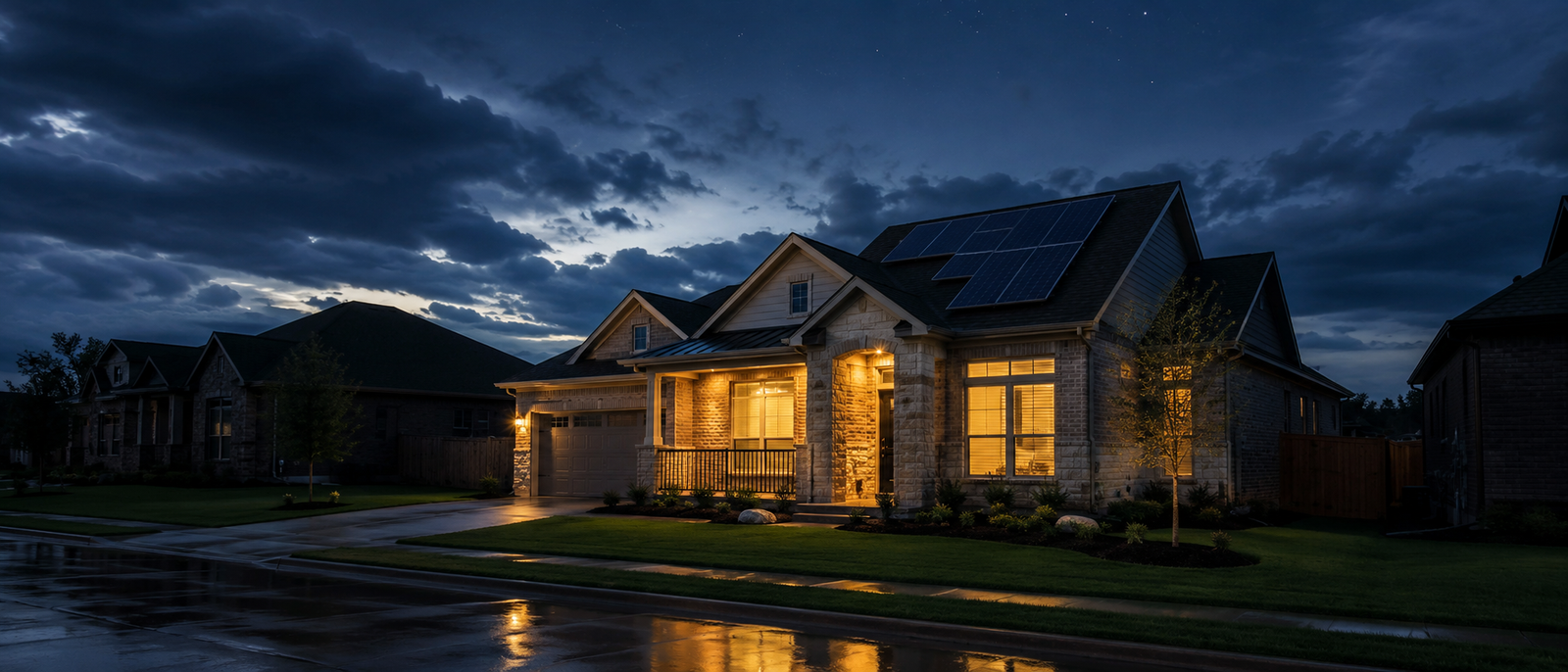
Our installation includes a 10.53 kW DC array and two Tesla Powerwall 3 units with 27 kWh of nominal battery capacity. It is configured for whole-home backup rather than a small critical-load panel.
A smaller array, a single battery, or a partial-home configuration would behave differently. The right outage system is not simply “solar plus one battery.” It has to be designed around the household loads, the weather, and how long the homeowner wants to remain functional without the utility.
Why Solar Panels Shut Down with the Grid
This is the part that surprises many homeowners. They see panels on the roof and assume sunlight should mean electricity inside the house.
A normal grid-connected inverter constantly monitors the voltage and frequency coming from the utility. When those conditions disappear or move outside the allowed range, the inverter stops exporting power and disconnects.
This protection prevents the house from energizing utility lines during an outage. A lineworker may be repairing equipment under the assumption that the circuit is dead. Electricity flowing backward from a private solar system could injure or kill that worker.
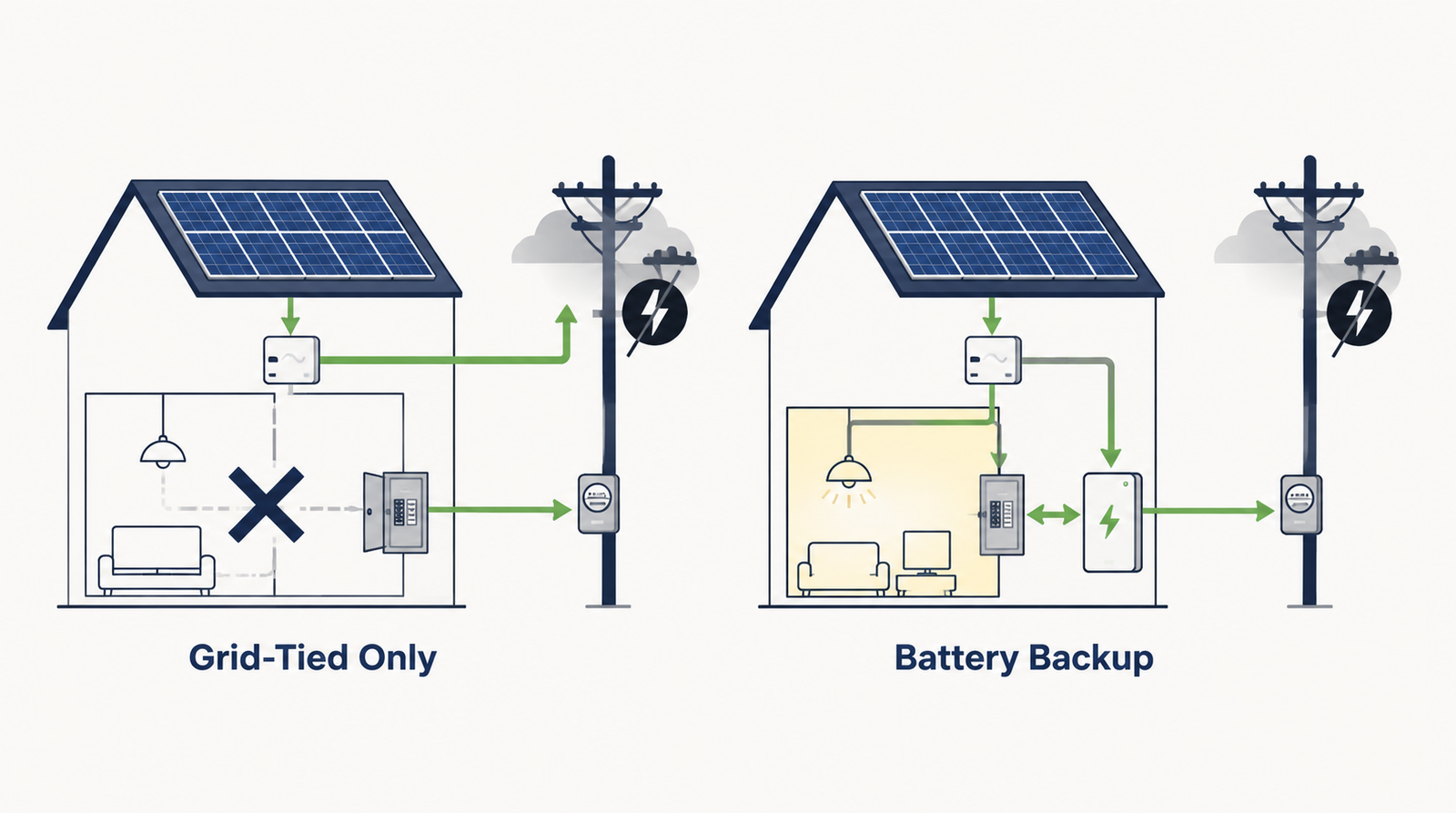
Battery-backed systems add another layer of equipment. In our system, the Tesla backup equipment separates the home from the utility during an outage. Once isolated, the Powerwalls establish the local voltage and frequency needed for the home and solar equipment to operate as a small, independent electrical system.
The utility line remains de-energized from our side, while the house continues operating behind the isolation equipment.
This is why simply adding a battery-shaped box to a solar installation does not automatically create backup power. The battery, inverter, controls, service arrangement, and isolation equipment must all support outage operation and be installed as a complete system.
Want to go deeper on how this works?
Sean White’s Solar Photovoltaic Basics is the clearest explanation of grid-tied systems, anti-islanding protection, and battery backup that I have found. It is also used in NABCEP certification training.
View Solar PV Basics on AmazonHow Much Solar and Battery Storage Does Outage Backup Require?
There is no honest answer based only on house size or a previous electric bill. Outage performance comes down to energy and power.
Power Determines What Can Run at the Same Time
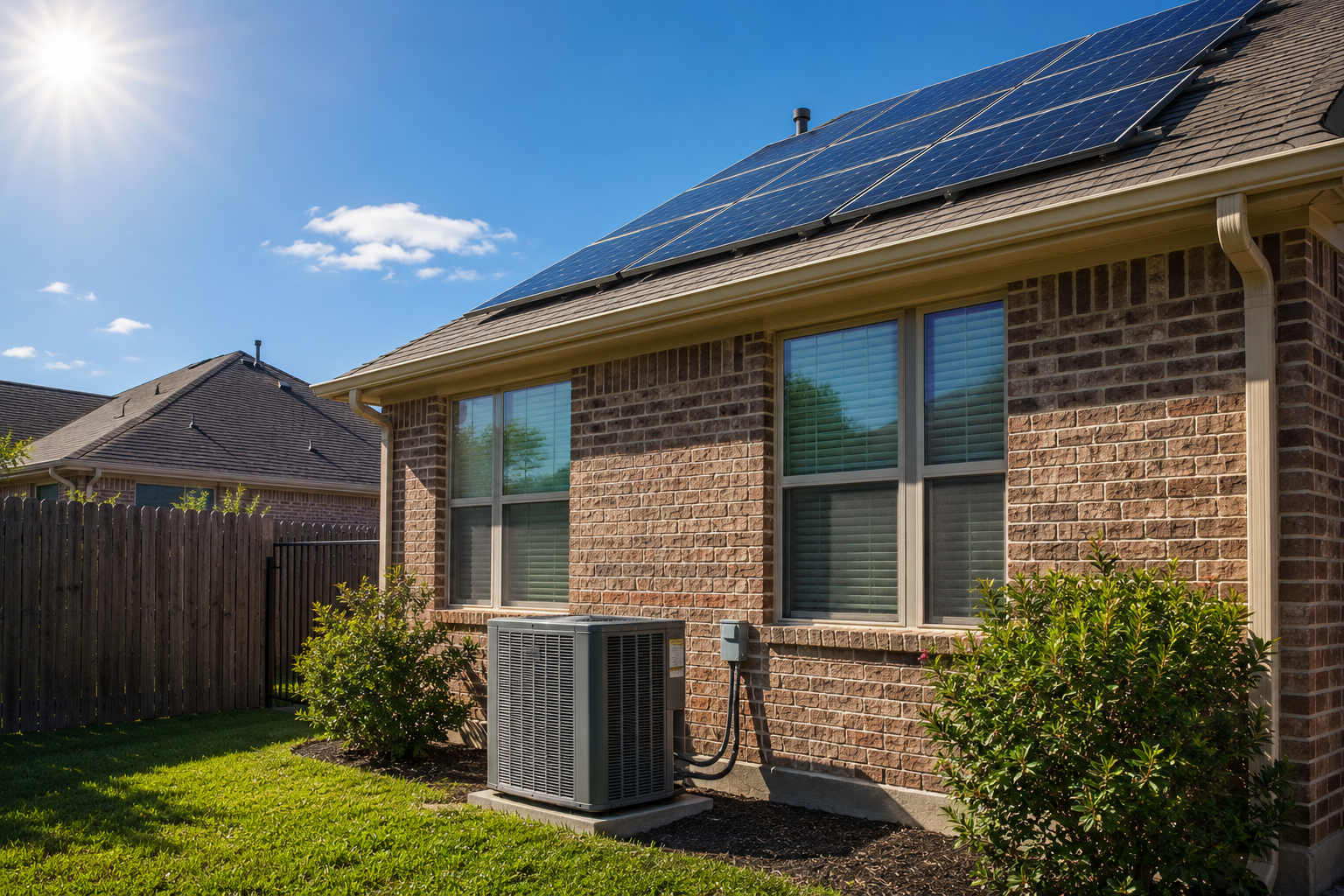
The batteries and inverter must provide enough instantaneous output to start and operate the equipment connected to the backup system. Central air conditioning, pumps, electric water heaters, ovens, dryers, and EV chargers can all place substantial demand on the system.
Energy Determines How Long It Can Run
Battery capacity is measured in kilowatt-hours. Two Powerwalls give us approximately 27 kWh of nominal stored energy. How long that lasts depends entirely on what the house is drawing.
A house averaging 2 kW would use roughly 24 kWh in 12 hours. A house averaging 4 kW would use that amount in about six hours. Actual battery availability, reserve settings, conversion losses, temperature, and changing loads all affect the real result.
The Array Has to Run the House and Replace the Energy Used Overnight
During a long outage, the daytime solar array has two jobs. It must carry the house while the sun is up, and it must put enough energy back into the batteries to reach the next morning.
That is why the smallest system that lowers an electric bill may not be the right system for resilience. An array designed only around annual offset can still struggle during a high-load summer outage if it cannot meet the daytime demand and recharge the batteries before sunset.
Our 10.53 kW array and two Powerwall 3 units were selected around whole-home backup, nighttime storage, and the ability to recover on a clear day after poor weather.
Before signing a contract, ask the installer to show you:
- Your measured or estimated peak backup load
- Your largest motor-starting load
- Your expected overnight energy use
- Your usable battery reserve
- Expected solar production during poor and average weather
- Whether the array can run daytime loads and recharge the batteries on the same day
- Which loads, if any, should be managed during an extended outage
Do not settle for “this should run the house.” Ask to see the load assumptions behind that statement.
What Whole-Home Backup Does Not Mean
Whole-home backup means the backup system is connected so the entire house remains available. It does not mean every appliance can run at full demand forever.
If we run the central air conditioner, electric cooking equipment, dryer, water heater, and other major loads at the same time, the house can consume stored energy much faster than it would under normal overnight conditions.
During an extended outage, we still have to watch the weather and the battery’s state of charge. A dark, stormy day may call for a higher thermostat setting, delaying laundry, or avoiding other heavy loads until the array is producing strongly again.
The equipment also has to survive the event. If wind, hail, debris, or a falling tree damages the roof, wiring, panels, service equipment, or batteries, the backup system may be reduced or completely unavailable.
Insurance coverage, roof condition, equipment placement, drainage, wind exposure, and installer workmanship all matter.
None of this applies to a standard grid-tied array without backup capability. Those panels will normally shut down with the utility, even in bright sunlight.
Adding batteries to an existing solar installation may be possible, but compatibility, service equipment, available space, controls, permitting, and system architecture can make the retrofit more involved than simply attaching another component.
Want to Know What Whole-Home Backup Would Require at Your House?
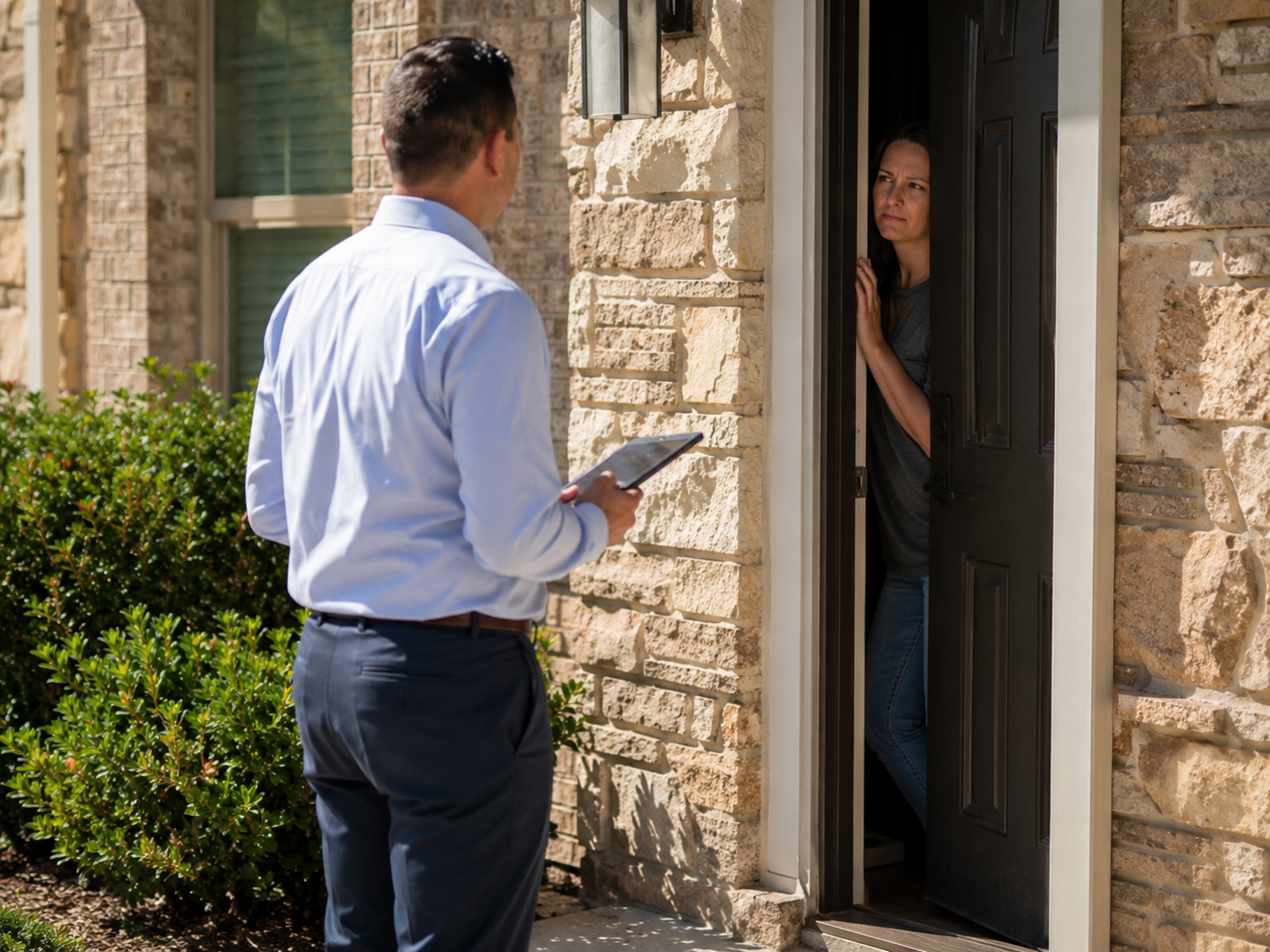
Good Faith Energy designed and installed the system at my own home. I chose them after comparing their proposal with a much more expensive door-to-door offer and working directly with their engineering team on the system design.
A proper proposal should be based on your energy use, major electrical loads, roof, service equipment, outage goals, battery configuration, and local utility requirements. It should not be a generic system size pulled from a sales presentation.
Referral disclosure: I may earn a commission if you request a quote through my link and later become a customer. I hired Good Faith Energy for my own house before entering the referral relationship.
Request a Good Faith Energy QuoteMore From the Solar Cluster
Important: The system sizes, costs, outage expectations, and performance described here are based on my own home and equipment. Solar production and backup duration vary by location, weather, shading, roof layout, household loads, equipment settings, utility requirements, and system design. A qualified installer should perform the final site and load evaluation.
Affiliate disclosure: This page contains a referral link to Good Faith Energy. If you request a quote through that link and later become a customer, I may earn a commission at no additional cost to you. I used Good Faith Energy for my own home installation before entering the referral relationship. All opinions are my own.