
Understanding the Pull-Up Effect in Leather
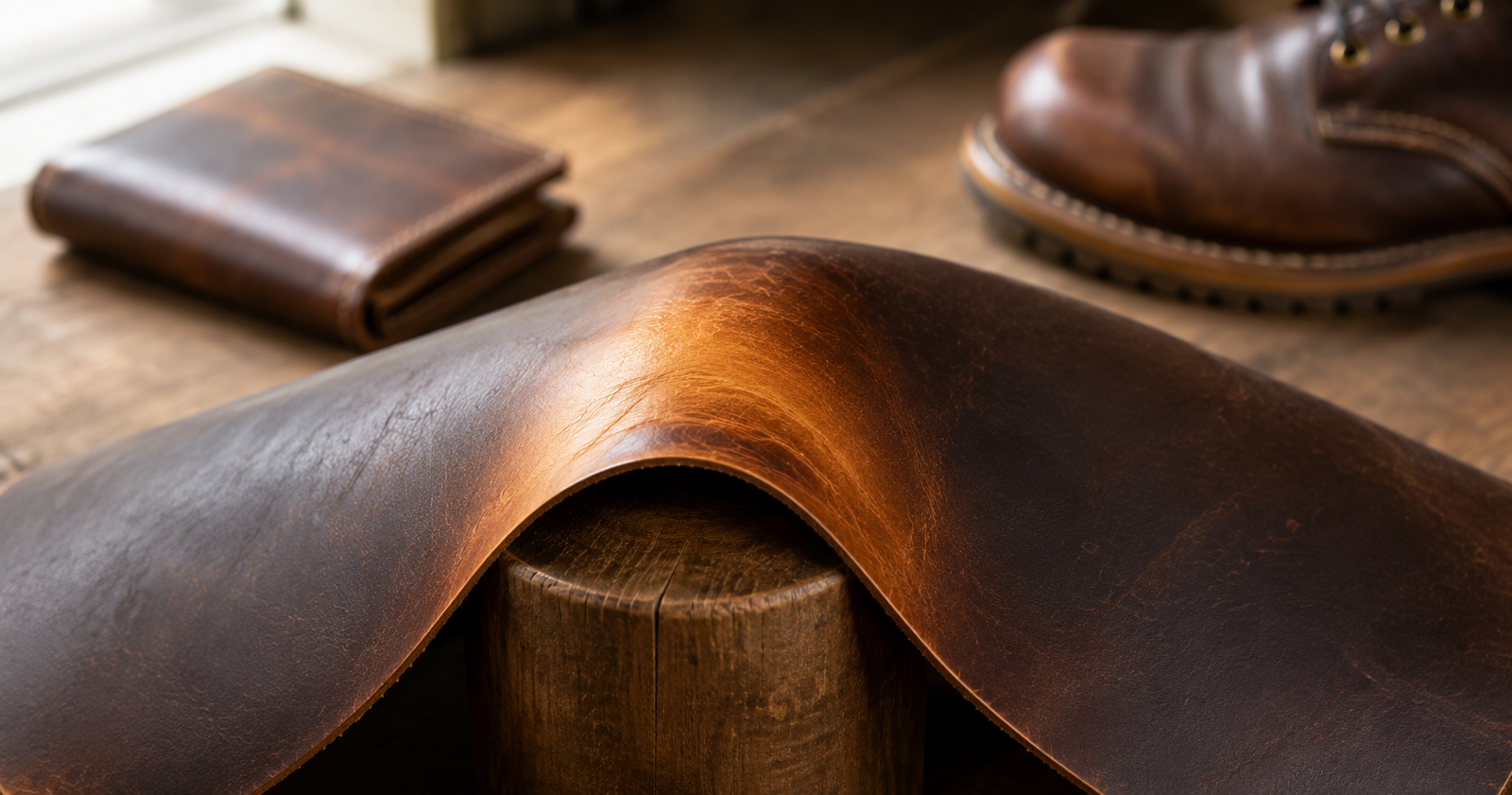
Spend enough time browsing leather suppliers and you will eventually see a hide described as having a strong or dramatic pull-up effect. The photographs usually show dark leather turning noticeably lighter where it is bent.
Pull-up leather is not one tanning method or one specific type of hide. The term describes leather that changes color when it is bent, stretched, folded, or pressed. Oils, waxes, and other conditioning materials move within the leather under tension, revealing a lighter undertone in that area.
That movement gives pull-up leather its familiar depth and variation. A finished bag, wallet, or pair of boots may show lighter bends, darker handling areas, scuffs, and polished high spots rather than staying one perfectly even color.
This guide explains how the pull-up effect works, how the leather changes with use, where it performs well, and what to check before buying it for a project.
How the Pull-Up Effect Works
The basic idea: When pull-up leather bends, conditioning materials move away from the stressed area and the color appears lighter. When the leather relaxes or is rubbed, some of that color may darken again.
Pull-up leather contains enough mobile oils, waxes, fats, or similar conditioning materials to create a visible color shift under tension. When the leather is folded, the fibers spread and the concentration of those materials changes around the bend.
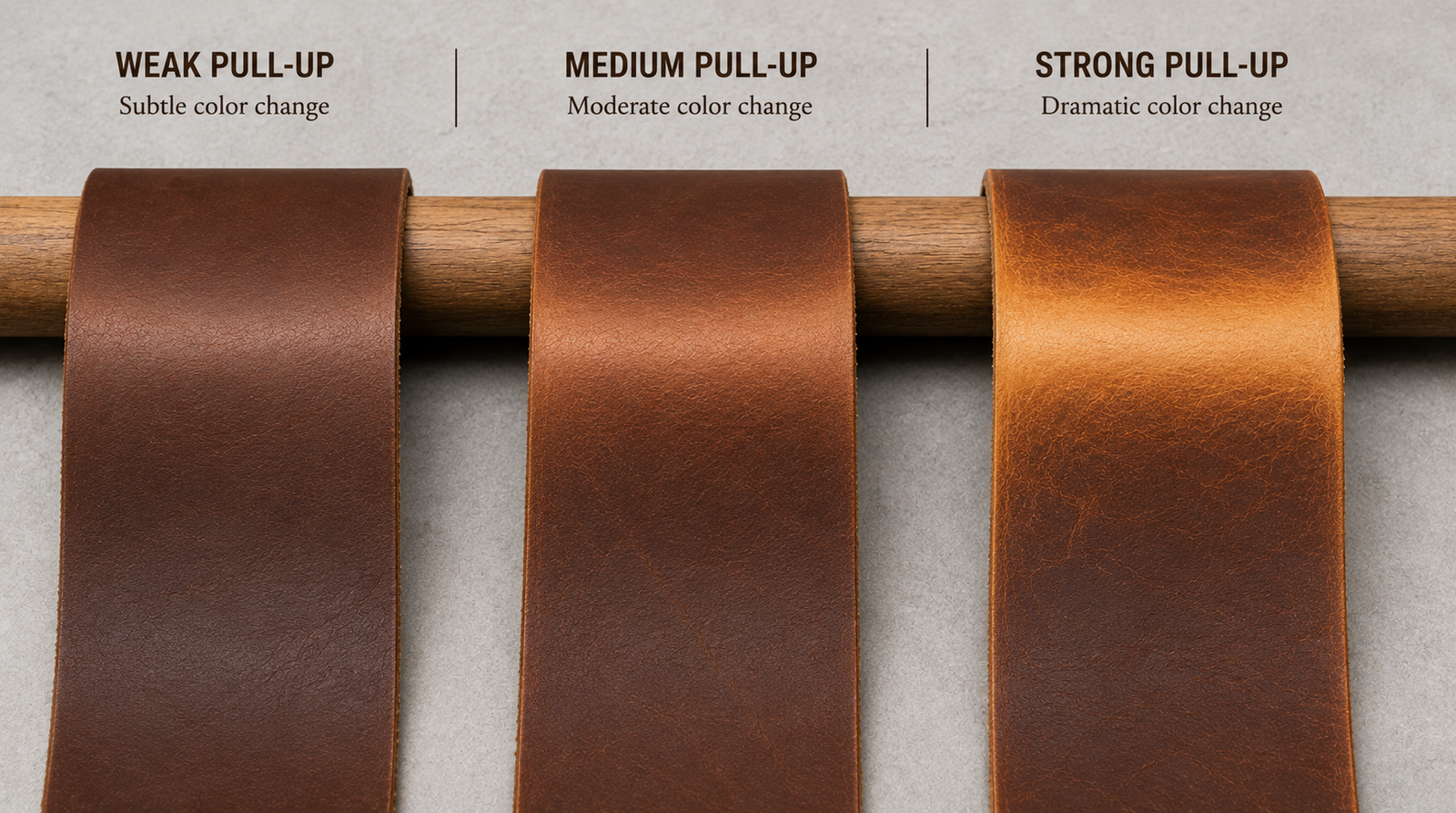
The result is a lighter streak or patch that follows the curve. A strong pull-up article may change from dark brown to amber along a sharp fold. A subtler article may show only a slight tonal change.
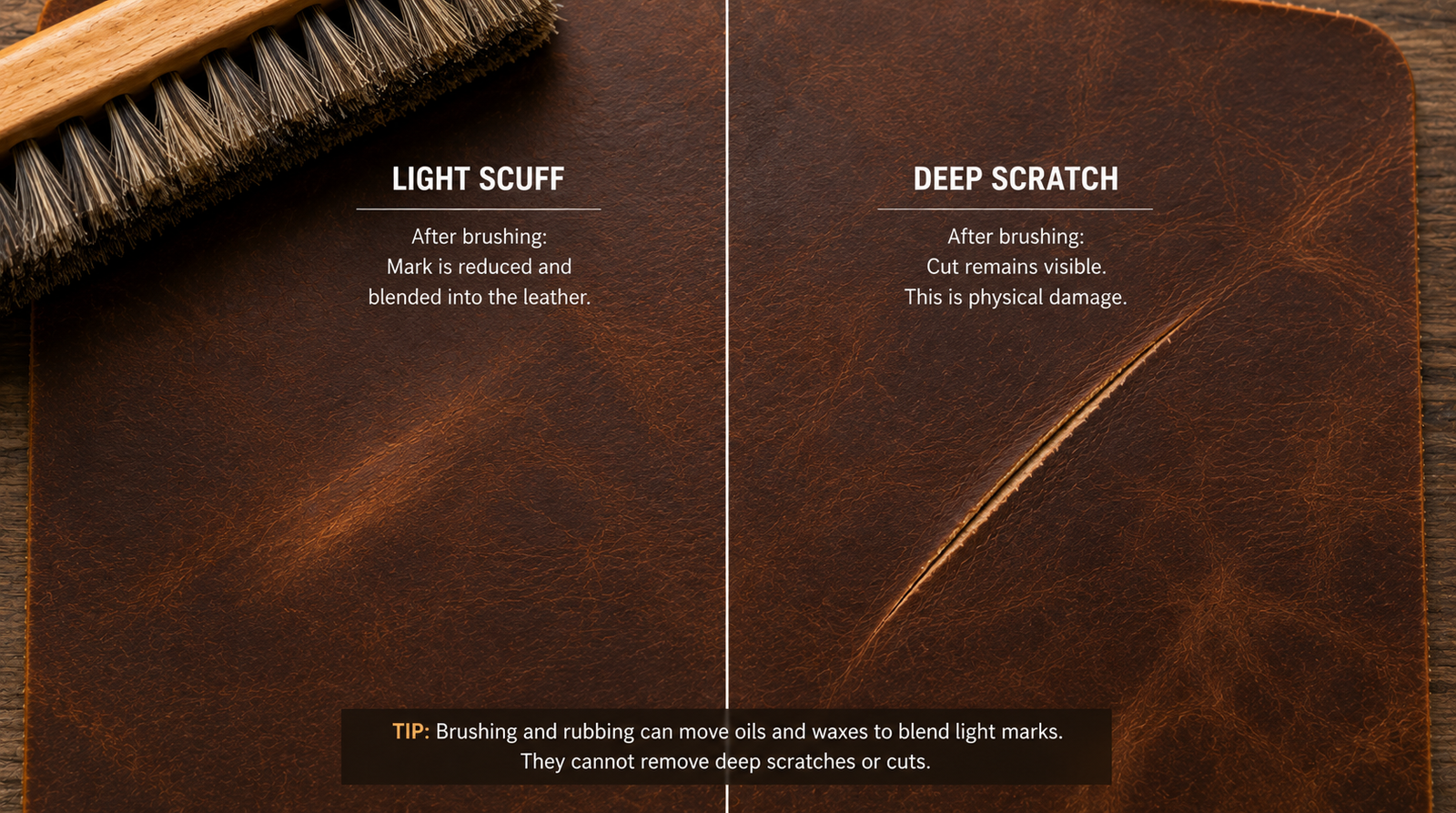
Rubbing the area with a finger, cloth, or brush can warm and redistribute some of the conditioning materials. Light pressure marks may darken or blend into the surrounding leather, but the result depends on the article. The color may not return perfectly, and a true cut or deep scratch will still be physical damage.
Pull-up leather may be chrome tanned, vegetable tanned, combination tanned, or produced through another recipe. The pull-up effect describes what the leather does when flexed. It does not identify the complete tannage.
Horween Chromexcel is one widely recognized example, but it represents only one style of pull-up leather. Other articles may be firmer, drier, softer, more heavily waxed, or much more dramatic when bent. Horween is known for producing Chromexcel alongside several other distinct leather articles.
What Pull-Up Does Not Tell You
“Pull-up” is useful information, but it is not a complete leather specification. Two hides can both show a strong color change and still feel completely different on the bench.
The term does not tell you:
- Tannage: Pull-up leather is not automatically chrome tanned or combination tanned.
- Temper: One article may be soft and floppy while another is firm enough for a structured bag.
- Thickness: The same article may be sold at several weights or split to order.
- Surface protection: Some pull-up leather is very open and mark-prone. Other articles have a light protective finish.
- Edge behavior: One hide may burnish reasonably well while another remains waxy, fibrous, or resistant to slicking.
- Colorfastness: Dark dyes, oils, and waxes may transfer differently depending on the article and finish.
Use the pull-up description to understand the visual effect. Use the article name, tannage, temper, weight, finish, and supplier notes to decide whether it fits the project.
How Pull-Up Leather Ages
Pull-up leather is chosen partly because it does not stay visually unchanged. Folds become more visible, handled areas darken, high spots polish, and the surface collects marks from ordinary use.
How quickly that happens depends on the leather, color, finish, product, and owner. A light-colored wallet carried in a pocket may change rapidly. A darker bag used occasionally may develop its character more slowly.
Light marks may blend
Some shallow scuffs and pressure marks can be reduced by rubbing the area with a clean finger, soft cloth, or horsehair brush. This moves surface waxes and oils and can make the mark less noticeable.
That is different from repairing the leather. A deep scratch cuts or displaces fibers and may remain visible. Heavy rubbing can also polish one area more than the rest, especially on matte or lightly finished leather.
Patina is not the same as neglect
Natural darkening, bending, and surface variation are part of the appeal. Cracked fibers, dried-out folds, mildew, dye transfer, and damaged finishes are maintenance problems rather than desirable patina.
Before adding conditioner, follow the tannery or supplier’s care guidance when available. Pull-up leather already contains substantial conditioning materials, and adding more can darken the color, soften the temper, increase transfer, or leave the surface greasy.
Bench note: Always test brushing, rubbing, cleaner, or conditioner on an offcut or hidden area first. Color changes are especially noticeable on lighter pull-up leather.
Working with Pull-Up Leather
Pull-up leather can be pleasant to cut and assemble, but its oily or waxy character changes how it responds to marking, glue, edge finishing, and handling.
Expect visible handling marks
Folding, pressing, stacking, and even gripping a piece firmly can create temporary light areas. Handle matching panels in the same way and keep the grain protected from hard tools, dirty benches, and rough storage surfaces.
Test adhesives
Heavy oils and waxes can interfere with some adhesives. Scuffing the flesh side lightly or choosing an adhesive suited to oily leather may improve the bond, but test the complete assembly before trusting it at a stressed seam.
Watch for transfer
Some pull-up leather can transfer dye, oil, or wax onto light fabric, paper, thread, or lining leather. Rub an offcut with a clean white cloth before pairing it with pale materials.
Choose the edge treatment by the leather
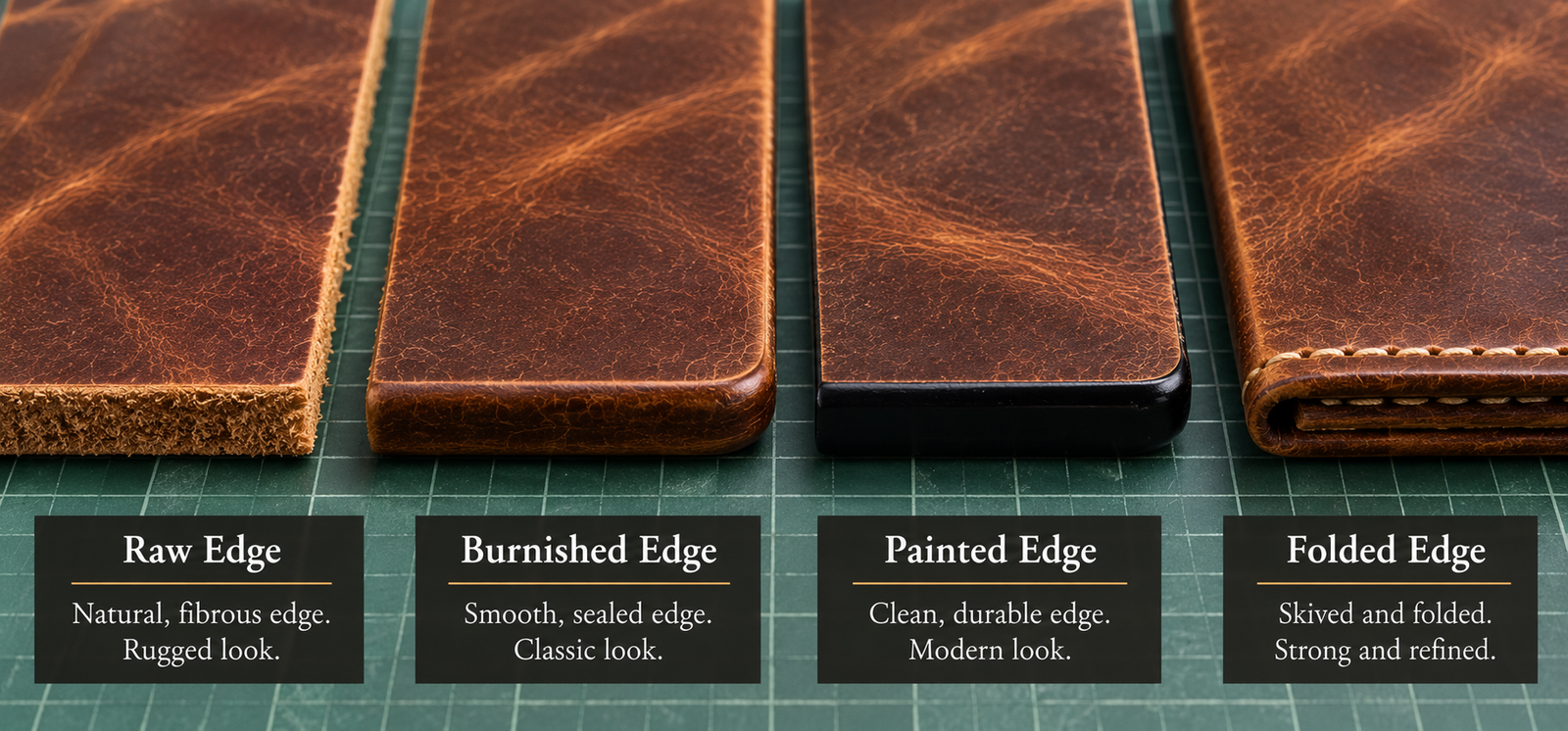
Some pull-up leathers can be sanded and burnished. Others remain soft, waxy, or fibrous and look better with a carefully cut raw edge, folded construction, turned edge, binding, or edge paint.
Water and burnishing compound alone will not produce the same result on every article. Make a finished edge sample before cutting the full project.
Plan for color movement
Skiving, folding, stitching, and turning the leather can all create lighter areas. This can make a project look rich and dimensional, but it can also make paired pieces look mismatched if they were cut from different parts of the hide.
Bench note: Cut matching exterior panels close together and in the same direction whenever possible.
Where Pull-Up Leather Works Best
Pull-up leather works especially well when visible use and color movement support the design rather than fighting it.
Good uses include:
- Boots and casual footwear
- Messenger bags, briefcases, and backpacks
- Wallets and card holders
- Watch straps and casual belts
- Notebook covers and portfolios
- Tool rolls and rugged cases
It may be a poor fit when the customer expects perfectly uniform color, a pristine surface, crisp tooling, or a finish that looks unchanged after handling.
Soft pull-up leather may also need reinforcement for structured bags, handles, straps, and closures. The visual effect does not tell you whether the leather can support the construction by itself.
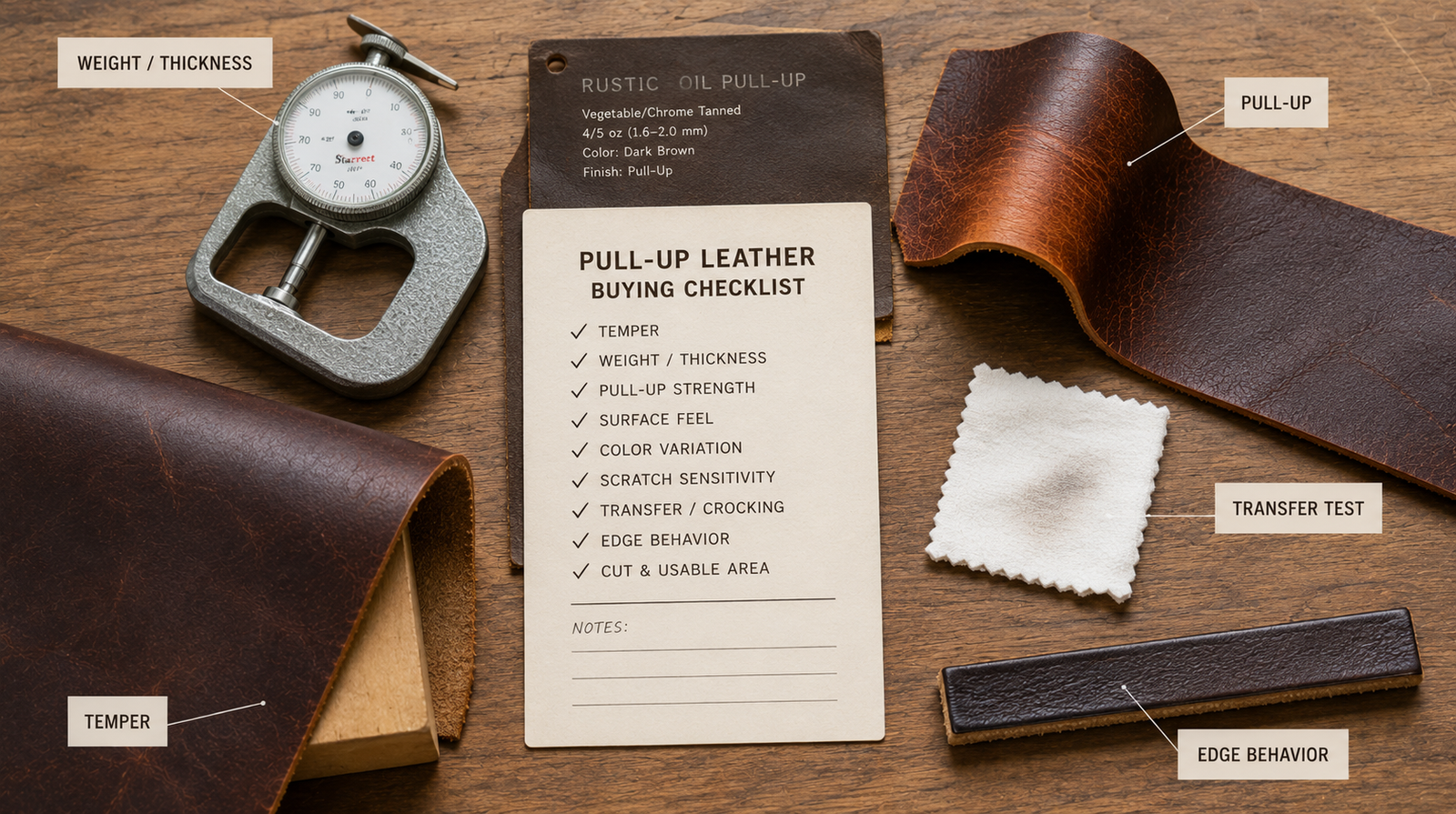
What to Check Before Buying Pull-Up Leather
Supplier photographs usually show the color change at its most dramatic. Before ordering, look beyond the folded sample and check the full specifications.
- Temper: Is it soft, medium, firm, or boardy?
- Weight: Is the supplied thickness appropriate for the project?
- Pull-up strength: Does it show a subtle shift or a dramatic two-tone bend?
- Surface feel: Is it dry, waxy, oily, slick, matte, or tacky?
- Color variation: How much difference should you expect across the hide?
- Scratch sensitivity: Does it mark from light contact?
- Transfer: Has the seller noted crocking, oil transfer, or dye rub-off?
- Edge behavior: Does the supplier recommend raw edges, burnishing, folding, or edge paint?
- Cut and usable area: Will the hide provide matching sections large enough for the project?
Whenever possible, order a sample or small panel before committing to a full side. A photograph can show the color, but it cannot tell you the temper, hand, smell, surface feel, or how the leather behaves under your tools.
Where to Buy Pull-Up Leather
Many leather suppliers carry at least one pull-up article, but the available tannages, tempers, weights, colors, and finishes vary widely. Compare the exact article rather than shopping from the words “pull-up leather” alone.
For consistent production, pay attention to reorder availability. Closeout pull-up leather can offer excellent value, but the exact color or finish may disappear once the current lot sells out.
Use our supplier directory to compare sources for pull-up leather, boot leather, bag leather, tannery articles, full sides, panels, and closeouts. Check the individual listing for temper, weight, tannage, and expected surface variation.