
What You Need to Know Before You Buy
Once you spend some time buying leather, you begin noticing that better suppliers do more than list the color, weight, and tannage. They also tell you which tannery made it.
That name gives you useful information. Established named tanneries build their reputations around particular recipes, processes, finishes, and types of leather. Horween Chromexcel, Hermann Oak tooling leather, and Badalassi Carlo Pueblo are not interchangeable products with different labels. They have different tempers, surfaces, working characteristics, and ways of aging.
The tannery name is not a complete guarantee, though. You still need to look at the specific article, thickness, temper, grade, finish, and part of the hide being sold. Two leathers from the same tannery may be intended for completely different kinds of work.
This guide introduces three widely recognized tanneries and explains what makers generally look for in their best-known leathers.
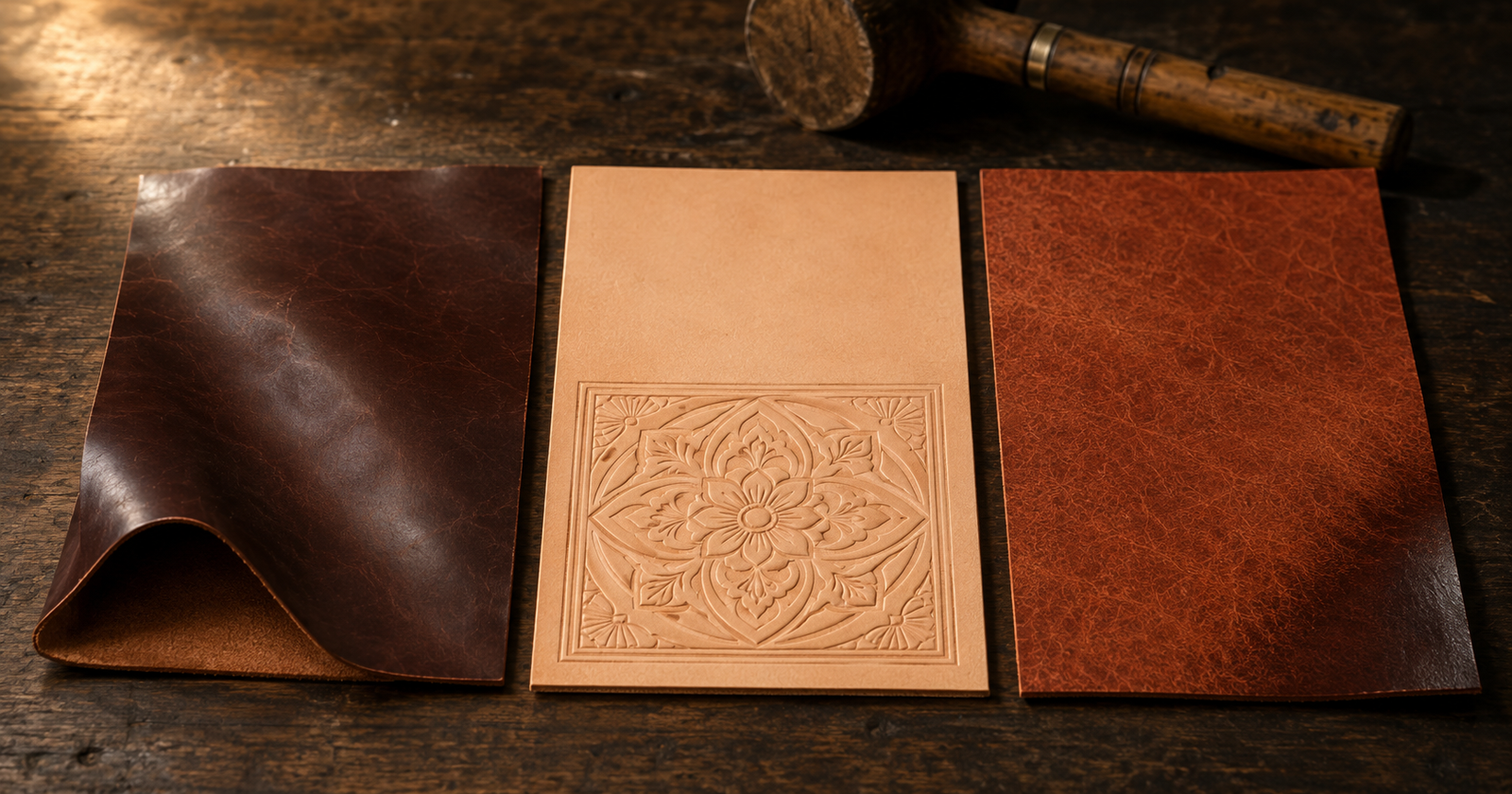
Three tanneries, three completely different leathers. Left to right: Horween pull-up, Hermann Oak tooling leather, Badalassi Carlo Pueblo. Same bench, different results.
What a Tannery Name Actually Tells You
A tannery name gives you a starting point, not the entire specification. It can tell you something about the process, consistency, finishing style, and reputation behind the leather. It also makes it easier to buy the same article again instead of trying to match an unnamed hide from a vague product description.
What it does not tell you by itself is whether that particular hide is right for your project. You still need to check:
- The article name: Chromexcel and Dublin may both come from Horween, but they are not the same leather.
- Weight and temper: Thickness does not tell you whether a hide is firm, soft, floppy, or springy.
- Grade and cut: A tannery can make excellent leather, but the section and grade selected by the distributor still matter.
- Finish and color: Surface treatments can affect scratching, burnishing, patina, and color transfer.
The tannery name narrows the field. The article specifications tell you whether the leather belongs on your bench.
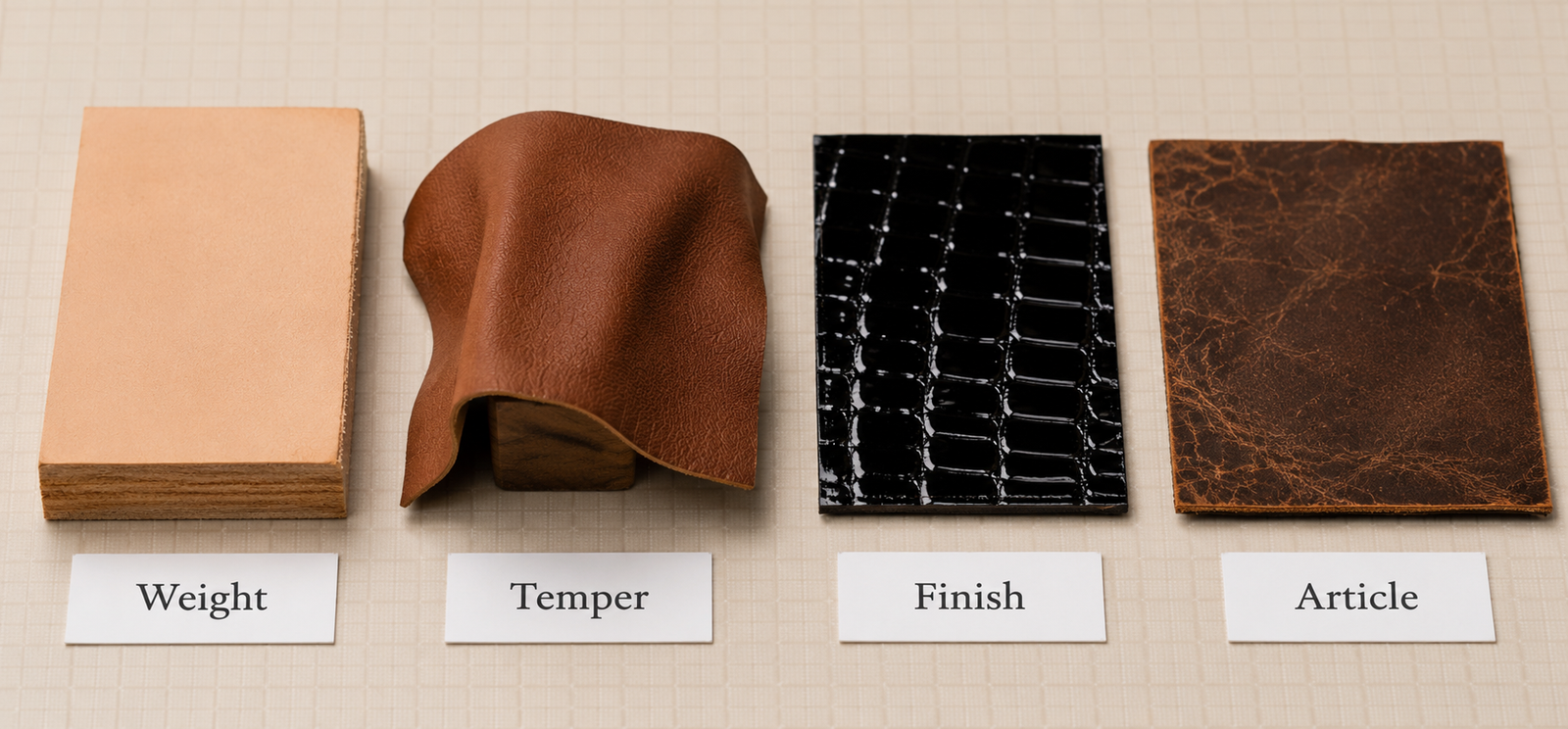
A tannery name is one piece of information. Weight, temper, finish, and article are four more. All five matter before you cut.
Horween Leather Company (USA )
Known for: Chromexcel, Genuine Shell Cordovan, football leather, and rich pull-up finishes.
Horween has operated in Chicago since 1905 and is one of the best-known American tannery names. Its catalog covers several very different kinds of leather, including footwear leathers, sporting-goods leather, horsehide shell cordovan, and combination-tanned articles.
The product most leathercrafters are likely to encounter is Chromexcel. It is a heavily conditioned pull-up leather with a rich waxy feel. When the leather bends or stretches, the oils and waxes move within it, causing the color to lighten temporarily in that area.
Chromexcel is popular for boots, bags, wallets, watch straps, and other projects where softness, visible pull-up, and a developing patina are part of the design. It can also mark and scratch more easily than a firm tooling leather. Many light surface marks can be blended with rubbing or brushing, but that does not make the leather maintenance-free or literally self-repairing.
Bench note: Chromexcel can vary noticeably by weight, color, hide, and supplier selection. Buy enough for the full project when matching panels matters.
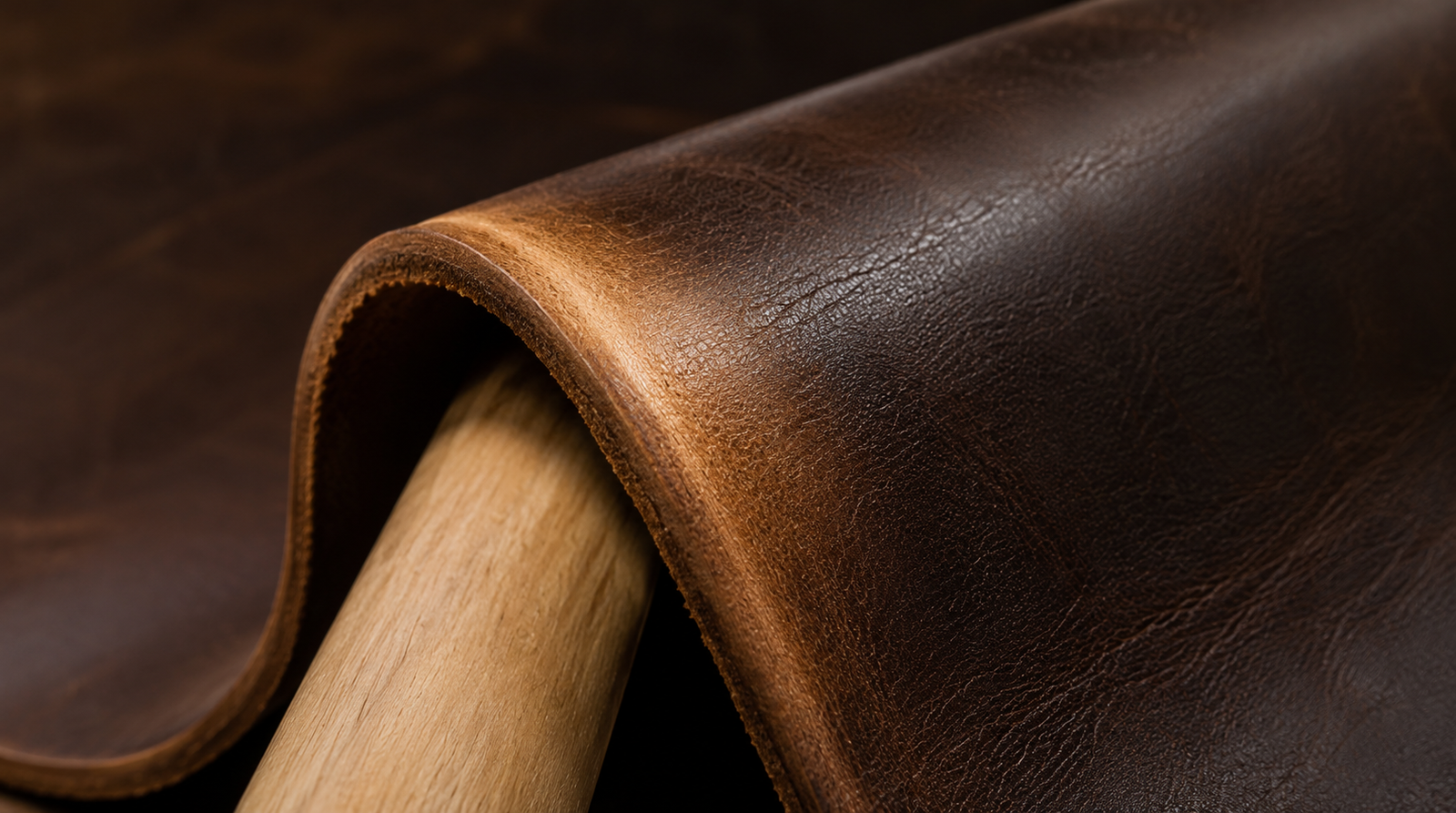
The pull-up effect in action. Where the leather bends and stretches, the internal oils and waxes move, causing the color to lighten temporarily. Flat areas stay dark.
Hermann Oak Leather (USA )
Known for: Firm vegetable-tanned leather for tooling, carving, belts, saddlery, and traditional leatherwork.
Hermann Oak has operated in St. Louis since 1881 and built its reputation around vegetable-tanned leather. Among leathercrafters, the name is especially associated with tooling sides, skirting leather, strap leather, and other firm articles made for structured work.
Good Hermann Oak tooling leather takes moisture evenly, accepts carving and stamping well, and holds a defined impression. That makes it a strong choice for belts, holsters, sheaths, saddlery, carved panels, and projects where the leather needs to keep its shape.
That firmness is not automatically an advantage for every project. It may be more leather than you need for a soft bag, turned wallet interior, garment, or project that needs an easy drape. Even within Hermann Oak leather, the weight, cut, grade, and individual hide can change how it feels on the bench.
Bench note: For carving or stamping, ask the supplier whether the piece is a tooling side, strap, skirting leather, or another article. “Hermann Oak” by itself is not a complete project specification.
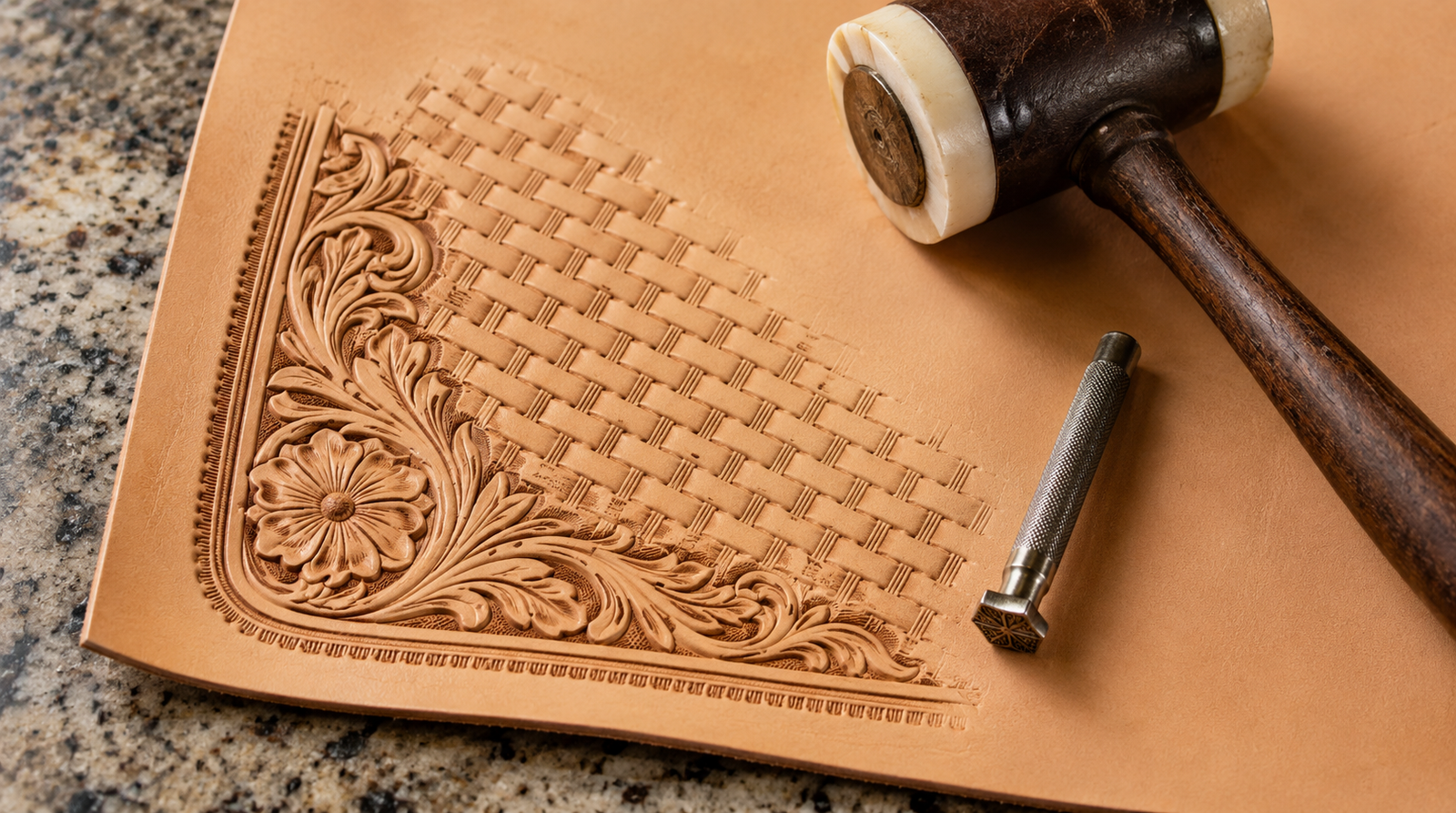
Hermann Oak tooling leather holds a clean, deep impression. The floral carving and basketweave show the kind of detail this leather is built for.
Badalassi Carlo (Italy )
Known for: Pueblo, Minerva Box, Minerva Smooth, and traditional Italian vegetable-tanned leather.
Badalassi Carlo is a Tuscan tannery and a member of the Genuine Italian Vegetable-Tanned Leather Consortium. Its leather is especially popular with wallet makers and small-goods makers who want rich color, visible character, and a surface that changes noticeably with handling.
Pueblo is probably the article most makers recognize. When new, it has a dry, matte surface with a deliberately distressed or scratched appearance. As it is handled, folded, and carried, high-contact areas gradually darken and become smoother and glossier.
That quick visual change is part of Pueblo’s appeal, but it is also something the buyer should understand before using it. The fresh surface will not remain evenly matte. Every touch, rub, and pocket ride contributes to the final look.
Badalassi also produces smoother and more pebbled articles that behave differently from Pueblo. Choosing the tannery is only the first step. The article name tells you which version of the Badalassi look you are actually buying.
Bench note: Pueblo is excellent when visible patina is part of the design. It is less suitable when the customer expects the original surface to remain perfectly uniform.
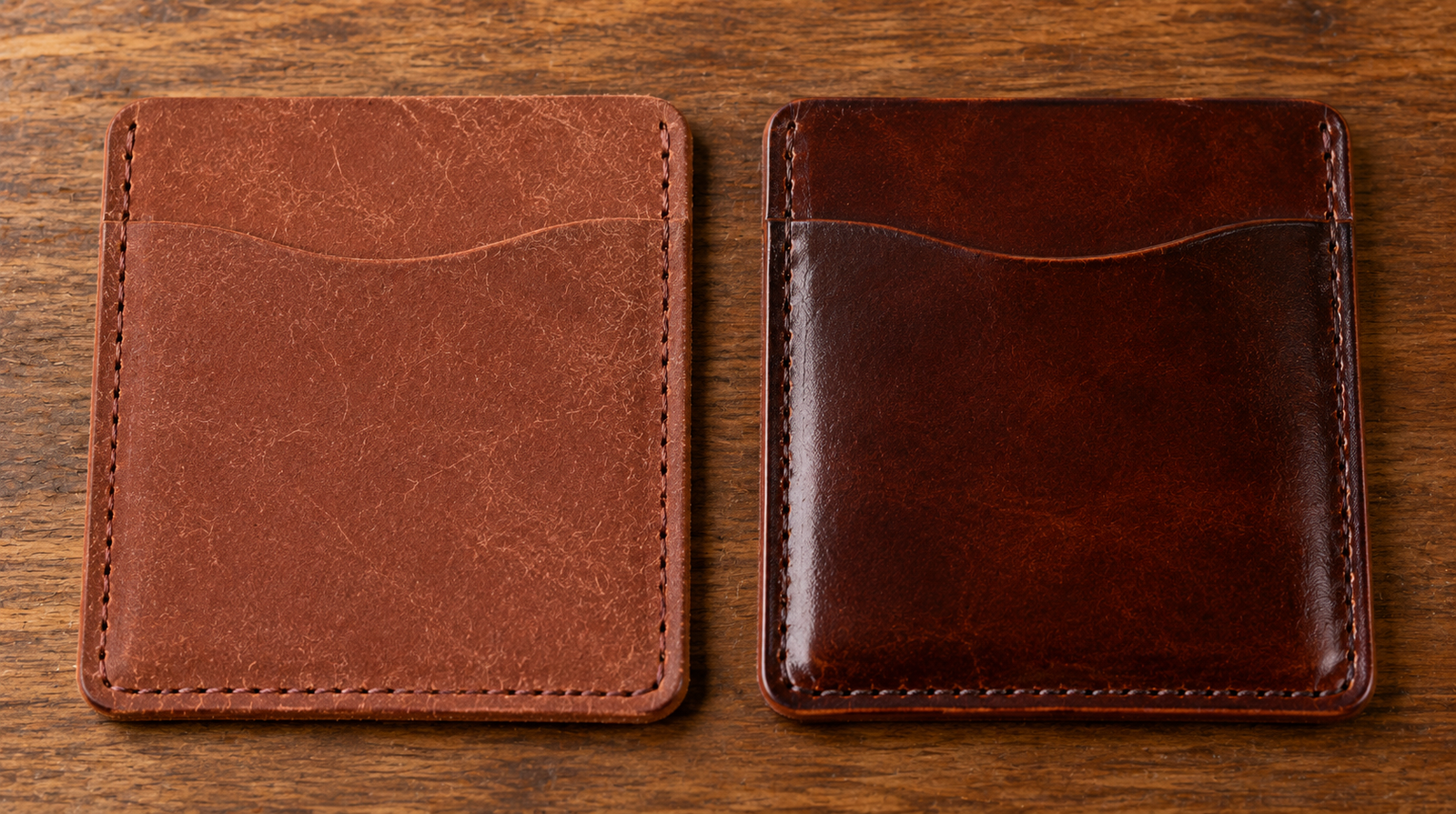
Left: new Pueblo, dry and matte. Right: the same leather after months of carry. The color deepens, the scratches smooth out, and the surface develops a natural gloss.
Which One Should You Choose?
These tanneries are not three versions of the same product. Each is known for leather that suits a different kind of project.
- Choose Horween Chromexcel when you want a soft, conditioned pull-up leather for boots, bags, wallets, straps, or casual goods that will develop visible wear.
- Choose Hermann Oak tooling leather when you need firmness, clean stamping, carving ability, or structure for belts, sheaths, holsters, and traditional tooling work.
- Choose Badalassi Carlo Pueblo when you want richly colored vegetable-tanned leather with a distinctive matte surface and fast-developing patina.
There are plenty of other excellent tanneries, and no one tannery is best for every project. Start with the result you want, then choose the tannery and article that naturally fit it.
Where to Buy Leather from Named Tanneries
Most individual leatherworkers buy these leathers through distributors rather than directly from the tannery. A good supplier will identify the tannery, article, weight, color, temper, grade, and size of the piece being sold.
Pay attention to how the supplier describes the cut. A full side, shoulder, bend, panel, and remnant can all come from the same named tannery while giving you very different usable yields.
Our supplier directory helps you find shops carrying Horween, Hermann Oak, Badalassi Carlo, and other named tannery leathers. Use it to compare selection, cut sizes, shipping, and the kinds of leather each supplier handles best.