Leather Quality: Understanding What You Are Actually Buying
Spend enough time shopping for leather goods and you will eventually see the phrase genuine leather stamped into a belt, wallet, bag, or furniture tag.
It sounds reassuring. After all, genuine means real.
The problem is that leather terminology is not always as clear or consistent as buyers expect. Phrases such as full grain, top grain, corrected grain, split leather, and genuine leather describe different parts of the hide, different levels of surface treatment, or sometimes little more than marketing language. They are terms that describe the surface condition and construction of the material. They are not a ranking system.
For a leatherworker, the name alone is never enough. You also need to know how the surface was treated, whether the grain layer is still present, how firm the leather is, what finish was applied, and whether the material suits the project you are building.
This page breaks down the most common leather surface and construction terms, what they actually mean, and which questions to ask before buying a hide or finished leather product.
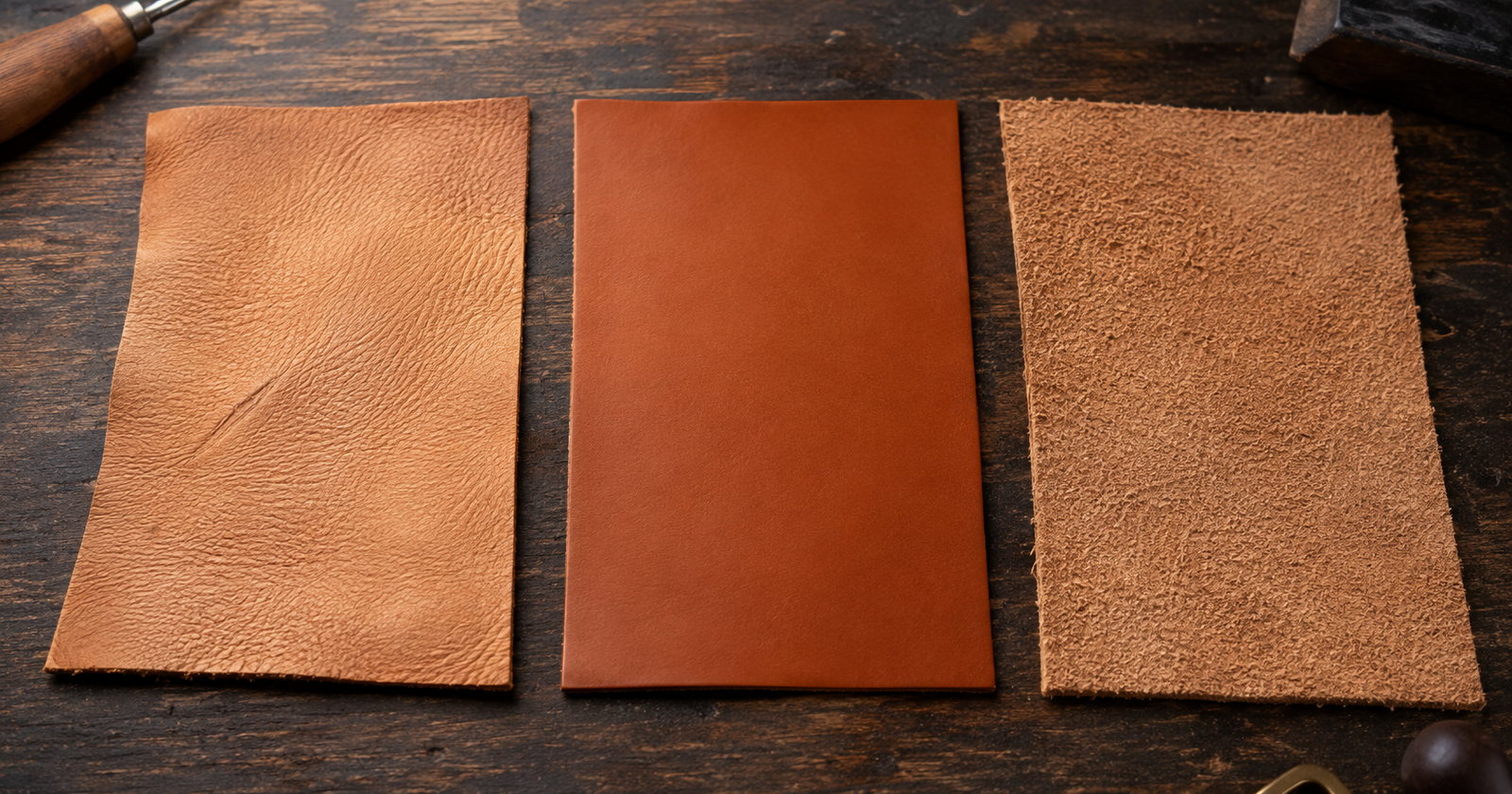
Left to right: full grain with natural surface character, corrected top grain with a uniform finish, and split leather showing the fibrous underside. Same animal, three very different materials.
Full Grain Leather: The Natural Grain Surface
What it is: Full grain leather retains the outer grain surface of the hide. That surface has not been sanded away to remove scars, wrinkles, pores, or other natural markings, although the leather may still be dyed, oiled, waxed, lightly embossed, or given another finish.
Because the grain surface remains intact, full grain leather shows more of the hide’s natural character. Depending on the animal and the tannery, that may include wrinkles, healed scars, insect marks, grain variation, or areas that take dye differently.
Many leatherworkers value full grain because the surface changes naturally with handling and use. Oils, friction, sunlight, conditioning, and ordinary wear can deepen the color and build a patina over time.
Full grain is often durable, but the label alone does not guarantee that a hide is exceptional. Animal quality, tannage, fiber structure, thickness, temper, finish, and the tannery’s workmanship all matter. A poorly processed full grain hide is not automatically better than a well-made top grain leather.
Full grain works especially well for belts, wallets, bags, saddlery, footwear, cases, and other projects where natural character and long-term aging are part of the appeal.
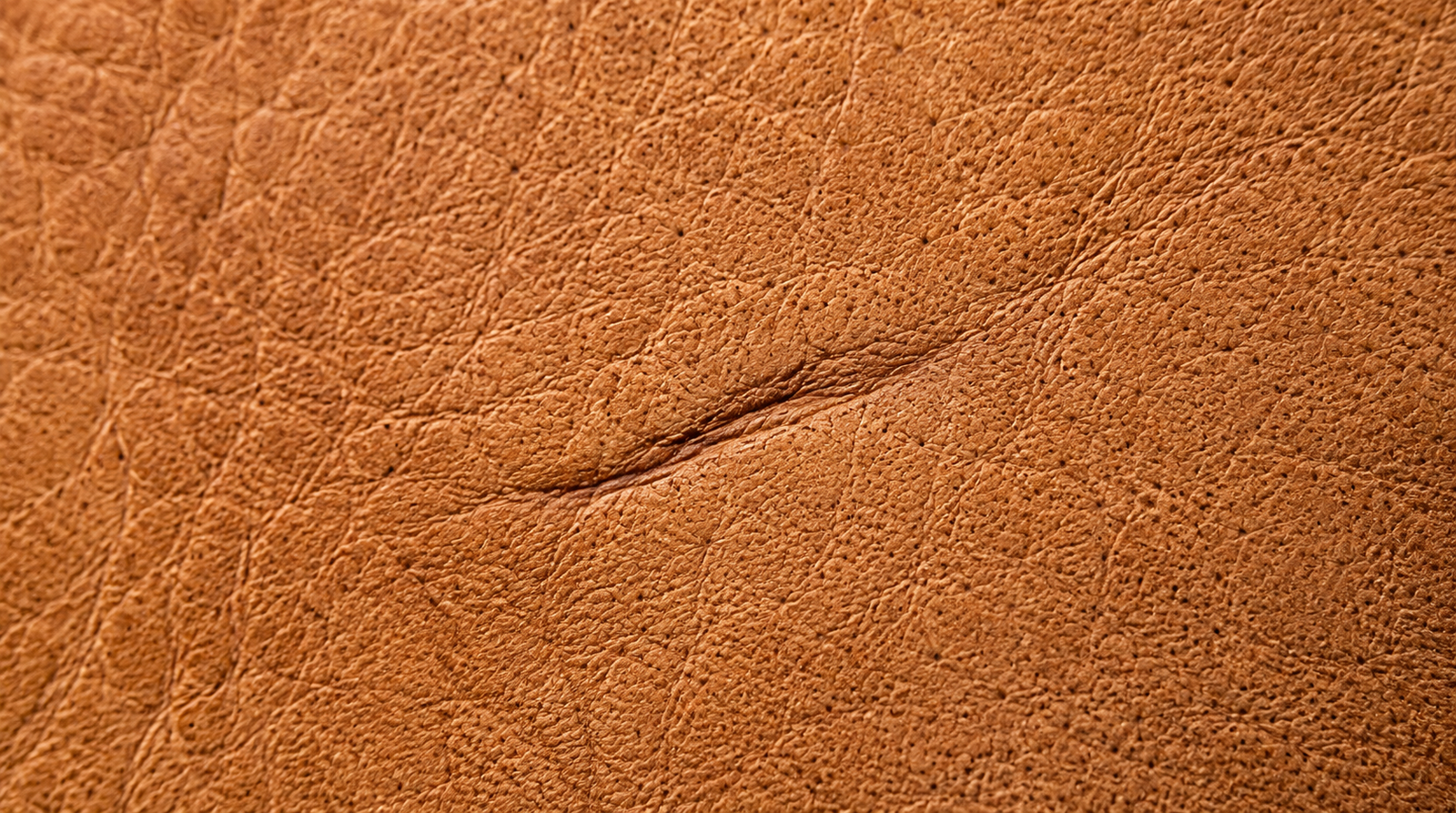
The healed scar visible here is not a defect to be corrected. On full grain leather, it is part of the surface and part of the story.
Top Grain Leather: A Broad and Often Misunderstood Term
What it is: Top grain leather comes from the outer portion of the hide and includes the grain layer. The surface may be left relatively natural, lightly buffed, corrected more heavily, embossed, coated, or finished for a more uniform appearance.
Top grain is a broad category. Two hides carrying the same label may look and behave very differently depending on how much surface work was done.
A lightly corrected top grain may still show natural grain and develop attractive character over time. A heavily corrected version may have a more uniform coating or embossed grain designed to reduce visible surface variation. Neither approach is automatically wrong. It depends on what the tannery is trying to produce and what the buyer needs.
Surface correction makes more of the hide visually consistent and easier to use in products that require matching panels. That is one reason top grain leather is common in furniture, footwear, handbags, automotive upholstery, and other applications where a predictable finish matters more than natural character.
Some top grain leathers are soft and heavily finished. Others are firm, minimally corrected, and very close in appearance to full grain. Before buying, look beyond the category name and ask how the surface was treated.
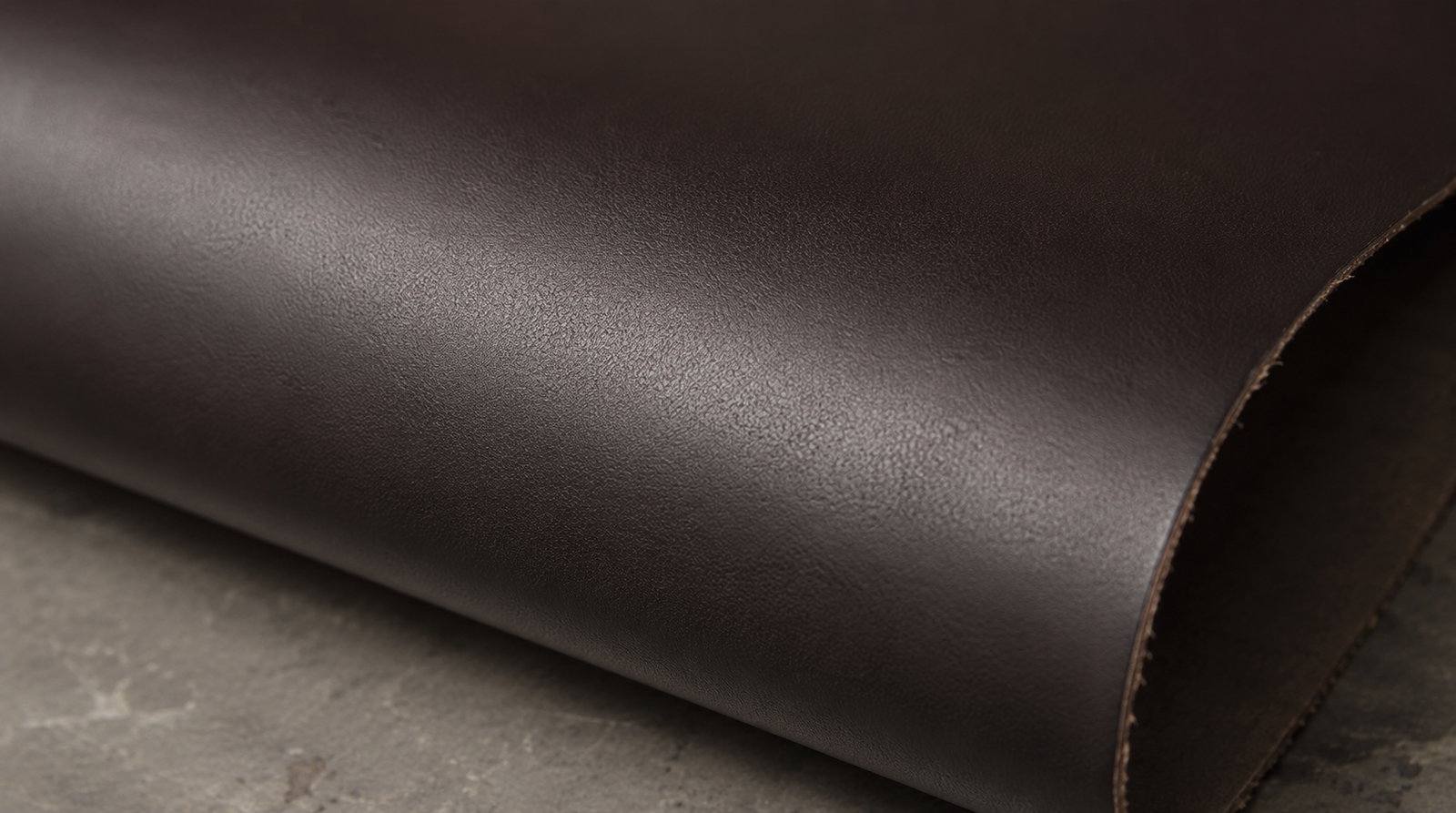
A lightly corrected top grain hide. The surface is even and predictable, which is exactly what some projects require.
Genuine Leather: A Label That Needs More Explanation
What it is: Genuine leather means the material contains real animal leather. It does not, by itself, tell you whether the leather is full grain, corrected top grain, split leather, heavily coated leather, or another construction.
This is where retail labeling becomes frustrating.
The phrase “genuine leather” is often presented as though it identifies a specific quality level, but it usually provides very little useful information about the surface condition or construction of the material. A product carrying that label may be made from split leather with a coated surface. It may also be made from another type of real leather that the manufacturer chose not to describe more precisely.
On lower-cost belts, wallets, and furniture, “genuine leather” commonly appears on materials that have been heavily finished or coated to create a uniform surface. Those products may wear well enough for their intended price point, or they may crack and peel when the coating begins to fail. The label does not tell you which outcome to expect.
When buying leather for a project, a reputable supplier will usually provide more useful details: the tannery, tannage, hide section, grain condition, thickness, temper, finish, and whether the leather has been corrected or split.
“Genuine leather” is not necessarily fake and not automatically worthless. It is simply too vague to be a meaningful quality indicator on its own.
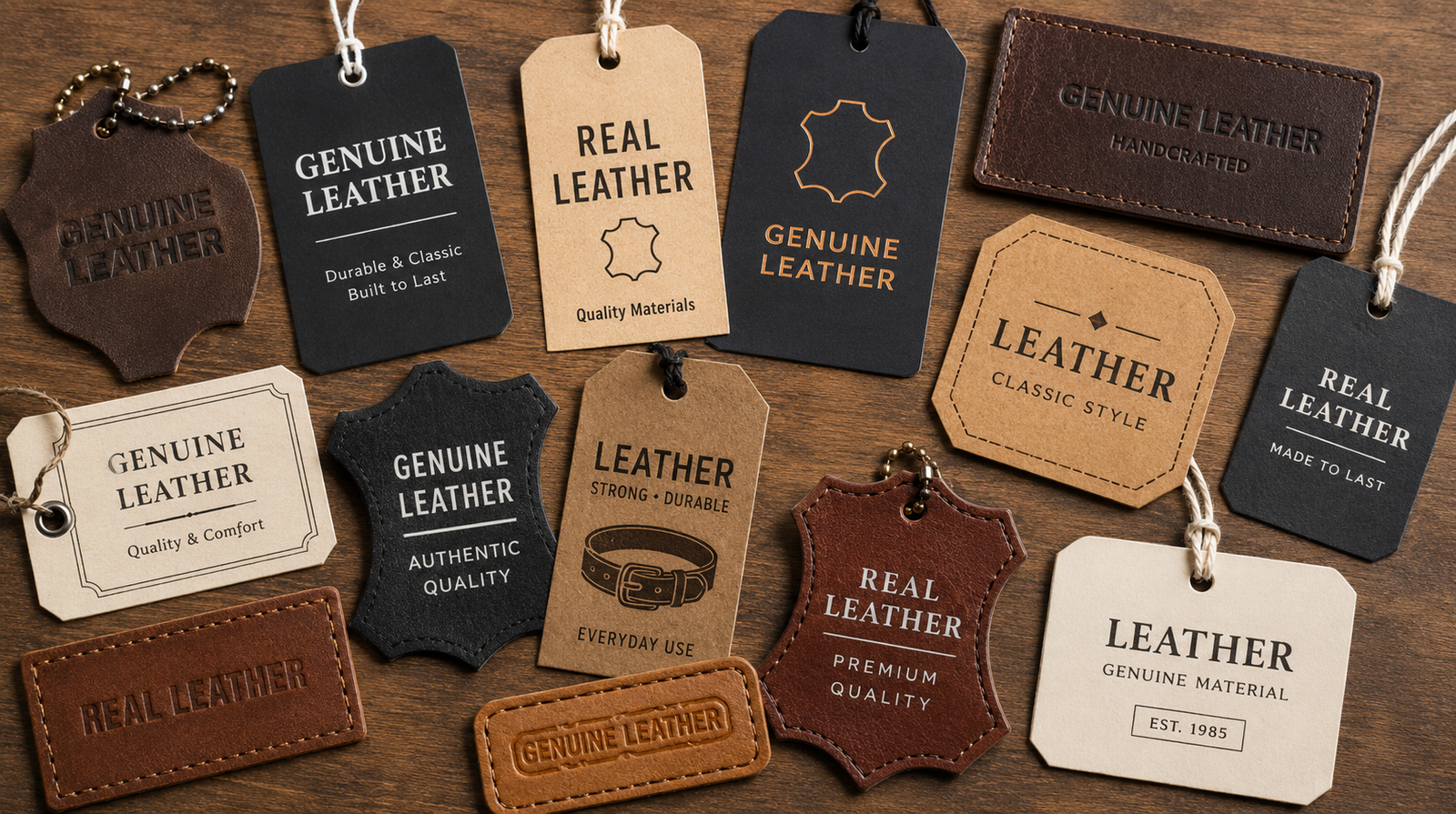
Every one of these tags says leather. None of them tell you what kind, how it was tanned, or how it was finished. That is the problem with “genuine leather” as a quality indicator.
Split Leather and Bonded Leather: Not the Same Material
The basic difference: Split leather is a real layer of hide separated from beneath the grain surface. Bonded leather is a manufactured composite made by combining leather fibers or scraps with binders and a backing material.
A hide is thick enough to be separated into layers. The upper layer contains the natural grain surface. Material taken from beneath that layer is called a split.
Split leather is still real leather. Because it no longer has the dense natural grain surface, it is often coated, finished, or embossed to improve its appearance and performance. Suede is commonly made from a split, although some suede comes from the flesh side of other cuts.
Split leather can be perfectly useful for linings, work gloves, suede goods, inexpensive bags, and other projects where the natural grain surface is not required. Its quality depends heavily on the fiber structure, thickness, and finish.
Bonded leather is a different material entirely. It is generally made from leather fibers or scraps mixed with binders and attached to a backing, then coated or embossed to resemble a continuous leather surface.
Bonded leather may be inexpensive and visually consistent, but it does not behave like a solid piece of hide. It is more likely to crack, peel, or separate as the surface and backing age at different rates.
When a product description says bonded leather, leather fiber, reconstituted leather, or leather composite, do not treat it as the same material as full grain, top grain, or split leather.
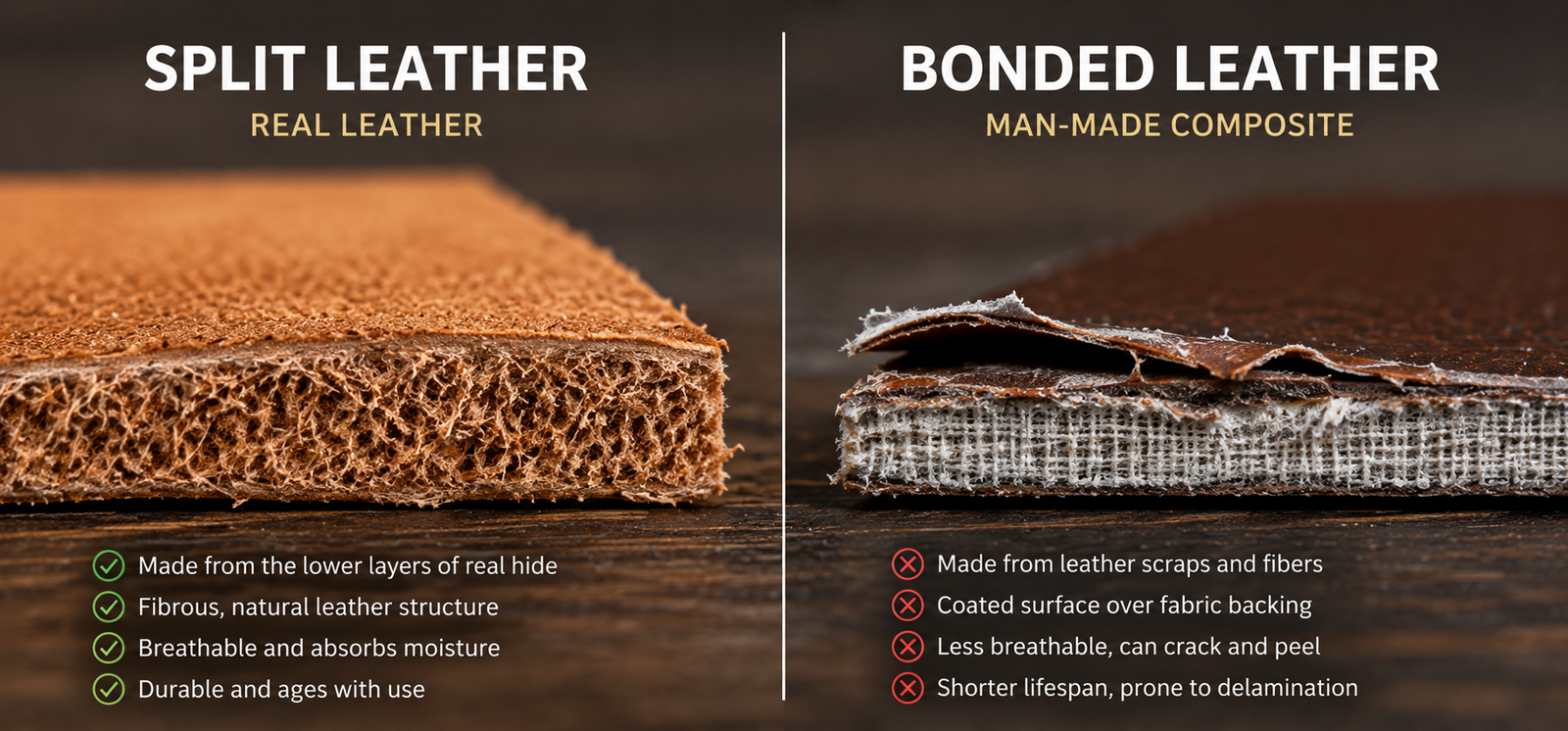
Split leather is real hide. Bonded leather is a composite. The cross-sections make the difference obvious.
What to Look for When Buying Leather
The surface type is only one part of the decision. Before ordering, look for:
- Tannage: vegetable, chrome, combination, oil, or another method
- Grain condition: full grain, lightly corrected, heavily corrected, or split
- Thickness: listed in ounces, millimeters, or both
- Temper: soft, medium, firm, or rigid
- Finish: aniline, semi-aniline, pigmented, waxed, pull-up, coated, or unfinished
- Cut: side, shoulder, bend, belly, double shoulder, or full hide
- Tannery or origin: when available
- Intended use: tooling, bags, upholstery, footwear, garments, straps, or lining
A detailed listing tells you far more than a single phrase such as “premium genuine leather.” The more clearly a supplier describes what they are selling, the more confident you can be in what you are ordering.
Where to Buy Quality Hides
When you are putting hours into cutting, skiving, stitching, and finishing a project, vague leather descriptions are not enough.
A good supplier should tell you what the leather is, how it was tanned, how thick and firm it is, what finish was applied, and what kinds of projects it suits. The more clearly a seller describes the hide, the less likely you are to be surprised when the order arrives.
Our master directory compares leather suppliers by selection, pricing, shipping, reputation, and the kinds of leather they handle best. Use it to find full grain, top grain, corrected grain, suede, split leather, and specialty hides from sellers who provide enough information to help you make an informed choice.