
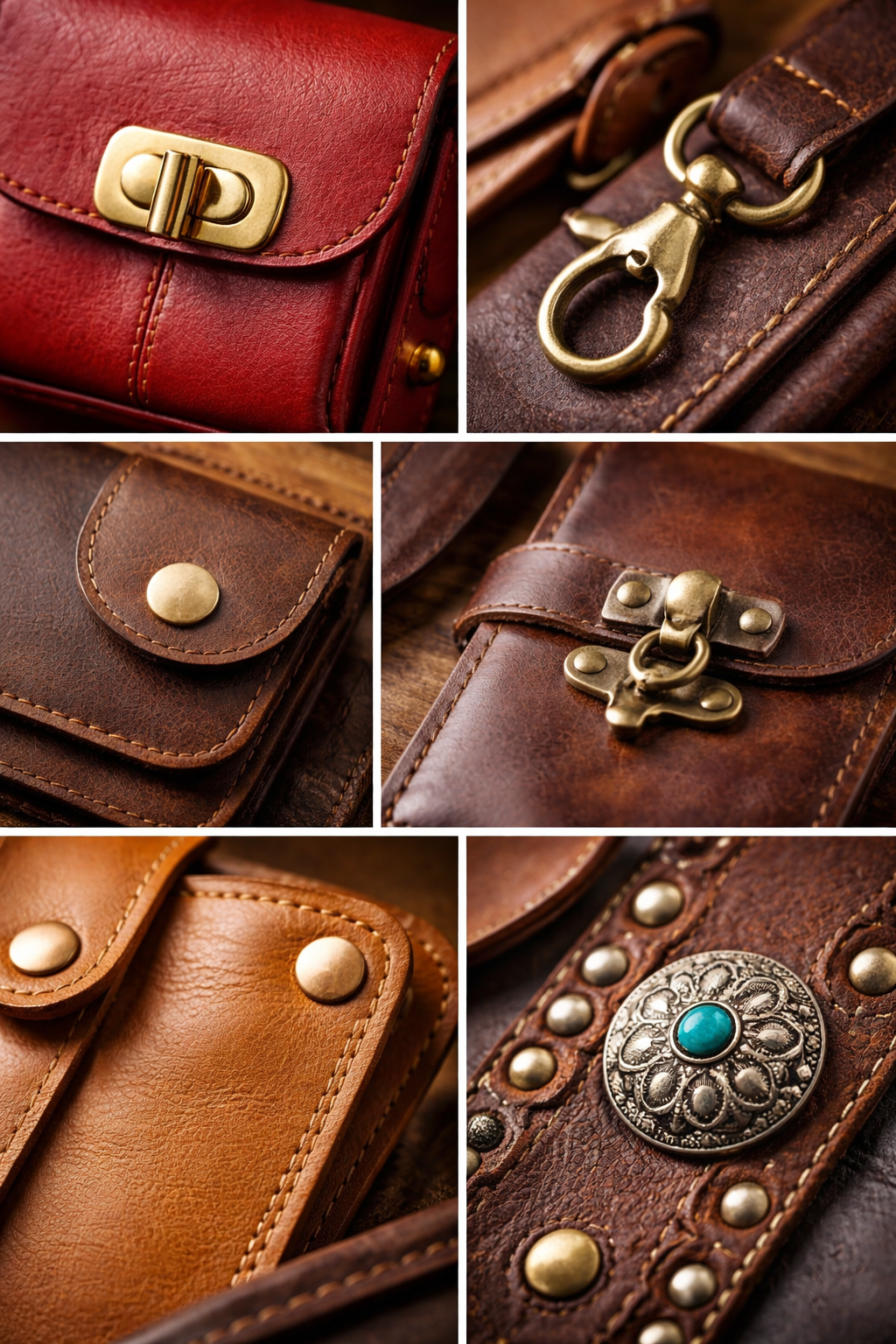
Finding reliable leather hardware suppliers is just as important as sourcing good leather. Hardware and findings are the parts that hold a project together — buckles, rivets, snaps, D-rings, Chicago screws, clasps, zippers, and everything else that is not leather or thread.
Where to Buy from the Best Leather Hardware Suppliers
Getting the hardware right is the difference between a project that looks finished and one that looks homemade. This page covers the best sources for leathercraft hardware, ranked by selection, finish quality, and reliability.
*Rankings are compiled from hands-on shop experience, verified buyer reviews on Etsy, discussions in r/Leatherworking, and Facebook leathercraft groups.
Buckle Guy
Buckle Guy is the hardware-first shop that serious leathercrafters keep coming back to. Where most leather suppliers treat hardware as a secondary category — a shelf of basics next to the leather and tools — Buckle Guy built their entire operation around hardware. The result is a catalog that goes deeper on buckles, rings, rivets, snaps, clasps, and findings than any general leather supplier can match, with consistent finish quality and sizing that makes production work predictable.
The finish consistency is the detail that matters most. When you order antique brass from Buckle Guy, the next order of antique brass will match. That sounds basic, but it is not a given across the industry — mismatched finishes between hardware batches are a common frustration with general suppliers. For makers who build multiples or want a cohesive look across a project, Buckle Guy’s consistency is worth the dedicated order.
Their zipper selection is also worth calling out specifically: quality zippers in the right length, weight, and finish for leather goods are surprisingly hard to source, and Buckle Guy has one of the better selections available to individual makers without wholesale minimums.
Best for: Any project where the hardware is part of the finished look — bags, belts, harnesses, dog collars, straps, and anything where finish consistency across multiple pieces matters.
Shop Buckle Guy Full ReviewTandy Leather
Tandy Leather is the most accessible hardware source for most leathercrafters, and that accessibility is genuinely valuable. With retail locations across the US and a well-stocked online store, Tandy is the fastest way to get snaps, rivets, buckles, Chicago screws, and other hardware basics without waiting on shipping. For beginners who are still figuring out what they need, the ability to walk into a store, handle hardware in person, and ask questions from staff is an advantage that no online-only supplier can offer.
The hardware selection at Tandy covers the fundamentals well. You will find the most common sizes and finishes of the hardware types that show up in most beginner and intermediate projects. Where Tandy falls short relative to Buckle Guy is in depth and finish consistency at the higher end — Tandy’s hardware catalog is broad but not deep, and finish quality can vary between batches. For production work or projects where hardware is a design feature, Buckle Guy is the better choice. For restocking basics or picking up hardware for a one-off project, Tandy is hard to beat for convenience.
Best for: Beginners, restocking common hardware types, in-person shopping, and any project where convenience matters more than premium finish selection.
Shop Tandy Leather Full ReviewWeaver Leather Supply
Weaver Leather Supply is the go-to source when you want hardware, leather, tools, and materials in a single order. Their hardware catalog is extensive — particularly for equestrian and saddlery hardware, which reflects their roots as a supplier to the horse industry — but it covers general leathercraft hardware thoroughly as well. Buckles, rings, snaps, rivets, conchos, and specialty hardware for bags, belts, and straps are all well-represented.
The practical advantage of Weaver is consolidation. When you are building a project that needs leather, thread, hardware, and edge finish, placing one order with Weaver instead of three orders from three suppliers saves both shipping costs and time. Their wholesale pricing tiers make Weaver increasingly competitive as order volume grows, and their production-quantity hardware options are useful for makers who build multiples.
Best for: Makers who want to consolidate hardware and materials in one order, equestrian and saddlery hardware, and production makers who benefit from wholesale pricing tiers.
Shop Weaver Leather Full ReviewSpringfield Leather
Springfield Leather carries a solid hardware selection as part of their broader leathercraft catalog. Like Weaver, the appeal is consolidation — Springfield is a reliable one-cart option when you need leather, hardware, and tools without the premium pricing of a specialty shop. Their hardware covers the common types well: buckles, rings, snaps, rivets, Chicago screws, and bag hardware in the most-used sizes and finishes.
Springfield’s customer service is consistently praised in the leathercraft community, which matters when you have a question about sizing or compatibility before placing an order. For makers who are not yet confident enough to know exactly what they need, the ability to get a straight answer from knowledgeable staff is worth a lot. Their pricing is competitive across the board, and they run sales regularly that make stocking up on hardware basics economical.
Best for: One-cart ordering alongside leather and tools, makers who value accessible customer service, and anyone stocking up on hardware basics at competitive prices.
Shop Springfield Leather Full ReviewPattern Kits with Matching Hardware
One of the most frustrating parts of building from a pattern is figuring out which hardware size actually fits the design. Some pattern makers solve this by selling hardware kits alongside their patterns — pre-selected hardware in the exact sizes the pattern was designed around. If you want to skip the measurement guesswork entirely, these are worth checking:
Other pattern suppliers on the site — Vasile & Pavel, Creative Awl Studio, and Prince Armory Academy — include hardware specifications in their pattern instructions, even when they do not sell hardware kits directly. Use those specs to order from Buckle Guy or Weaver with confidence.
How to Buy Hardware Without Getting Burned
Hardware mistakes are expensive — not because the hardware itself costs much, but because the wrong hardware means rebuilding part of a finished project. These four rules prevent most hardware ordering mistakes:
1. Lock Your Measurements Before You Order
Hardware sizing is not forgiving. A 1-inch buckle requires a 1-inch strap — not a 25mm strap, not a “close enough” strap. Measure your strap width in both inches and millimeters before ordering, and confirm the hardware’s inside dimension matches. For bag hardware (D-rings, swivel hooks, rectangular rings ), confirm the inside width against the strap that will run through it, not the outside dimension of the hardware.
2. Pick One Finish Per Project and Stick to It
Mixing “antique brass” from two different suppliers is almost always a visible mistake. Finish names are not standardized — one supplier’s antique brass is another’s dark brass. Order all hardware for a project from the same supplier in the same batch whenever possible. If you need to reorder, order a test piece first and compare it to your existing hardware in natural light before committing to a full restock.
3. Order Extras on Consumables
Snaps, rivets, Chicago screws, and similar consumables are cheap enough that ordering 20% more than you think you need costs almost nothing. Running out of rivets mid-project and waiting on a reorder is a frustrating and avoidable delay. Order extras. Store them organized by size and finish.
4. Check Post Length on Rivets and Chicago Screws
Post length is the most commonly overlooked hardware specification. A rivet or Chicago screw with a post that is too short will not set correctly through thick leather; one that is too long will look sloppy or fail to clinch. Measure your leather stack (all layers that the post will pass through) and match the post length to that measurement. Most hardware suppliers list post length in the product specifications — read it before ordering.
Do You Sell Leathercraft Hardware or Findings?
This page is actively maintained and open to new listings. If you sell buckles, rivets, snaps, rings, clasps, zippers, or other leathercraft findings and want to be listed here, send your store link and hardware categories. Featured placement at the top of the page is available for suppliers who want priority visibility with makers actively shopping for hardware. Sponsored placements are always clearly labeled.
Get Listed or Featured