How to Tell Whether It Is Actually a Good Deal
Leather gets expensive quickly, especially when you are learning, testing patterns, or trying to keep the material cost of a finished product under control. That makes finding the best deals on leather worth learning as a skill of its own.
The lowest sticker price is not always the cheapest leather to use. A discounted side may be a genuine bargain, or it may contain loose belly, deep brands, finish problems, heavy scars, or an awkward shape that leaves very little usable area for your project.
The goal is not simply to buy cheap leather. It is to buy leather with enough usable yield, the right temper, and the right surface for the work you actually make. Closeouts, utility grades, remnants, and scrap can all save money when you understand what you are giving up in exchange for the lower price.
This guide explains how to compare discounted leather, read supplier descriptions, calculate usable value, and avoid buying a bargain that belongs in the practice pile.
Price per Foot Is Not the Whole Price
The real cost of leather is the amount you paid divided by the amount you can actually use. A cheap side is not much of a bargain when the belly is loose, the center is heavily branded, and your pattern pieces will not fit between the defects.
For example, imagine two pieces of leather:
- Piece A: $5 per square foot, but only about half of it works for your project.
- Piece B: $8 per square foot, with nearly all of the main cutting area usable.
Piece A may have the lower advertised price, but Piece B can produce more finished goods for the money.
Match the defect to the project
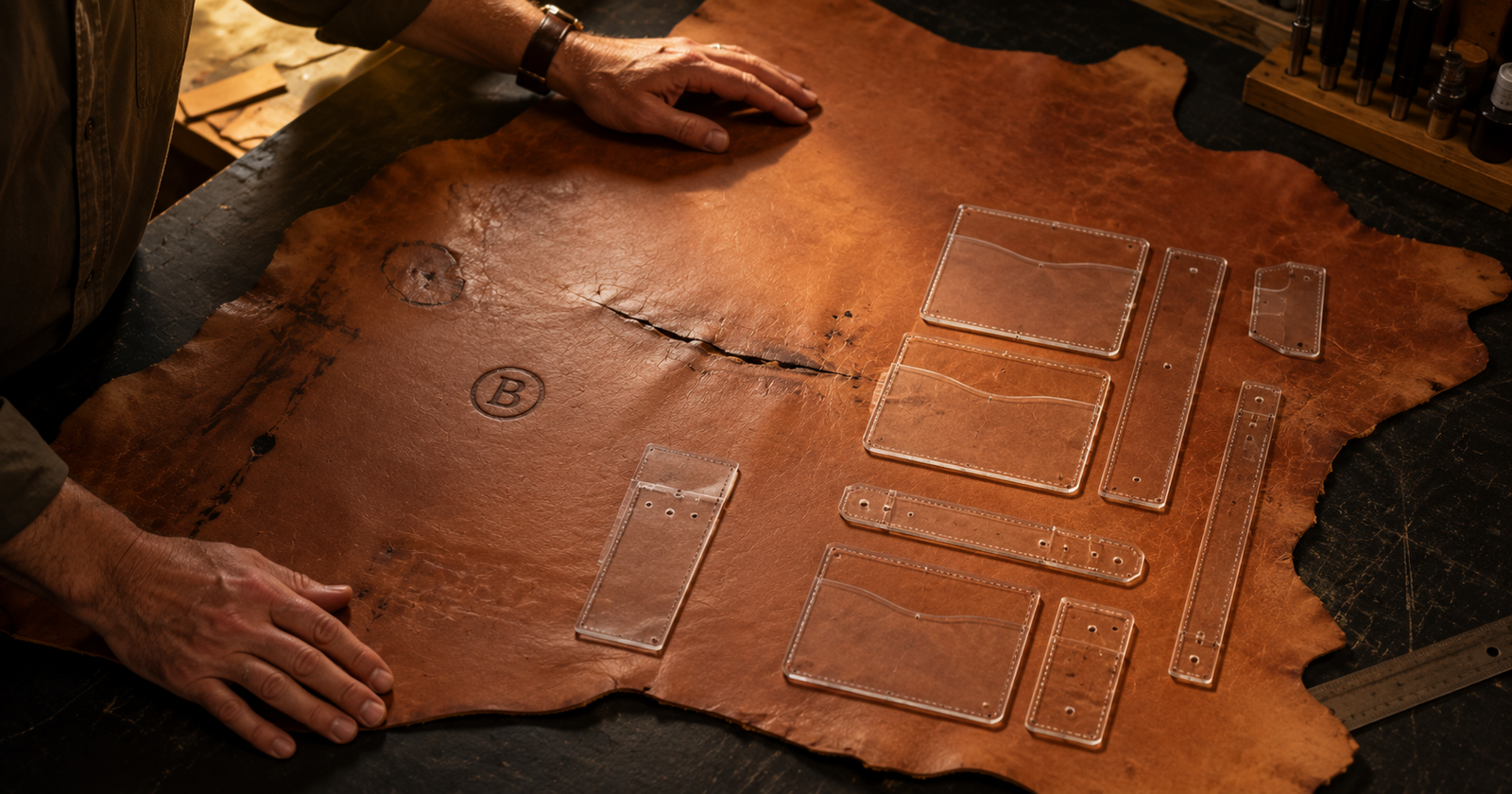
A scar across the center of a side is a serious problem when cutting large bag panels. The same side may be excellent for card wallets, watch straps, tabs, keychains, and small accessories because those pieces can be nested around the damage.
Before buying discounted leather, compare the size of your pattern pieces with the size and location of the defects. Usable yield matters more than the grade name printed on the listing.
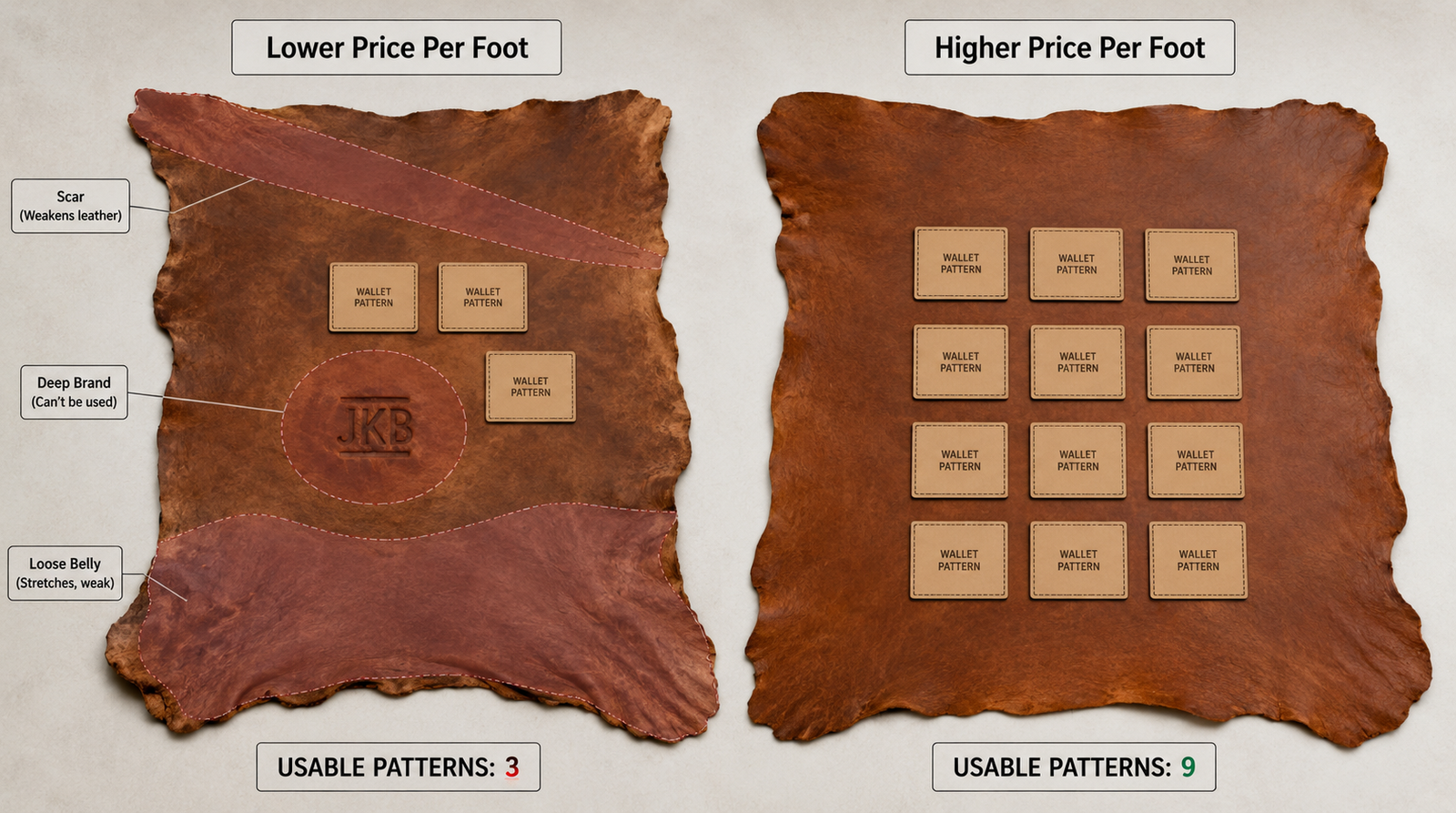
Lower price per foot does not mean lower cost per finished piece. The hide on the left yields 3 patterns. The hide on the right yields 9. The math is the same as the leather.
Understanding Leather Grades and Seller Terms
The practical rule: Treat every grade name as the seller’s description until you know how that particular tannery or supplier defines it.
Leather grading is not governed by one universal retail scale. One supplier may use numbered grades. Another may use terms such as tannery run, standard, utility, economy, craft, or special purchase. Two listings using the same word may not allow the same defects.
Discounted leather may be lower priced because of:
- Brands, scars, holes, insect damage, or range marks
- Loose grain, stretch, or weak belly
- Uneven color, finish, thickness, or temper
- Roll marks, handling damage, or surface scratches
- An unusual color or article that did not sell quickly
- An awkward cut, partial hide, short panel, or small remnant
- A customer cancellation, discontinued run, or excess inventory
Some utility or lower-grade hides really are the same article as the better-looking stock, with defects that can be cut around. Others may have structural, finishing, or consistency problems that affect how they work. Read the individual seller’s definition instead of assuming that every blemish is cosmetic.
Bench note: A respected tannery name does not make the damage irrelevant. Good leather with a defect is still defective in that area. The question is whether the remaining usable sections fit your patterns.
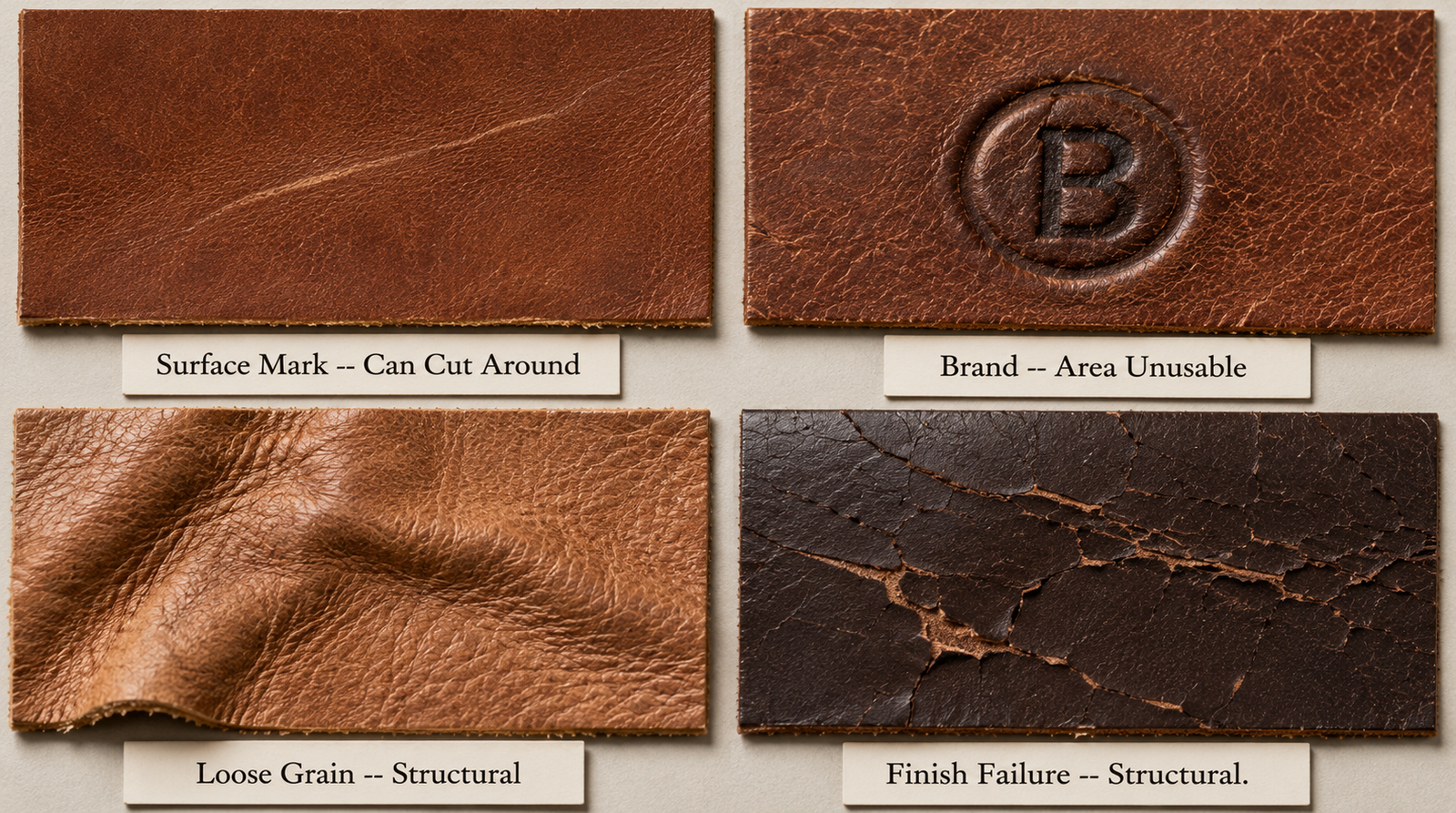
Not all defects are equal. A surface mark can be cut around. A brand, loose grain, or finish failure affects the leather itself. Know the difference before you buy.
Read the Listing Like a Cutting Diagram
A good discount listing should tell you more than the color and square footage. Look for photographs of the actual hide or a clear description of the defect type, cut, temper, weight range, and surface condition.
Pay close attention to phrases such as:
- Representative photo: The hide you receive may look different from the one pictured.
- As-is: Returns may be restricted or unavailable.
- Variable weight: The thickness may change across the piece or between hides.
- Assorted colors: You may not be able to choose what arrives.
- Natural markings: This can include anything from light character to defects that interrupt a cutting area.
- Final sale: Make sure the risk is reflected in the price.
When the description is vague, ask for clarification before buying. A five-minute message can prevent a box of leather you cannot use.
Overstock, Odd Lots, and Closeouts
Overstock and closeout leather can come from canceled orders, excess production, discontinued colors, short runs, manufacturer leftovers, supplier inventory changes, and articles that simply did not sell as expected.
That means a closeout is not necessarily damaged or lower quality. Sometimes the only problem is that the color, finish, or quantity no longer fits the original buyer’s needs.
The tradeoff is usually consistency and repeatability. Once an odd lot is gone, you may never see the same color, temper, or finish again. Even when the supplier receives something similar later, it may not match closely enough to complete an existing production run.
Closeouts work best when:
- You can finish the entire project from the quantity currently available.
- You do not need to reorder the exact color later.
- You are comfortable adjusting the design to the cut and usable area.
- You have a plan for the leather before the bargain convinces you to buy it.
Bench note: Buy enough for matching panels and expected mistakes. Saving money on the first hide does not help if you later need a second hide that no longer exists.
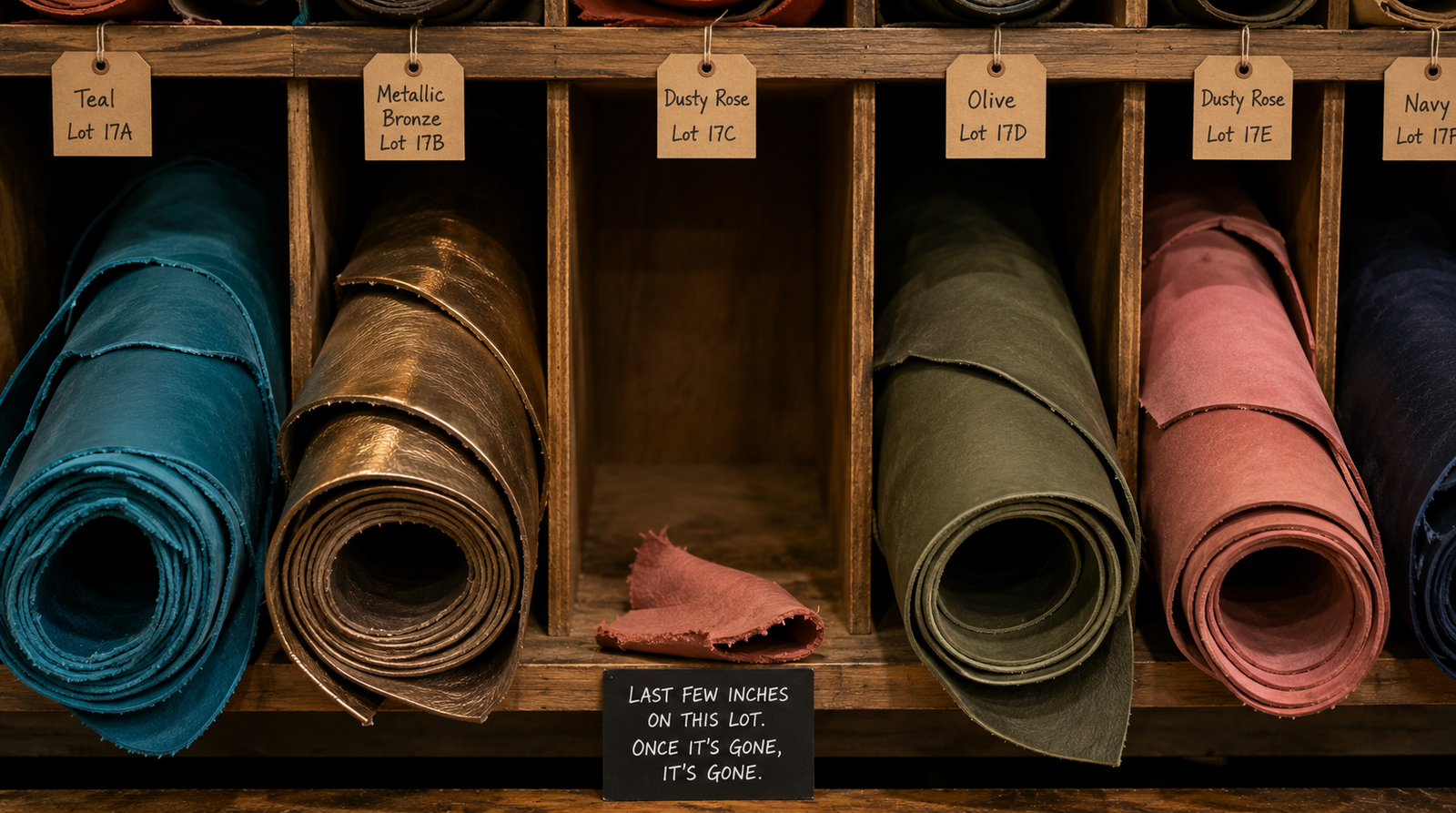
Closeout leather can be genuinely excellent. The catch is the empty slot in the middle. Once that lot is gone, it is gone. Buy enough for the whole project before you start.
Buying Remnants and Scrap Strategically
Scrap and remnant leather can be one of the cheapest ways to practice a technique or produce small goods, but only when the piece size, temper, and tannage match the work.
For stitching practice, edge finishing, hardware tests, dye samples, keychains, tabs, cord wraps, and small inlays, an assorted bundle may be perfectly useful. For matching wallets or repeatable products, random scrap can create more sorting than savings.
Know what kind of scrap you are buying
- Tooling or veg-tan scrap: Useful for carving, stamping, molding, dye testing, and structured small goods.
- Upholstery or garment scrap: Usually softer and better for lining, soft pouches, applique, tassels, and flexible accents.
- Strap offcuts: Useful for keepers, loops, handles, tabs, and hardware tests when the widths are workable.
- Mixed scrap: Best treated as a practice assortment unless the seller provides useful minimum sizes and material details.
Mixed temper and tannage are not automatically unusable together. Many projects intentionally combine firm exterior leather, soft lining, flexible gussets, and reinforced straps. The real problem is buying a mystery bundle without knowing whether any of the pieces suit the job you have in mind.
Bench note: A scrap bag sold by weight can contain many pieces that are too narrow, irregular, or damaged for your patterns. Minimum dimensions are often more useful than the total number of pounds.
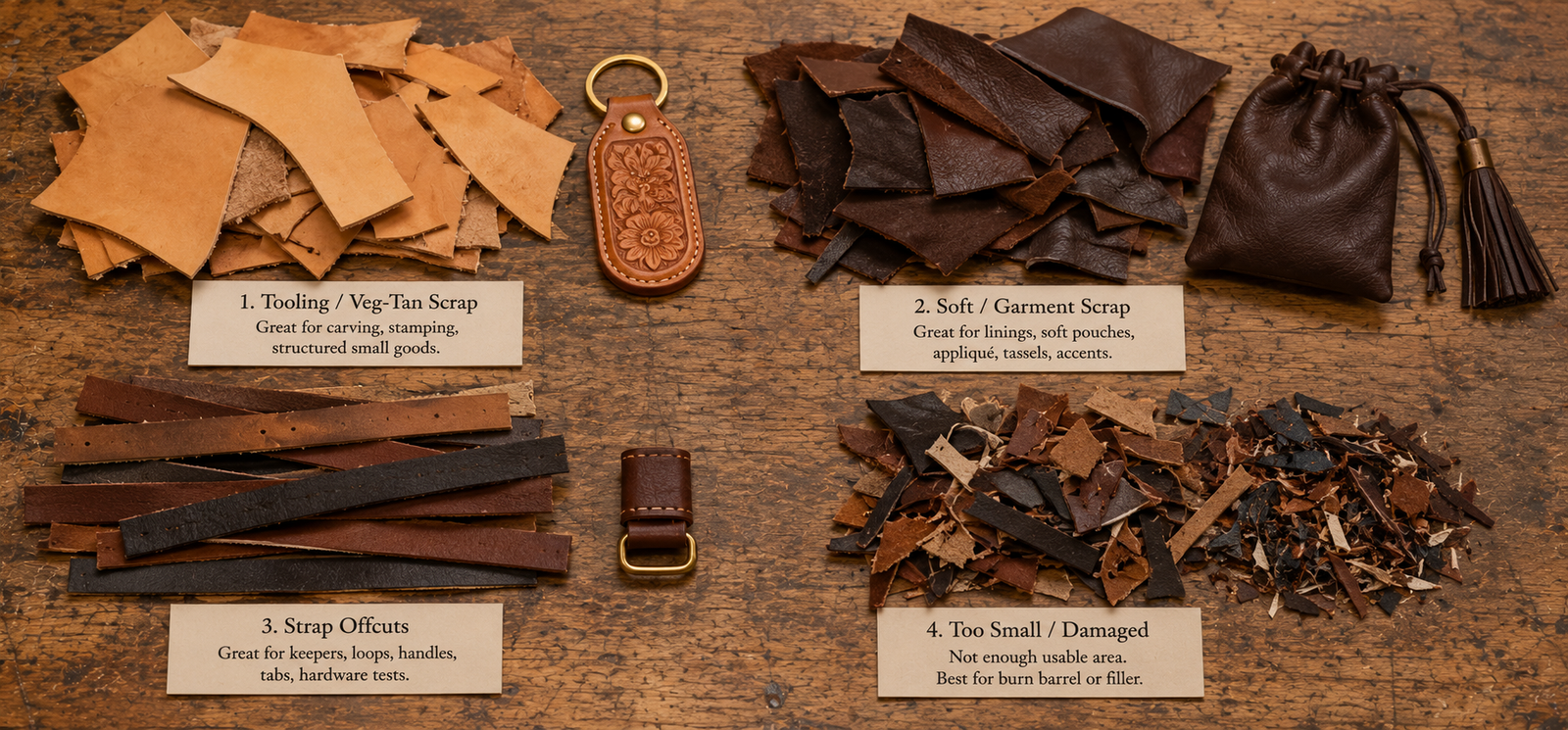
Scrap is not just scrap. Tooling pieces, soft garment leather, and strap offcuts each have a use. The pile in the lower right does not. Sort before you buy and you will know what you actually need.
Questions to Ask Before Buying Discounted Leather
When the listing does not answer these questions, ask the supplier:
- Is the photograph of the actual piece or a representative example?
- What defects should I expect?
- Are the defects cosmetic, structural, or both?
- What is the approximate weight and temper?
- Does the leather have stretch, loose grain, finish cracking, or color transfer?
- What are the minimum usable dimensions?
- Can I choose the color, cut, or general condition?
- Is the leather returnable if it differs materially from the description?
- Is this article likely to be available again?
A knowledgeable supplier may not be able to map every scar on a closeout hide, but the answer should help you understand the level of risk you are accepting.
How to Tell Whether It Is Actually a Good Deal
Before placing the order, check the leather against the project rather than the discount percentage.
- Usable yield: Can your largest pattern pieces fit between the expected defects?
- Temper: Is the leather firm or soft enough for the construction?
- Weight: Will it work at the supplied thickness, or will you need to split or reinforce it?
- Consistency: Do you need matching pieces or repeat orders?
- Shipping: Does freight erase most of the discount?
- Return policy: Are you comfortable accepting the risk of an as-is or final-sale purchase?
- Actual need: Do you have a project for it, or are you buying because the markdown created urgency?
The best deal is not always the cheapest hide. It is the leather that gives you the most usable project material for the total amount you spend.
Where to Look for Leather Closeouts and Deals
Some suppliers regularly handle overstock, odd lots, remnants, utility grades, and one-time tannery runs. Others occasionally add discounted hides to a clearance section. The best source depends on whether you need a full side, a small panel, repeatable stock, or simply inexpensive material for practice.
Our supplier directory includes shops known for closeouts, tannery seconds, remnants, scrap, and discounted leather. Compare selection, shipping, cut sizes, and seller descriptions before deciding which apparent bargain fits your work.