
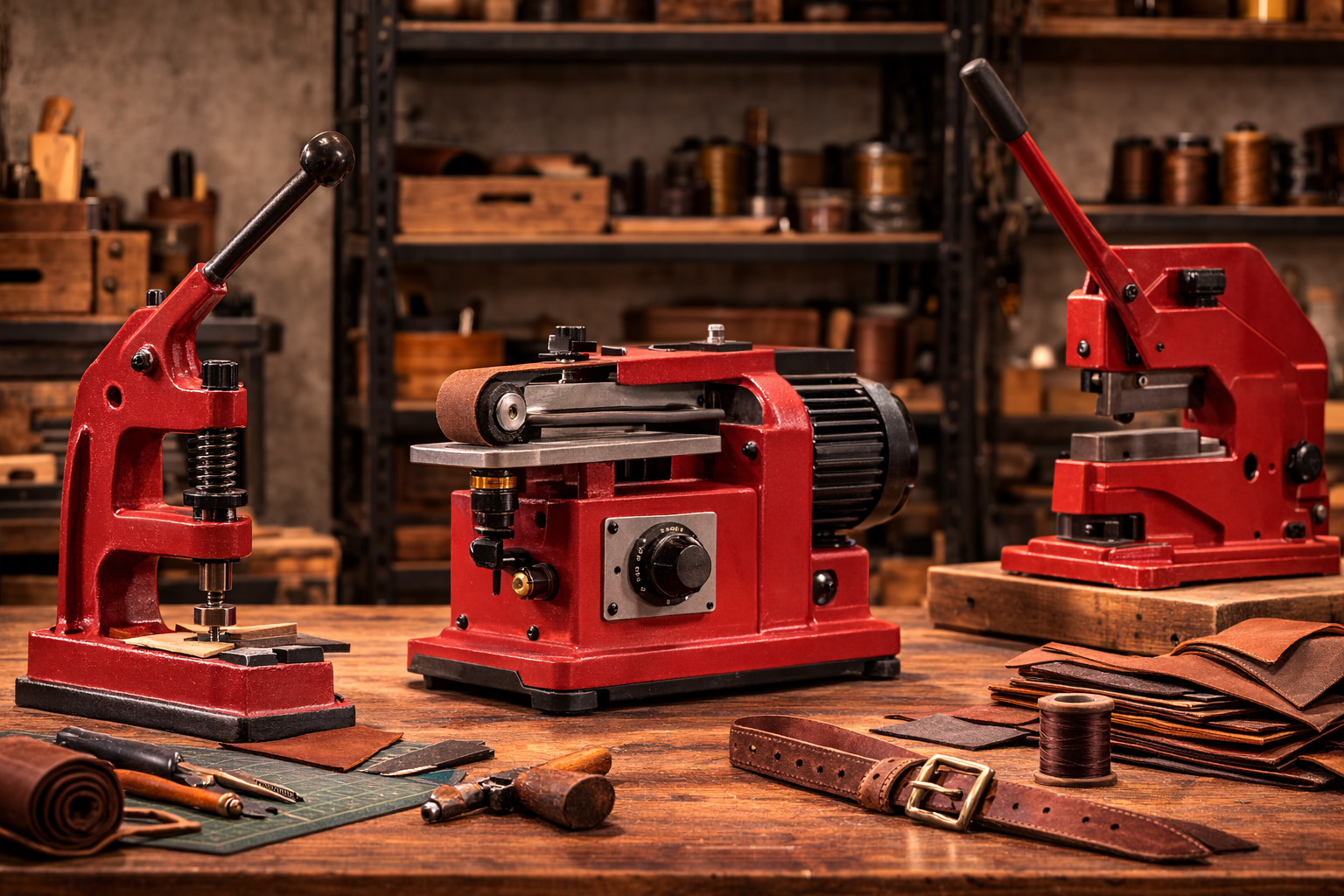
Finding reliable sources for leathercraft machines is one of the biggest investments you will make in your shop. Whether you are buying your first leather sewing machine or outfitting a production studio with skivers, splitters, and clicker presses, knowing where to buy is critical.
Where to Buy Leathercraft Machines
This page covers the best places to buy heavy-duty equipment, what to expect from each supplier, and who provides the best post-sale support and freight shipping.
*Rankings are compiled from hands-on shop experience, verified buyer reviews on Etsy, discussions in r/Leatherworking, and Facebook leathercraft groups.
Weaver Leather Supply
Weaver Leather Supply carries one of the most comprehensive machine catalogs available from a US leather supplier. Their equipment selection spans leather sewing machines (cylinder arm, flatbed, and post bed configurations), skiving machines, leather splitters, clicker presses, and edge finishing equipment. Weaver’s roots in the saddlery and equestrian trade mean their machine inventory is oriented toward serious production use — the machines they carry are built to run all day, not just for occasional hobbyist sessions.
The advantage of buying a machine through Weaver is that they understand leather. A general-purpose sewing machine retailer can sell you a machine, but they cannot tell you whether it will handle 10 oz veg tan at 8 stitches per inch. Weaver’s staff can. Their catalog descriptions include practical details about material capacity, thread size compatibility, and application suitability that are genuinely useful when making a purchasing decision.
Weaver also stocks replacement parts, needles, thread, and accessories for the machines they sell — which matters when you are running production and cannot afford a week-long wait for a replacement part.
Best for: Production makers, saddlers, and serious hobbyists who want a machine built for leather work and guidance from a supplier who understands the application.
Shop Weaver Machines Full Weaver ReviewTandy Leather
Tandy Leather carries a selection of entry-level and mid-range leather sewing machines and tools, and their retail locations make them the most physically accessible option for makers who want to see equipment in person before buying. Some Tandy locations have machines on the floor for demonstration, which is genuinely valuable when you are making your first machine purchase and want to understand what you are buying before committing.
Tandy’s machine selection is not as deep as Weaver’s, and their equipment tends toward the lighter end of the capacity range — better suited to hobbyist use than heavy production. But for a first machine purchase, particularly if you have a Tandy store nearby, starting your research there is a reasonable approach. The staff at well-staffed locations can walk you through the differences between models and help you understand what your actual use case requires.
Best for: Beginners making their first machine purchase, makers near a Tandy retail location who want to see equipment in person, and hobbyists who need a light-duty machine for occasional use.
Shop Tandy Machines Full Tandy ReviewSpringfield Leather
Springfield Leather carries a selection of leather sewing machines and equipment alongside their broader catalog of leather, tools, hardware, and dyes. The machine selection is not as deep as Weaver’s, but the advantage is convenience — if you are already ordering leather and supplies from Springfield, adding a machine to the same order simplifies logistics and reduces shipping costs.
Springfield’s machine offerings tend toward the mid-range in terms of capacity and price point, which makes them a reasonable option for hobbyists who want a capable machine without the full trade-focused investment that Weaver’s catalog implies. Their customer service is approachable and their website makes it easy to compare options within their available inventory.
Best for: Makers who are already sourcing leather and supplies from Springfield and want to add a machine to their order, and hobbyists looking for a mid-range machine from a supplier they already trust.
Shop Springfield Machines Full Springfield ReviewMachine Types: What Each One Does
Leathercraft machines are specialized tools. Understanding what each type does — and what you actually need for your work — is the most important step before you spend money on equipment.
Sewing Machines
Leather sewing machines differ from fabric sewing machines in three key ways: they use a walking foot (or compound feed ) to move thick material evenly, they are built to handle heavier thread (69 to 277 weight), and they are constructed with enough torque to drive a needle through multiple layers of heavy leather. A standard fabric sewing machine will destroy itself trying to sew 8 oz leather. A dedicated leather machine will do it all day. The main configurations are flatbed (for flat goods like belts and panels), cylinder arm (for bags, holsters, and anything with a round or tubular shape), and post bed (for shoes, boots, and tight curves).
Skiving Machines
Skiving is the process of thinning leather at the edges or in specific areas to reduce bulk at seams and folds. A skiving machine does this faster and more consistently than hand skiving with a knife. Essential for bag making, shoe making, and any project where seam bulk is a problem. If you are hand-skiving everything and spending significant time on it, a skiving machine pays for itself quickly.
Leather Splitters
A leather splitter reduces the overall thickness of a hide or panel to a specific measurement. If you buy a 5 oz hide and need 3 oz for your project, a splitter gets you there without waste. Some suppliers (Rocky Mountain Leather Supply) offer a leather splitting service, though fees vary by leather type. If you are doing significant volume or need precise thickness control, owning a splitter makes sense.
Clicker Presses
A clicker press uses steel rule dies to cut consistent shapes from leather at high speed. Essential for production runs of wallets, card holders, straps, and any item where you are cutting the same shape repeatedly. Hand cutting 200 wallet panels takes hours. A clicker press cuts them in minutes. The investment is significant, but for production makers the ROI is fast.
Edge Finishing Machines
Edge finishing machines bevel, burnish, and paint leather edges faster and more consistently than hand finishing. At production volume, the time savings are significant. For hobbyists, a good edge finishing machine is a quality-of-life upgrade rather than a necessity — hand finishing with a slicker and edge paint produces excellent results, just more slowly.
How to Buy a Leather Sewing Machine Without Getting Burned
The leather sewing machine market has a significant number of low-quality machines marketed with impressive-sounding specifications. Here is what experienced makers have learned about buying machines:
- Define your thickest material first. The most common buying mistake is purchasing a machine that cannot handle the leather you actually work with. Know your maximum combined thickness in ounces before you look at a single machine listing.
- Walking foot is non-negotiable for leather. A standard presser foot will not feed leather evenly. You need a walking foot (also called a compound feed or triple feed) to move multiple layers of leather through the machine without slipping or bunching.
- Buy from a leather-focused supplier, not a general sewing retailer. A supplier who sells leather knows what the machine needs to do. A general sewing retailer may not understand the difference between sewing denim and sewing 8 oz veg tan.
- Used industrial machines are often better than new budget machines. A used Juki, Consew, or Cowboy machine from a reputable dealer will outperform a new no-name machine at the same price point. The industrial machines are built to run for decades.
- Factor in needles and thread. Leather sewing machines use specific needle systems (typically 135×17 or 794) and heavier thread than fabric machines. Make sure your supplier stocks the consumables for the machine you are buying.
- Ask about support. When the machine needs adjustment or a part, who do you call? Buying from a supplier with a service department or strong technical support is worth a premium over buying the cheapest option with no support infrastructure.

Know What to Buy Before You Order
Finding the right supplier is only half the equation. The thread you choose, the punch you reach for, the dye you trust — these are the things that separate work that looks handmade from work that looks hand-crafted. I put together a short list of the supplies I actually use on every project. No filler, no guesswork.
Do You Sell Leathercraft Machines or Equipment?
This page is actively maintained and open to new listings. If you sell leather sewing machines, skiving machines, splitters, clicker presses, or related leathercraft equipment and want to be listed here, send your store link and what you carry. Featured placement at the top of the page is available for suppliers who want priority visibility with makers actively shopping for equipment. Sponsored placements are always clearly labeled.
Get Listed or Featured