The YouTube Professional Series IV: Homesteading & Gardening Channels
The homesteading and gardening YouTube channel space has exploded over the past decade as more people look for ways to grow their own food, raise animals, reduce their dependence on grocery stores, and build a more self-sufficient life. The content ranges from backyard container gardens to full off-grid homesteads, and the quality varies enormously.
The best homesteading and gardening YouTube channels do not just show you pretty gardens or dramatic farm builds. They teach you the underlying principles of soil health, plant biology, food preservation, and sustainable living that make the difference between a thriving homestead and a frustrating failure. The four creators on this list represent the best of that teaching tradition.
This guide reviews the top homesteading and gardening YouTube channels worth your time in 2026. We have analyzed their teaching depth, practical value, production quality, and who each channel is actually built for. Use the quiz at the end to find your match.
Table of Contents
- 1. Daisy Creek Farms — The Organic Soil Gardener
- 2. Hollis and Nancy’s Homestead — The Self-Sufficient Couple
- 3. MIgardener — The Budget Organic Gardener
- 4. An American Homestead — The Off-Grid Family
- 5. Quick Comparison Table
- 6. The Honest Scoring System
- 7. Who Should You Follow?
- 8. The Goals Quiz: What Is Your Homesteading Style?
- 9. Your Results and Action Plan
- 10. Final Thoughts
- 11. FAQ: Homesteading and Gardening Realities
Daisy Creek Farms — The Organic Soil Gardener
What He Teaches
Daisy Creek Farms with Jag Singh is one of the most principled organic gardening YouTube channels available. Jag built his channel around a single core belief: healthy soil produces healthy food, and healthy food is the only food worth growing. His content covers organic gardening techniques, living soil biology, companion planting, composting, and chemical-free pest management across a wide range of vegetables, fruits, and herbs.
What sets Daisy Creek Farms apart is the depth of the “why” behind every technique. Jag does not just tell you to add compost — he explains what the microbial life in that compost is doing for your plants, why synthetic fertilizers disrupt that ecosystem, and how to build a garden that feeds itself over time. His personal story, rooted in honoring his great-grandfather’s farming legacy, gives the channel an authenticity that most gardening YouTube channels lack entirely.
Strengths
- Living soil focus: One of the clearest teachers of soil biology and its direct impact on plant health and food quality.
- Chemical-free approach: Every technique avoids synthetic pesticides, herbicides, and fertilizers — the content is genuinely organic.
- Massive library: Over 370 videos covering nearly every vegetable, fruit, and herb a home gardener would want to grow.
- Proven results: Multiple videos with millions of views confirm the practical value of his methods with real home gardeners.
- Beginner accessible: Complex soil science is explained in plain language that a first-year gardener can understand and apply immediately.
Weaknesses
- Limited homesteading scope: The channel focuses almost entirely on gardening — livestock, food preservation, and off-grid living are not covered.
- Eastern US bias: Content is most relevant to gardeners in North America’s eastern and central regions; western and arid climates may find less applicable advice.
- No community features: Unlike some channels, there is no active membership or community forum for ongoing support.
Best for:
- Anyone who wants to grow food organically without chemicals and understand the soil science behind why it works
- Backyard gardeners who want to improve their soil health and reduce dependence on store-bought inputs
- People who want to grow food as a health and self-sufficiency practice, not just a hobby
Not ideal for:
- People looking for full homesteading content including livestock, food preservation, and off-grid systems
- Gardeners in arid western climates who need region-specific plant and water management advice
- Anyone looking for a quick-start gardening guide with minimal explanation of underlying principles
Recommended Starting Videos:
- His “How to Pick a Sweet Watermelon” video — the most-watched on the channel and a great introduction to his practical teaching style
- The “5 Benefits of Hydrogen Peroxide on Plants” series — highly practical and among the most-viewed gardening content on YouTube
- His living soil and composting series — the best entry point to understanding the core philosophy behind all of his gardening advice
Hollis and Nancy’s Homestead — The Self-Sufficient Couple
What They Teach
Hollis and Nancy’s Homestead is one of the most complete self-sufficiency YouTube channels available for people who want to grow their own food, cook it from scratch, and raise backyard chickens without needing a large rural property. Hollis brings decades of hands-on gardening expertise and a calm, methodical teaching style that makes even complex growing techniques feel approachable for beginners.
The channel covers the full cycle of food production from seed to table. Hollis walks viewers through seed starting, transplanting, container gardening, raised bed systems, and harvest techniques, while Nancy contributes cooking content that shows exactly what to do with the food once it comes out of the garden. The combination of growing and cooking content makes this one of the most practically useful homesteading YouTube channels for families who want to eat what they grow.
Strengths
- Seed to table coverage: One of the few homesteading YouTube channels that covers both growing and cooking in equal depth.
- Container gardening expertise: Exceptional content for people with limited space who want to maximize production in containers and raised beds.
- Calm teaching style: Hollis explains techniques clearly and patiently, making the channel accessible to complete beginners.
- Chicken keeping: Solid introductory content for anyone wanting to add backyard chickens to their homestead.
- Large library: Over 540 videos covering nearly every aspect of small-scale food production and home cooking.
Weaknesses
- Limited off-grid content: The channel focuses on suburban and small-property homesteading rather than full off-grid living.
- No livestock beyond chickens: Viewers interested in goats, pigs, or larger livestock will need to look elsewhere.
- Production style: The production is functional but not polished — viewers accustomed to high-production YouTube content may find it plain.
Best for:
- Suburban and small-property homesteaders who want to grow food, cook from scratch, and raise backyard chickens
- Beginners who want a patient, step-by-step teacher who covers the full growing cycle from seed to harvest
- Families who want to connect their garden output directly to their kitchen and reduce grocery spending
Not ideal for:
- People looking for full off-grid living content including alternative energy, water systems, and large livestock
- Viewers who want high-production, cinematic homesteading content
- Anyone specifically focused on soil science or advanced organic growing techniques
Recommended Starting Videos:
- His container vegetable garden series — the best entry point for anyone with limited growing space
- The seed-to-harvest series for any vegetable you want to grow — step-by-step and very beginner friendly
- His “12 Reasons Why I Grow Vegetables in Containers” video — a great overview of his philosophy and approach
From the Shelf
A Book Worth Having Before You Start
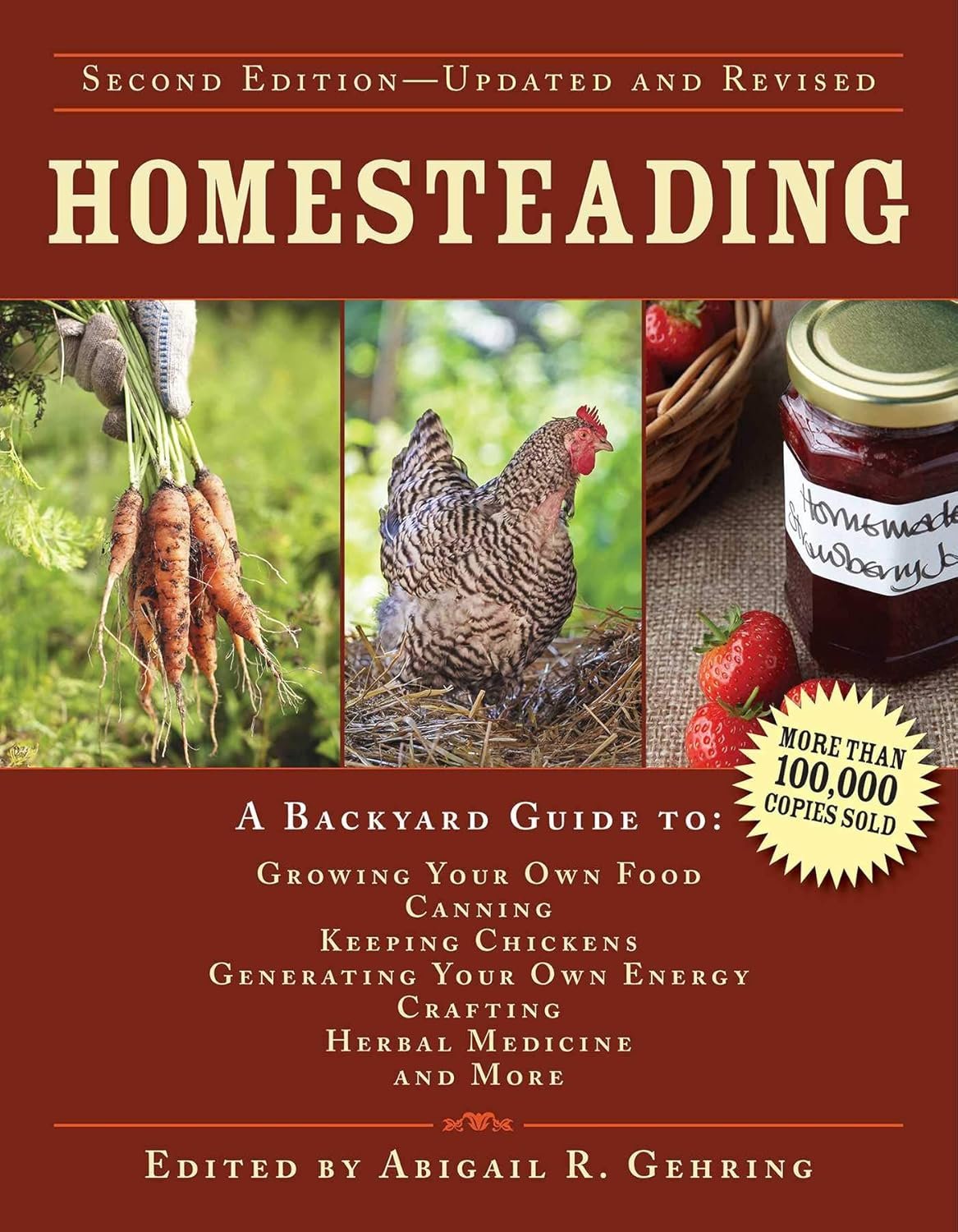
Homesteading: A Backyard Guide
Edited by Abigail R. Gehring | Second Edition, Updated and Revised | Over 100,000 copies sold
This is the reference I kept coming back to when I was starting out. It covers growing your own food, canning, keeping chickens, generating energy, crafting, and herbal medicine in one practical volume. Not a coffee table book — a working manual. If you are serious about building a more self-sufficient life, this belongs on your bench.
Shop on AmazonAs an Amazon Associate I earn from qualifying purchases.
MIgardener — The Budget Organic Gardener
What He Teaches
MIgardener, run by Luke Marion out of Michigan, is one of the most practical and cost-conscious organic gardening YouTube channels available. Luke built his channel around a core principle: growing food organically should not be expensive, complicated, or intimidating. His content covers high-yield vegetable gardening, seed saving, composting, and budget-friendly techniques that maximize production without requiring expensive inputs or equipment.
What makes MIgardener stand out is the relentless focus on value. Luke teaches you how to save your own seeds, build your own compost, and grow more food per square foot than most gardeners think is possible. His Michigan growing zone gives him a naturally challenging climate to work with, which means his techniques are tested against real adversity and translate well to gardeners in colder, shorter-season regions across North America.
Strengths
- Budget focus: Every technique is designed to minimize cost while maximizing yield — ideal for gardeners on a tight budget.
- Seed saving expertise: One of the best resources on YouTube for learning to save, store, and trade seeds to reduce ongoing costs.
- High-yield methods: Teaches intensive planting techniques that produce significantly more food per square foot than conventional spacing.
- Cold climate relevance: Michigan-based content is directly applicable to gardeners in short-season, northern growing zones.
- Massive library: Over 2,400 videos covering virtually every aspect of organic vegetable gardening.
Weaknesses
- Limited homesteading scope: Like Daisy Creek Farms, the focus is almost entirely on gardening rather than full homesteading.
- Northern bias: Content is most directly applicable to northern and cold-climate gardeners; southern and tropical gardeners may find less relevant advice.
- Less visual polish: Production quality is functional and informative but not visually cinematic.
Best for:
- Gardeners on a budget who want to maximize food production without spending heavily on inputs or equipment
- Anyone in a cold or short-season growing zone who wants advice tested in a genuinely challenging climate
- People interested in seed saving as a long-term self-sufficiency strategy
Not ideal for:
- People looking for full homesteading content beyond the vegetable garden
- Gardeners in warm, tropical, or arid climates who need region-specific growing advice
- Anyone looking for high-production, cinematic content over practical instruction
Recommended Starting Videos:
- His seed starting series — the best entry point for understanding his approach to low-cost, high-yield gardening
- The “ALL of the Crops We Are Starting NOW” seasonal series — a practical real-time guide to what to plant and when
- His seed saving tutorials — the most unique and cost-saving content on the channel and one of the best resources on YouTube for this skill
An American Homestead — The Off-Grid Family
What He Teaches
An American Homestead documents the real-world experience of a family that left the city in 2012 to build a self-sufficient rural homestead from the ground up. The channel covers the full spectrum of homesteading life — gardening, food preservation, livestock, off-grid energy, water systems, and the honest realities of what it actually takes to live this way long-term. This is not aspirational content designed to make homesteading look easy. It is honest documentation of the work, the failures, and the hard-won lessons.
What makes An American Homestead valuable is the breadth and the honesty. Most homesteading YouTube channels show you the highlights. This channel shows you the full picture, including the burnout, the unexpected costs, and the decisions that did not work out as planned. For anyone seriously considering a major lifestyle transition toward rural self-sufficiency, this channel is one of the most grounded and realistic resources available.
Strengths
- Full homestead scope: One of the few homesteading YouTube channels that covers gardening, livestock, food preservation, off-grid energy, and water systems together.
- Radical honesty: The channel does not shy away from failures, mistakes, and the unglamorous realities of homestead life.
- Long-term perspective: Over a decade of documented homesteading provides a realistic view of what the lifestyle looks like across multiple seasons and years.
- Family context: Content is relevant to families making the transition together, not just individuals.
- Practical decision-making: Videos frequently address the real financial and logistical decisions that aspiring homesteaders need to think through before committing.
Weaknesses
- Less instructional depth: The channel is more documentary than tutorial — you get the experience, but not always the step-by-step how-to.
- Irregular upload schedule: Uploads are less frequent and consistent than dedicated gardening channels.
- Narrower gardening content: For deep vegetable gardening instruction, Daisy Creek Farms or MIgardener are stronger dedicated resources.
Best for:
- People seriously considering a move to rural property or off-grid living who want a realistic picture of what that life actually involves
- Families planning a homesteading transition who want to see the full scope of what is required across multiple years
- Anyone who wants honest, unfiltered homesteading content rather than highlight-reel inspiration
Not ideal for:
- People looking for detailed, step-by-step gardening or food preservation tutorials
- Urban and suburban gardeners who want practical small-space growing advice
- Anyone looking for frequent, consistent upload schedules
Recommended Starting Videos:
- “Season 1 Episode 1” — the starting point of the full homestead journey, essential context for everything that follows
- His “Pulling The Trigger On A Homestead” video — the most honest and practical advice for anyone thinking about making the leap
- His homestead burnout videos — critical viewing for anyone romanticizing the lifestyle before understanding the real demands
Quick Comparison Table
Not sure which homesteading and gardening YouTube channel fits your goals? This table breaks down the key differences at a glance so you can make the right choice for your situation and objectives.
| Feature | Daisy Creek Farms | Hollis & Nancy | MIgardener | An American Homestead |
|---|---|---|---|---|
| Subscribers | 951K+ | 578K+ | 1.1M+ | 432K+ |
| Primary focus | Organic soil gardening | Self-sufficient family homestead | Budget organic gardening | Off-grid rural homesteading |
| Best for | Soil science, chemical-free growing | Seed to table, chickens | Budget, seed saving, cold climates | Full homestead transition |
| Livestock content | No | Chickens only | No | Yes (multiple animals ) |
| Off-grid content | No | No | No | Yes |
| Beginner friendly | Yes | Yes (best option) | Yes | Moderate |
| Food preservation | Limited | Yes (cooking focus) | Limited | Yes |
| Active channel | Yes | Yes | Yes | Yes (irregular) |
The Honest Scoring System
How do you measure a homesteading and gardening YouTube channel? We look past the aesthetics and evaluate the actual educational value. Here are the eight dimensions that matter for anyone serious about building real self-sufficiency skills.
| Dimension | Daisy Creek Farms | Hollis & Nancy | MIgardener | An American Homestead |
|---|---|---|---|---|
| Teaching Depth | 9 — Excellent soil science | 8 — Clear and thorough | 8 — Practical and detailed | 6 — Documentary over tutorial |
| Beginner Accessibility | 8 — Very approachable | 10 — Best on this list | 8 — Clear and practical | 5 — Assumes some baseline |
| Homestead Scope | 4 — Garden only | 6 — Garden, cooking, chickens | 4 — Garden only | 10 — Full homestead coverage |
| Organic Methods | 10 — Core philosophy | 8 — Consistently organic | 9 — Budget organic focus | 7 — Organic where practical |
| Cost Efficiency | 7 — DIY inputs emphasized | 7 — Practical and frugal | 10 — Best on this list | 6 — Honest about real costs |
| Food Preservation | 4 — Not a focus | 8 — Cooking and preserving | 4 — Not a focus | 8 — Full pantry coverage |
| Production Value | 7 — Clean and functional | 6 — Plain but clear | 7 — Functional and informative | 7 — Documentary style |
| Long-Term Value | 9 — Timeless soil principles | 8 — Practical and reusable | 9 — Seed saving is evergreen | 9 — Multi-year documentation |
Who Should You Follow?
Your choice among these homesteading and gardening YouTube channels depends on where you are starting from and what you are trying to build. Here is the honest breakdown.
Follow Daisy Creek Farms if:
You want to grow food organically and understand the soil science behind why it works. If you want to build a garden that feeds itself through living soil biology, reduce your dependence on purchased inputs, and grow the cleanest, most nutritious food possible, Jag Singh’s channel is the most principled and scientifically grounded organic gardening resource on this list.
Follow Hollis and Nancy’s Homestead if:
You are a beginner who wants to grow food and cook it from scratch on a suburban or small property. If you want a patient, step-by-step teacher who covers the full cycle from seed to table, and you want to add backyard chickens to your homestead, Hollis and Nancy’s channel is the most complete and beginner-friendly resource on this list for that specific combination of goals.
Follow MIgardener if:
You want to grow as much food as possible on a tight budget. If you want to learn seed saving, intensive planting techniques, and how to build a productive organic garden without spending heavily on inputs, Luke Marion’s channel is the most cost-conscious and practically valuable resource on this list. His cold-climate experience also makes him the best choice for gardeners in northern growing zones.
Follow An American Homestead if:
You are seriously considering a major lifestyle transition to rural property or off-grid living. If you want to see the full, unfiltered reality of what homesteading actually looks like across a decade — the successes, the failures, the burnout, and the hard decisions — this channel is the most honest and comprehensive resource available for anyone making that kind of commitment.
The Goals Quiz: What Is Your Homesteading Style?
Answer each question honestly. Your most frequent letter reveals which homesteading and gardening YouTube channel best matches your goals and lifestyle. Selections highlight in red as you choose.
Question 1: What is your primary goal right now?
Question 2: How much land do you currently have to work with?
Question 3: What is your biggest concern about growing your own food?
Question 4: What kind of content do you learn best from?
Question 5: How do you feel about livestock?
Question 6: What does your budget for homesteading look like?
Question 7: What is your growing climate like?
Question 8: What does your ideal outcome look like after 12 months?
Your Live Score Tally
Scroll down to see your full results and action plan.
Your Results and Action Plan
Find your most frequent letter below for your personalized channel recommendation and action plan.
Mostly A’s — You Are a Daisy Creek Farms Person (The Organic Soil Builder)
You want to grow food the right way — organically, sustainably, and with a deep understanding of why it works. You are not satisfied with just following instructions; you want to understand the soil biology, the plant science, and the principles that make a garden truly thrive without chemicals.
Your Action Plan:
- Start with a soil test to understand what your garden is working with before adding any amendments.
- Build or purchase a compost system immediately — living compost is the foundation of everything Jag teaches.
- Learn to identify the beneficial insects in your garden before reaching for any pest control solution.
- Focus on building soil organic matter over multiple seasons rather than chasing quick fixes with purchased inputs.
- Subscribe to Daisy Creek Farms on YouTube and start with his living soil and composting series.
Mostly B’s — You Are a Hollis and Nancy Person (The Self-Sufficient Homemaker )
You want the full suburban homestead experience — a productive garden, a flock of chickens, and a kitchen full of food you grew and cooked yourself. You want to reduce your dependence on grocery stores and build a household that produces a meaningful portion of its own food.
Your Action Plan:
- Start with a container or raised bed garden if you do not have in-ground space — Hollis has excellent content specifically for this setup.
- Learn to grow three or four vegetables you actually eat regularly before expanding to a full garden plan.
- Research your local ordinances on backyard chickens before building a coop — many suburban areas have restrictions.
- Connect your garden and kitchen from day one — plan what you will cook with what you grow to avoid waste.
- Subscribe to Hollis and Nancy’s Homestead on YouTube and start with his container vegetable garden series.
Mostly C’s — You Are a MIgardener Person (The Budget Food Producer )
You want maximum food production for minimum cost. You understand that self-sufficiency means reducing dependence on purchased inputs over time, and you are willing to learn the skills — seed saving, composting, intensive planting — that make that possible.
Your Action Plan:
- Start saving seeds from your best-performing plants this season — even one or two varieties is a meaningful start toward seed independence.
- Learn intensive spacing techniques to maximize production from every square foot of growing space you have.
- Build a compost system to eliminate the ongoing cost of purchased fertilizers and soil amendments.
- Join a seed swap or local gardening group to access a wider variety of seeds at no cost.
- Subscribe to MIgardener on YouTube and start with his seed starting and seed saving series.
Mostly D’s — You Are an An American Homestead Person (The Committed Homesteader )
You are thinking seriously about a major lifestyle change. You want the full picture of what rural homesteading actually requires — not the highlight reel, but the real costs, the real failures, and the real rewards of building a self-sufficient life from the ground up.
Your Action Plan:
- Watch the full An American Homestead archive from Season 1 before making any major property decisions — the early episodes are the most valuable for setting realistic expectations.
- Build your skill base before you buy land — start growing food, preserving food, and learning basic animal husbandry now while you still have a safety net.
- Run the real numbers on what rural property, infrastructure, and ongoing homestead costs will actually require before committing.
- Connect with local homesteading communities to learn from people already living this life in your region.
- Subscribe to An American Homestead on YouTube and start with Season 1 Episode 1 for the full context.
Final Thoughts: Which Homesteading and Gardening YouTube Channel Is Worth Your Time?
The homesteading and gardening YouTube channel space is full of beautiful content that makes the lifestyle look effortless. The four creators on this list are different — they show you the work, the principles, and the real outcomes that come from doing it right.
Daisy Creek Farms gives you the soil science. Hollis and Nancy give you the seed-to-table cycle. MIgardener gives you the budget discipline and seed independence. An American Homestead gives you the honest long-term picture. Each one is valuable on its own, and together they cover the full spectrum of what it means to grow your own food and build a more self-sufficient life.
The biggest mistake aspiring homesteaders make is consuming content without acting on it. Pick one channel, pick one skill, and start this season. A single raised bed, a packet of seeds, or a batch of compost is more valuable than a hundred hours of watching someone else do it. The knowledge only becomes useful when it meets the soil.
Next Steps:
- Take the quiz above if you have not already — your result points you to the right homesteading and gardening YouTube channel for your goals
- Subscribe to your chosen channel and watch at least three videos before buying any seeds, tools, or equipment
- Start small and build — one raised bed, one crop, one season is the right starting point for most people
- Check out Series V: Foraging and Survival for channels that complement homesteading with wild food skills
- Explore the full YouTube Professional Series for honest reviews of top creators across seven different niches
FAQ: Homesteading and Gardening Realities
What is the best homesteading YouTube channel for a complete beginner?
Hollis and Nancy’s Homestead is the most beginner-friendly starting point on this list. Hollis explains every technique clearly and patiently, covers the full cycle from seed to harvest, and includes cooking content so you know what to do with everything you grow. Daisy Creek Farms is also excellent for beginners who want to understand the soil science behind organic gardening from the start.
Can I grow a meaningful amount of food in a small backyard or on a balcony?
Yes. Both Hollis and Nancy’s Homestead and MIgardener have extensive content specifically for container and small-space gardening. With intensive planting techniques, a few well-managed raised beds or large containers can produce a surprising amount of food. The key is choosing high-yield crops like tomatoes, beans, lettuce, and herbs that produce a lot of food per square foot, and managing soil health carefully in the limited growing medium you have.
Is organic gardening actually more expensive than conventional gardening?
Not necessarily, and MIgardener’s entire channel is built around proving that it does not have to be. The upfront investment in building healthy soil through compost and organic matter reduces your ongoing input costs over time. Seed saving eliminates the annual seed purchase. The real cost of conventional gardening — synthetic fertilizers, pesticides, and the soil degradation they cause — compounds over time in ways that organic methods avoid entirely.
How realistic is it to become fully self-sufficient from a homestead?
Full self-sufficiency is extremely difficult and rarely achieved even by experienced homesteaders. An American Homestead is the most honest resource on this question — the channel documents over a decade of real homesteading and is transparent about what is genuinely achievable versus what is romanticized in most homesteading content. A more realistic and achievable goal is meaningful food self-sufficiency — producing a significant portion of your family’s vegetables, eggs, and preserved food — which is well within reach for most people with a modest property and consistent effort.
What is the most important thing to get right in an organic garden?
Soil health. Every creator on this list agrees on this point, and Daisy Creek Farms makes it the central focus of his entire channel. Healthy, living soil with good organic matter, active microbial life, and proper drainage will produce healthy plants with minimal intervention. Most gardening problems — pest pressure, disease, poor yields — trace back to compromised soil. Build the soil first and most other problems take care of themselves over time.