

This Texas solar shopping guide is the story of how our family compared electricity providers after going solar. Here in Texas, many residents can choose their electricity provider through the competitive retail market. Having options is a good thing, but trying to compare plans can become overwhelming very quickly when you are not sure what your solar and battery system actually needs. The plans do not always use the same rates, fees, credits, or restrictions, so much of the process feels like comparing apples to oranges. This is how we worked through those choices and eventually found a plan that fit the way our own system operates.
Our Texas Solar Shopping Guide: Lessons from Our First Two Years with Solar
To compare current plans available in your area, start with the official Power to Choose website. Then download and read the provider’s Electricity Facts Label, Terms of Service, and any separate solar or battery rules before choosing a plan.
Searching for an electricity plan in Texas can feel like comparing apples to oranges. One company emphasizes the energy rate. Another advertises free nights. Another focuses on solar buyback credits. Once you add monthly fees, delivery charges, credit limits, and battery rules, it becomes difficult to tell which plan is actually better.
When it was time to choose a provider that would work with our new solar and battery system, we wanted to get the most bang for our buck. We also knew that finding the right plan was going to take more than choosing whichever company advertised the lowest number.
I spent a substantial amount of time researching plans and looking at our own usage data before we made the first decision. That research mattered because a plan that works well for a house without solar may not work nearly as well for a house that produces, stores, imports, and exports electricity at different times of the day.
Start with your own data: Smart Meter Texas can provide access to your home’s electricity-usage information. For a solar home, knowing when you use power can be just as important as knowing how much you use.
Our First Year with David Energy
After doing our initial research, we chose David Energy. At the time, the plan appealed to us because it had a moderately low per-kWh price, paid 3 cents per kWh for the electricity we exported, had no monthly base charge, and carried only a $25 early-cancellation fee.
That low cancellation fee gave us some breathing room. If the plan did not work the way we expected, we were not trapped in an expensive contract just to get out of it.
We had an excellent experience with David Energy. For several months, the solar credits worked strongly in our favor. However, by the end of the one-year contract, we were still paying a small electricity bill during some months, and the company’s available plan structure had changed.
Our goal was to get as close to no monthly electricity bill as reasonably possible. We believed that might be achievable with the right combination of system settings, battery use, and retail plan, so we decided to look again rather than automatically renewing.
The One-Year System Review That Changed Our Approach
Throughout the design and installation process, Good Faith Energy encouraged us to contact them when we had questions. We could reach out directly or use their scheduling system to set up a meeting.
At the one-year mark, I scheduled a review with one of their technicians. I wanted to make sure the system had produced the amount of energy everyone expected during its first full year and that there were no problems hiding in the data.
I also used the meeting to ask a lot of questions about lowering the remaining electricity bill. The technician walked me through the system in more depth and explained how the operating settings and the retail electricity plan could work together.
That was when he introduced me to Texas Power Guide and its plan-analysis service for solar homes.
I temporarily authorized Texas Power Guide to review our smart-meter information. Its Solar Electric Plan Analysis used our actual consumption, the timing of that consumption, and the way our system produced and exported electricity to compare available plans.
Why We Switched to a Free-Nights Plan
Based on our actual usage and production data, Texas Power Guide recommended a free-nights plan from Direct Energy.
Honestly, the plan looked worse on paper at first.
It did not offer a solar buyback credit for the electricity we sent to the grid. Our David Energy plan had paid us 3 cents per kWh for those exports. The Direct Energy plan instead offered free electricity every night from 9:00 PM until 9:00 AM.
I could not immediately see how giving up the buyback credit was supposed to save us more money. That changed when I read the plan documents closely.
Every electricity plan comes with documents that explain the actual rate structure, fees, restrictions, and conditions. The headline offer gets your attention, but those documents tell you whether the plan will work with the way your house and batteries operate.
The detail that mattered to us: The plan documents we reviewed did not prevent us from charging our home batteries from the grid during the free nighttime period. That meant we could charge the two Powerwalls overnight and move other high-energy activities into those free hours without adding an energy charge.
That one detail changed the entire calculation for our house. During the free period, the grid can recharge the batteries. During the day, the solar array powers the house and replenishes the batteries when conditions allow. We are not relying on a small export credit to make the plan work.
Under our current setup, most months we pay only about the $10 connection or base charge. During months with heavier cloud cover and lower solar production, we have still generally paid only around $30 for electricity from the grid.
Those are our results, not a guarantee that the same plan will produce the same bill for another household. The recommendation worked because it was based on our actual usage pattern, our solar production, two Powerwall 3 units, and the way we were able to shift consumption into the free period. If you take one thing from this Texas solar shopping guide, it is that the winning plan is the one that matches your own meter data, not the one with the best advertisement.
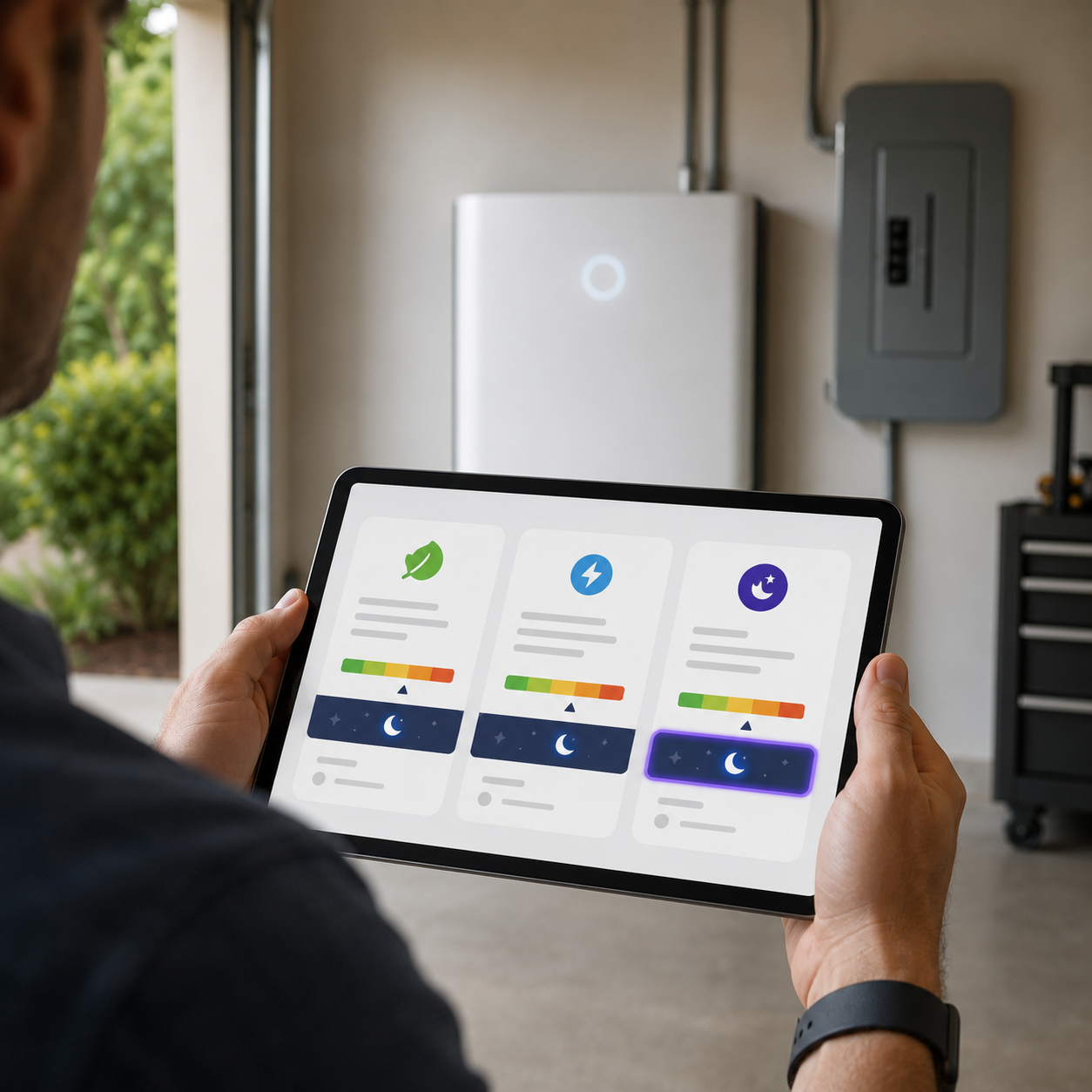
The plan with the best headline rate is not always the best plan for a solar-and-battery home. The details have to match the way your system actually uses, stores, and imports electricity.
Planning a Solar and Battery System for Your Own Texas Home?
Good Faith Energy installed the system at our home. What I appreciated was that we could continue asking questions after the installation instead of being left to figure everything out alone. The one-year system review helped us understand our production data and pointed us toward the tools we used to evaluate a different electricity plan.
Your installer cannot choose the perfect retail plan forever because plans, rates, and terms change. They should, however, be able to help you understand how your system operates so you know what to look for when comparing those plans.
Referral disclosure: We hired Good Faith Energy for our own home before entering its referral program. If you request a quote through this link and later complete a qualifying installation, we may receive a commission.
Request a Quote from Good Faith Energy

Affiliate disclosure: This page contains a referral link to Good Faith Energy. If you request a quote through that link and later complete a qualifying installation, we may receive a commission. We hired Good Faith Energy for our own home before entering its referral program. The electricity plans, rates, and terms discussed here reflect our personal experience and may change. Always review the current Electricity Facts Label, Terms of Service, and any separate solar or battery conditions before enrolling.