Leather Thickness: What the Ounce System Actually Means
Leather thickness is one of those things that seems simple until you actually try to buy a hide.
Most suppliers list leather in ounces instead of millimeters or fractions of an inch. If you are new to leatherwork, that can leave you staring at a product page wondering whether 3-ounce leather is thin, thick, or somewhere in the middle.
The wrong choice can make a perfectly good project frustrating. Leather that is too thick can turn a wallet into a brick. Leather that is too thin can leave a belt stretching, curling, or feeling flimsy.
The goal is not to memorize every conversion. It is to understand the range you are working in and match the leather to the way the finished project needs to bend, fold, hold its shape, and wear over time.
This guide explains how leather ounces work, how they convert to millimeters and inches, and which thickness ranges are commonly used for wallets, belts, bags, sheaths, straps, and other leather projects.
Why is Leather Measured in Ounces?
What the ounce actually means: In leatherwork, ounces are used as a practical thickness measurement. As a general rule, one ounce of leather is about 1/64 of an inch thick, or roughly 0.4 millimeters.
That means 4-ounce leather is around 1/16 of an inch thick, while 8-ounce leather is close to 1/8 of an inch.
Leather is a natural material, so the thickness will not be perfectly even across an entire hide. The back and shoulder are often firmer and more consistent, while the belly area may be softer, stretchier, or slightly thinner.
That is why suppliers usually list a range such as 3 to 4 ounces or 8 to 9 ounces instead of promising one exact measurement.
When you see a hide listed as 4 to 5 ounces, you should expect most of the usable leather to fall somewhere between about 1.6 and 2.0 millimeters. Some areas may vary slightly, especially on a full side or hide.
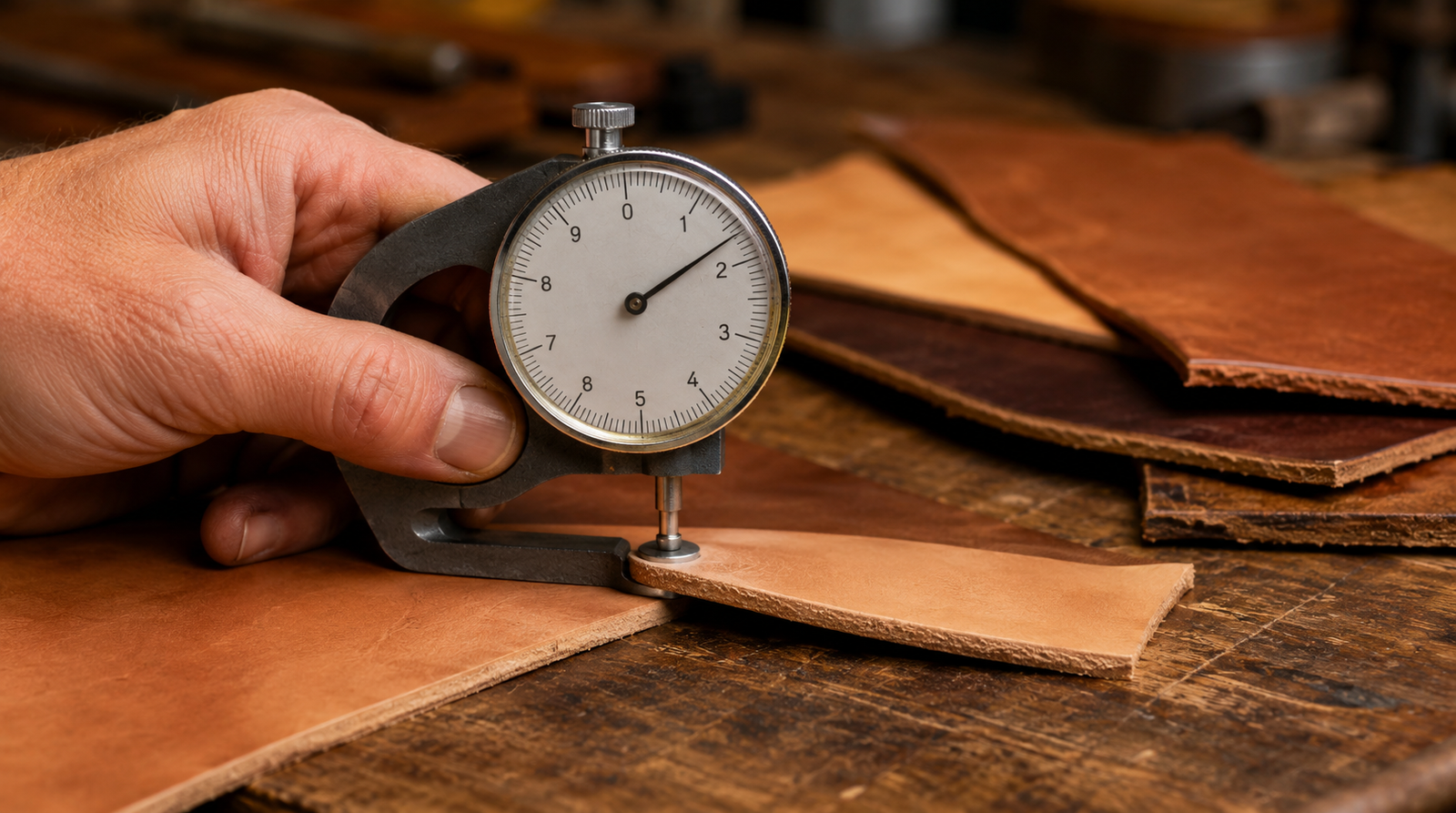
A dial gauge is the most reliable way to confirm leather thickness before cutting. Suppliers list ounce ranges, but the gauge tells you exactly what you have in hand.
Leather Thickness Conversion Chart
Use this chart when a supplier lists leather in ounces and your pattern, tool, or project plan gives the thickness in millimeters or inches. Treat the numbers as practical working conversions rather than laboratory measurements, since individual hides will always vary a little.
| Leather Weight (Ounces ) | Millimeters (mm) | Inches (Fraction) |
|---|---|---|
| 1 to 2 oz | 0.4 – 0.8 mm | 1/64″ – 1/32″ |
| 2 to 3 oz | 0.8 – 1.2 mm | 1/32″ – 3/64″ |
| 3 to 4 oz | 1.2 – 1.6 mm | 3/64″ – 1/16″ |
| 4 to 5 oz | 1.6 – 2.0 mm | 1/16″ – 5/64″ |
| 5 to 6 oz | 2.0 – 2.4 mm | 5/64″ – 3/32″ |
| 6 to 7 oz | 2.4 – 2.8 mm | 3/32″ – 7/64″ |
| 7 to 8 oz | 2.8 – 3.2 mm | 7/64″ – 1/8″ |
| 8 to 9 oz | 3.2 – 3.6 mm | 1/8″ – 9/64″ |
| 9 to 10 oz | 3.6 – 4.0 mm | 9/64″ – 5/32″ |
| 10 to 12 oz | 4.0 – 4.8 mm | 5/32″ – 3/16″ |
Which Thickness Do I Need for My Project?
The conversion chart tells you how thick the leather is. The more important question is what that thickness feels like once you begin folding, stitching, lining, and using it.
The ranges below are a practical starting point. Temper, tanning method, lining, reinforcement, and the number of layers can all change what works best, so do not treat these as hard rules.
A note about temper: Thickness and firmness are not the same thing. A soft 5-ounce chrome-tanned leather may fold more easily than a firm 3-ounce veg tan. Always check both the thickness and the temper before ordering.
1 to 2 oz (0.4 – 0.8 mm)
This is very thin leather, usually used where flexibility and low bulk matter more than structure.
Common uses include wallet linings, bag linings, watch-strap linings, small decorative layers, garment details, and lightweight interior components.
On its own, leather this thin usually will not provide much shape or support. It works best as part of a layered construction or as a lining beneath a heavier outer leather.
2 to 4 oz (0.8 – 1.6 mm)
This is one of the most useful ranges for small leather goods.
It works well for card pockets, wallet interiors, lightweight wallet exteriors, watch straps, small pouches, soft notebook covers, and other projects where several layers may be stacked together.
When building a wallet, remember that the finished thickness is the total of every layer. Three pieces of 3-ounce leather stacked together are no longer a thin construction. This is where many first wallets become much bulkier than expected.
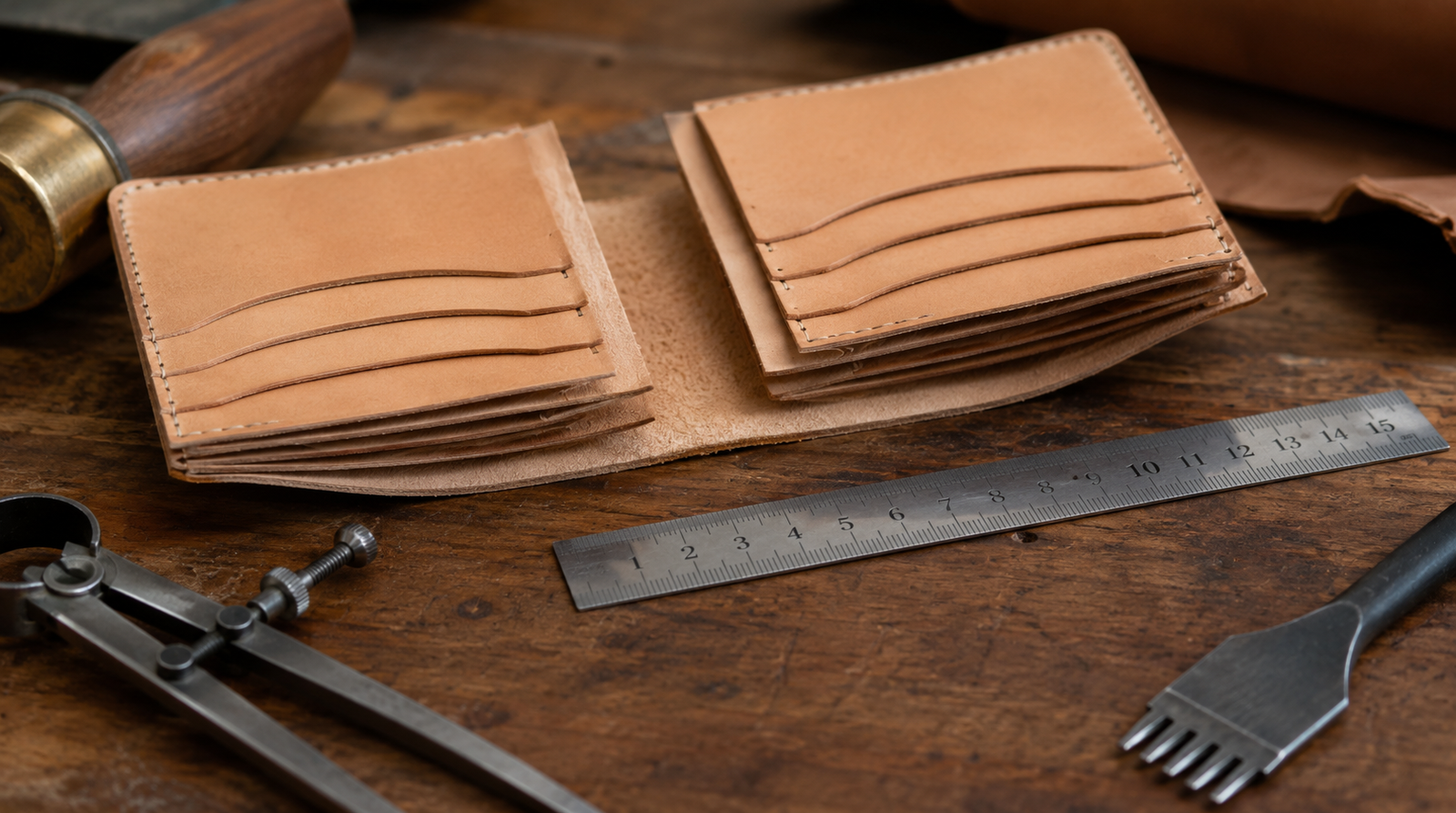
Every layer of leather in a wallet adds to the finished thickness. Three pieces of 3-ounce leather stacked together are no longer a thin construction.
4 to 6 oz (1.6 – 2.4 mm )
This is a versatile middle range with enough body for many everyday projects without becoming excessively heavy.
It is commonly used for notebook covers, wallet exteriors, light bags, messenger bags, small cases, straps, and lighter knife sheaths.
Softer leather in this range may still drape well, while firmer veg tan can hold a fairly structured shape. The thickness number alone does not tell you the whole story, so pay attention to temper as well.
6 to 8 oz (2.4 – 3.2 mm)
Leather in this range begins to feel substantial.
It is a good choice for tool pouches, structured bags, heavier straps, knife sheaths, light-duty belts, and projects that need to resist bending or collapsing.
It can still be stitched by hand, but skiving, edge preparation, hole spacing, and hardware selection become more important as the material gets heavier.
8 to 10+ oz (3.2 – 4.0+ mm)
This is heavy leather intended for projects that need strength, stiffness, or long-term resistance to stretching.
Common uses include work belts, gun belts, holsters, saddle parts, heavy sheaths, armor pieces, and some industrial or outdoor gear.
Do not assume thicker is always better. Heavy leather adds weight and bulk quickly, especially around folds, overlaps, and hardware. For some projects, two carefully chosen layers may work better than one extremely thick piece.
The Leather Thickness Calculator
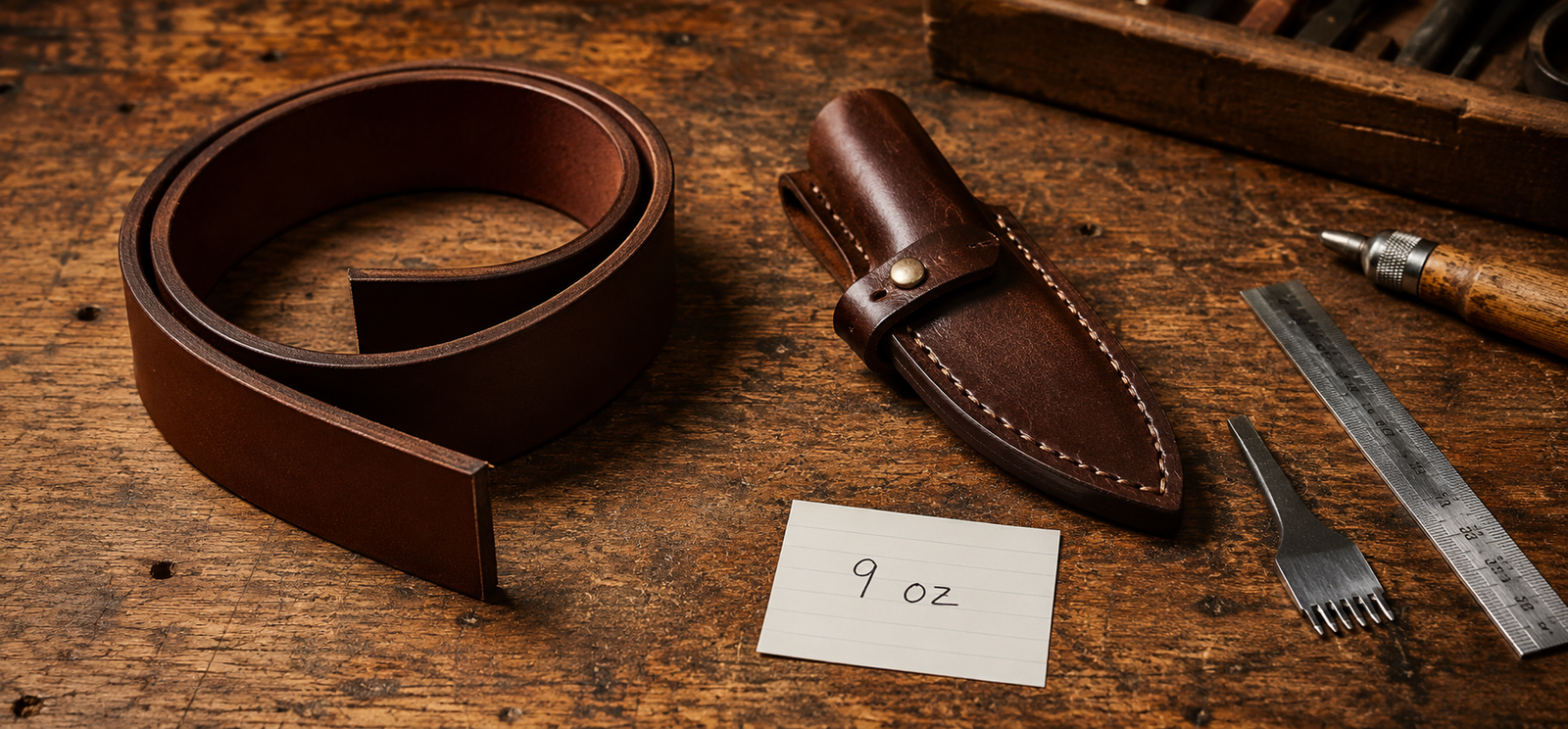
Heavy leather in the 8 to 10 oz range is built for projects that need to resist stretching and hold their shape under load. Belts, holsters, and sheaths are the most common applications.
You do not need to keep the entire conversion chart in your head.
We built the Leather Thickness Calculator so you can enter an ounce range and see the approximate millimeter and inch conversion. You can also start with the type of project you are making and use the suggested range as a practical starting point.
It is especially useful when a pattern is written in millimeters but the leather supplier lists everything in ounces.
Interactive Leather Thickness Calculator
Convert leather ounces to millimeters and inches, or check a practical starting range for wallets, belts, bags, sheaths, straps, and other common projects.
Where to Buy the Right Weight
Once you know the thickness range you need, the next challenge is finding a supplier who describes the leather clearly.
Look for listings that include the ounce range, millimeter range, temper, tanning method, cut size, and any splitting or skiving options. A good product description should help you understand more than the color of the hide.
Our leather supplier directory brings together sellers for everything from thin lining leather and wallet interiors to heavy veg tan for belts, sheaths, and structured work. Use it to compare selection, pricing, shipping, reputation, and how clearly each supplier explains what you are buying.